
The 2022 Protests and the Violation of Women’s Rights: Institutionalized Intensification of Repression Against Women
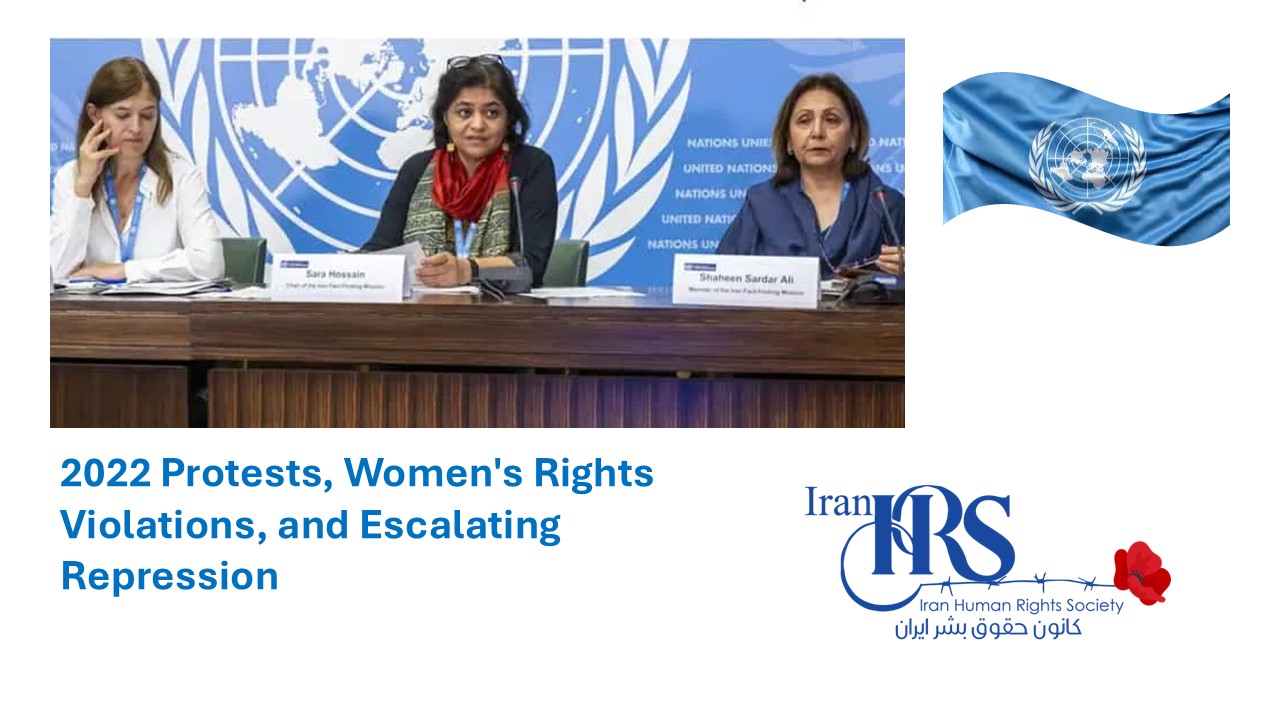
In September 2024, the United Nations fact-finding committee published an 11-page report outlining the severe human rights situation in Iran, particularly regarding the suppression of women’s and girls’ rights following the 2022 protests. These protests, which began with the killing of Mahsa Amini while in custody of the “Guidance Patrol,” marked a turning point in the history of civil protests in Iran and sparked a wave of public discontent across the country.
Many young people, women, and men participated in these protests, raising their voices for freedom. However, the government’s response to these demands was brutal repression, widespread arrests, and the execution of protesters.
The United Nations fact-finding committee emphasized that the Iranian government is systematically trying to eliminate the remnants of women’s civil activities and, through repressive policies such as the “Noor Plan,” is targeting the fundamental rights of women and girls. This plan, which combines technological surveillance with physical violence, has been introduced as a tool to suppress those who do not comply with the compulsory hijab.
Instruments of Repression: Technology, Violence, and Executions
The report documents numerous cases of physical violence against women and girls, including beatings and kicking, due to non-compliance with the mandatory hijab. The use of technology to monitor and control women in public spaces is a new measure, indicating an intensification of social control and restrictions on individual freedoms.
Additionally, the fact-finding committee expressed concern about the increasing issuance of death sentences, particularly for women activists. The death penalty has become a tool in the hands of the government, used to instill fear and silence society. The committee warned that these policies not only violate the individual rights of victims but also have widespread negative consequences for their families, journalists, human rights defenders, and political dissidents.
The statement reads in part: “Effective accountability for serious human rights violations and breaches of international law, including crimes against humanity, remains inaccessible to victims, survivors, women, and children.”
Widespread Injustice: From Institutional Discrimination to Crimes Against Humanity
One of the key issues highlighted in the report by the UN fact-finding committee is the lack of accountability and widespread injustice regarding human rights violations in Iran. Despite the increasing number of victims and the severity of these violations, no effective mechanism for accountability exists, and many victims and survivors are unable to access justice.
The committee emphasized that severe human rights violations, including crimes against humanity, are continuing systematically without any meaningful deterrent action from the international community.
The 2022 Protests and Violent Suppression: A Government Fearful of Change
The second anniversary of the nationwide 2022 protests still raises significant concerns among Iranian government officials. These widespread protests, which erupted across the country at the time, demanded fundamental changes to the Iranian regime. Many young people, women, and men participated, raising their voices for freedom. However, the government’s response to these demands was brutal repression, widespread arrests, and the execution of protesters.
Part of the statement reads:
“Given the persistent harassment and prosecution of women and girls, alongside the lack of justice and meaningful accountability for protesters and their families within Iran, countries should support accountability and reparations for victims, their families, and those expressing solidarity. They should also apply universal jurisdiction in their domestic courts for crimes committed by the Iranian regime.”
The 2022 Protests: A Final Call for the End of Repression
The widespread 2022 protests signaled a turning point against the repressive regime. Concerns among the regime’s leaders remain strong as the second anniversary of the protest’s approaches. The United Nations fact-finding committee, which was established following the broad suppression after these protests, has expressed deep concern about the “new trend of issuing death sentences for female activists.”
In recent reports, the committee warned that over the past two years, the Iranian regime has used the death penalty and other criminal sentences, particularly in cases related to national security, as tools of intimidation and repression.
This strategy has been implemented to prevent further protests and to suppress dissenting voices, especially in the face of a wave of public demonstrations demanding basic rights. The committee emphasized that these sentences not only threaten the lives of political and social activists but also contribute to severe social repression and restrictions on civil liberties.
The UN committee has called on other countries to expedite the processing of asylum applications for victims of the 2022 protests,
The UN committee has called on other countries to expedite the processing of asylum applications for victims of the 2022 protests, especially those who were injured or are seeking refuge. This request includes the granting of humanitarian visas to these individuals to help them escape the oppression and repression of the Iranian regime.
The formation of this committee followed the increasing number of deaths and injuries during the 2022 protests, with the mission of investigating and documenting human rights violations in Iran. Sara Hossein, as the chair of the committee, along with Shadi Sardar Ali and Viviana Krsticevic, are responsible for reporting to the United Nations. In March 2024, the team submitted a comprehensive report on institutional and structural discrimination against Iranian women and girls, highlighting the severity of human rights violations in the country.
Follow Iran Human Rights society on social networks:
Telegram /Twitter /Instagram / YouTube / Facebook
Join Iran Human Rights Society on Twitter






Discussion about this post