

Professor Ben Saul: “I am concerned that Iran’s Supreme Court recently refused to halt the executions of Behrouz Ehsani and Mahdi Hassani, following trials reportedly tainted by torture, forced confessions, and misuse of terrorism charges. I urge Iran to immediately commute these death sentences.”

Iran Human Rights Society, Thursday, May 29, 2025 – Professor Ben Saul, UN Special Rapporteur on the promotion and protection of human rights while countering terrorism, issued a statement warning of the imminent risk of execution for Behrouz Ehsani and Mahdi Hassani. Expressing deep concern over the Supreme Court of Iran’s refusal to suspend their sentences, he described their trials as “tainted by torture, forced confessions, and misuse of terrorism charges.”
Saul emphasized: “I am concerned that Iran’s Supreme Court recently refused to halt the executions of Behrouz Ehsani and Mahdi Hassani, following trials reportedly tainted by torture, forced confessions, and misuse of terrorism charges. I urge Iran to immediately commute these death sentences.”
Appointed in October 2023 as the UN Human Rights Council’s Special Rapporteur, Professor Saul is a distinguished international law scholar at the University of Sydney with extensive work on international law, counter-terrorism, and fundamental freedoms.
Amnesty International’s Response: Urgent Need for Global Action

Prior to Professor Saul’s warning, Amnesty International expressed grave concern in a post on X (formerly Twitter) about the rejection of the second appeal by the two prisoners, stating that “global action is now needed” to halt their potential executions.
The statement reads:
“Amnesty International is gravely concerned that Behrouz Ehsani and Mahdi Hassani face execution in Qezel Hesar Prison after their second appeal was rejected. We call on Iranian authorities to immediately halt any plans to carry out these executions.”
Amnesty emphasized that both prisoners were subjected to severe torture and mistreatment to extract forced confessions, and their trials in the Revolutionary Court were grossly unfair, lacking international fair trial standards.
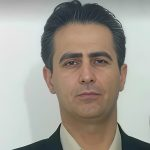
Mahdi Hassani: Torture, Solitary Confinement, and Unfair Trial
Mahdi Hassani, born in 1976, from Rey, married with three children, was arrested on September 11, 2022, in Zanjan and transferred to Ward 209 of Evin Prison. He endured months of physical and psychological torture before being moved to Ward 8 of Evin Prison.
Charged with offenses including “rebellion, waging war against God, corruption on earth, membership in the Mujahedin-e Khalq Organization, collecting classified information, and conspiracy against national security,” his charges stem from confessions obtained under torture and prolonged solitary confinement.
Behrouz Ehsani: Unfair Trial and Imminent Execution Risk
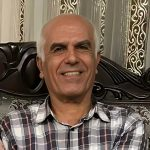
Behrouz Ehsani, another political prisoner sentenced to death, has similarly faced torture and inhumane pressure. Human rights sources report that Ehsani, denied adequate access to a lawyer, was coerced into confessions that formed the basis of his death sentence.
According to informed sources, both the initial court and the Supreme Court dismissed reports of torture and forced confessions, rejecting both appeals. Amnesty International had previously called for an immediate halt to these executions in a statement issued last December.
Gross Violations of Human Rights Under the ICCPR
The cases of Behrouz Ehsani and Mahdi Hassani represent yet another instance of gross human rights violations by the Iranian regime.
Under Article 7 of the International Covenant on Civil and Political Rights (ICCPR), no one shall be subjected to torture or cruel, inhuman, or degrading treatment.
Additionally, Article 14 guarantees the right to a fair trial, access to legal counsel, and protection from coerced confessions. Executing individuals based on forced confessions is a clear violation of these fundamental principles.
Follow Iran Human Rights Society on social networks:
Telegram /Twitter /Instagram / YouTube / Facebook
Join Iran Human Rights Society on Twitter







Discussion about this post