
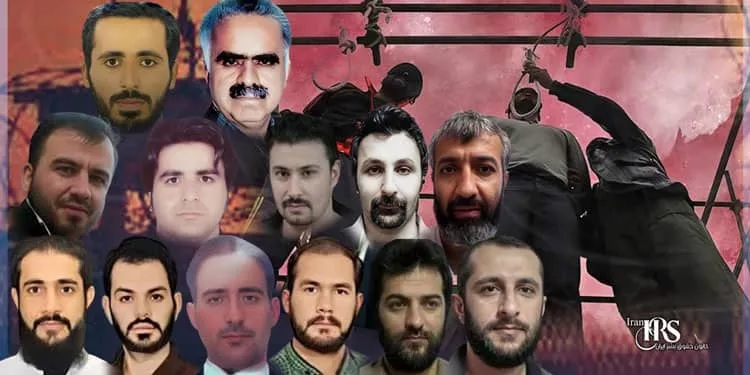
Mass Executions of Sunni Prisoners in Recent Years, Particularly in Prisons Like Rajai-Shahr, Vakilabad, Ghezel Hesar, and Bandar Abbas, Are Only a Part of This Systematic Elimination Project
Iran Human Rights Society, Friday, May 29, 2025 – Khamenei, the leader of the ruling religious dictatorship, has turned execution—one of the most lethal and inhumane tools of suppression—into the backbone of a policy of intimidation and societal control. In his governance system, the gallows are not raised for justice but to sow terror and suppress resistance. Among the targets, religious minorities—especially Sunni citizens—are directly in the crosshairs of this judicial-security killing machine, as if holding a different religious belief is, in itself, an unforgivable crime.
Mass executions of Sunni prisoners in recent years, particularly in prisons such as Rajai-Shahr, Vakilabad, Ghezel Hesar, and Bandar Abbas, are only a part of this systematic elimination project. These judicial killings are carried out in complete silence by official media, with denial or indifference from responsible institutions, while the families of the victims are deprived of even the right to say goodbye or bury their loved ones with dignity.
These executions send a clear message to Iran’s protesting society: resistance comes at a cost, even if the only reason is solidarity with justice or adherence to a religion outside the regime’s official narrative. By expanding this policy of death, Khamenei seeks to trap the people in a dilemma of “obedience or execution.”

The religious dictatorship, instead of listening to the voice of protest, has resorted to the noose. Yet history shows that regimes that rule by the gallows will ultimately collapse under the wave of truth and justice.
Mass Execution of 6 Sunni Followers in 2012
On December 27, 2012, in Ghezel Hesar Prison in Karaj, six Sunni followers named Bahram Ahmadi, Keyvan Zandkarimi, Houshyar Mohammadi, Mohammad Zaher Bahmani, Asghar Rahimi, and Behnam Rahimi were executed.
These executions were carried out without prior notification to their families and without adhering to legal procedures.
Human rights organizations, including Amnesty International, reported that these individuals were tortured during interrogations and tried in unfair courts. Additionally, their families were denied final visits, and the bodies were buried in the execution section of Behesht Sakineh Cemetery in Karaj without the families’ knowledge.
Execution of 16 Baluch Sunni Youths in Zahedan Prison – 2013
On October 26, 2013, in a vengeful act, Khamenei ordered the execution of 16 Baluch Sunni youths in Zahedan Prison. The names of six of them are as follows:
Nasser Malazehi, Mehrallah Rigi, Abdulwahab Rigi, Habibollah Rigi Shouraki, Hamed Vekalat, and Ayub Bahramzehi, all of whom were young Sunni religious activists from the cities of Sarbaz, Khash, and Saravan in Sistan and Baluchistan Province.

Mass Execution of 6 Sunni Prisoners in 2014
On the morning of Wednesday, March 4, 2014, six Sunni prisoners named Hamed Ahmadi, Jahangir and Jamshid Dehghani, Kamal Molaei, Sedigh Mohammadi, and Hadi Hosseini were executed in Rajai-Shahr Prison.
Hamed Ahmadi, Jahangir and Jamshid Dehghani, and Kamal Molaei were accused of killing Mulla Mohammad Sheikholeslam, a senior Sunni cleric with close ties to the Iranian regime.
This regime-affiliated cleric was killed in September 2009 in Sanandaj by unknown individuals. However, these four individuals stated that they were arrested months before the assassination on charges of “promoting and propagating the Sunni faith.”
Mass Execution of at Least 25 Sunni Prisoners – 2016
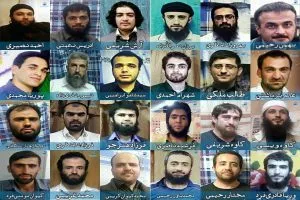
On August 2, 2016, in Rajai-Shahr (Gohardasht) Prison in Karaj, special forces attacked Ward 10, removing at least 25 prisoners, mostly Kurds and Sunnis, from the ward and executing them under strict security conditions without prior notification to their families.
The names of these individuals are as follows:
Behrouz Shah-Nazari, 2. Taleb Maleki, 3. Shahram Ahmadi, 4. Kaveh Sharifi, 5. Arash Sharifi, 6. Varya Ghaderifard, 7. Keyvan Momenifard, 8. Alem Barmashti, 9. Pourya Mohammadi, 10. Ahmad Nasiri, 11. Edris Nemati, 12. Farzad Honarjou, 13. Seyed Shahou Ebrahimi, 14. Mohammadyavar Rahimi, 15. Bahman Rahimi, 16. Mokhtar Rahimi, 17. Mohammad Gharibi, 18. Farshid Naseri, 19. Mohammad Keyvan Karimi, 20. Amjad Salehi, 21. Omid Peyvand, 22. Ali Mojahedi, 23. Hekmat Sharifi, 24. Omar Abdollahi, 25. Omid Mahmoudi.
These executions sparked widespread reactions from human rights organizations.
The Iran Human Rights Organization stated that these individuals were subjected to severe torture to extract forced confessions and were tried in unfair courts. Their families were denied final visits, and after the executions, they received their children’s bodies bearing severe signs of beating.
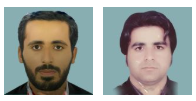
Execution of Three Sunni Prisoners in Mashhad – 2020
In January 2020, three Sunni prisoners named Mohammad Ali Arayesh, Hamid Rastbala, and Kabir Saadat Jahani were executed in Vakilabad Prison in Mashhad. Their families were denied final visits.

Mass Execution of 6 Sunni Prisoners – 2023, Ghezel Hesar Prison
Davood Abdollahi, Farhad Salimi, Anvar Khezri, Khosrow Besharat, Ghasem Abasteh, and Ayub Karimi were executed in October 2023 in Ghezel Hesar Prison.
These six were accused of killing Abdulrahim Tina, a regime-appointed imam in Mahabad, and were arrested in 2009, spending 14 years in various prisons under the threat of execution.
Additionally, Anvar Khezri, another co-defendant in this case, was executed on May 1, 2024, in Ghezel Hesar Prison in Karaj without a final visit with his family.
Kamran Sheikheh, also linked to this case, was executed on July 25, 2024, in Urmia Central Prison.
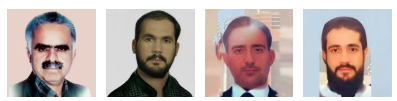
Execution of 5 Sunni Political Prisoners – 2025
At dawn on Tuesday, April 8, 2025, the execution sentences of five Sunni political prisoners named Malek Fadaei-Nasab, Taj Mohammad Khorramali, Farhad Shakeri, Abdulrahman Gargij, and Abdulhakim Azim Gargij were carried out in Vakilabad Prison in Mashhad without final visits or notification to their families.
These individuals were arrested in 2015 by intelligence forces and transferred to Vakilabad Prison in Mashhad after one year.
In 2019, Branch 1 of the Mashhad Revolutionary Court, presided over by Judge Mahmoud Davoudabadi, sentenced them to death. Their main charge was membership in the “National Solidarity Front of Iranian Sunnis.” This sentence was overturned by the Supreme Court, but in early August 2024, Branch 4 of the Mashhad Revolutionary Court, through a case fabricated by the Ministry of Intelligence, retried and sentenced these six political-ideological prisoners to death.
The Supreme Court overturned their death sentences twice due to weak evidence and documentation. However, intelligence authorities manipulated the case and extracted confessions through torture.
Intelligence officials subjected the prisoners to physical torture, including pepper spray, strikes to sensitive body parts, and whipping.
Farhad Shakeri and his co-defendants repeatedly emphasized their innocence, stating that their only crime was following the Sunni faith.
According to previously published reports, these prisoners were forced to make confessions under torture.
One report stated:
“After their arrest, they were placed in a hall where water from the upstairs bathroom and toilet dripped on their heads. The prisoners in this hall were under severe pressure due to infestations of bedbugs, lice, and cockroaches.”
Another source regarding the torture of these prisoners said:
“These prisoners were also subjected to severe torture to force confessions for acts they absolutely did not commit. The most brutal tortures were inflicted on them in the solitary cells of the intelligence detention center.
Intelligence interrogators threatened some prisoners that if they did not confess, their families would be assassinated or subjected to rape.”
This article recounts a portion of the execution and torture of Sunni political prisoners in the prisons of the ruling dictatorship. Undoubtedly, this is only a small part of the crimes committed by the regime’s leaders against political prisoners, especially Sunnis.
The execution of Sunni followers and their religious activists in the prisons of the ruling religious dictatorship is not only a clear example of widespread human rights violations but also a stark indication of an organized suppression policy aimed at silencing a religious minority. Over recent decades, the regime has used tools such as fabricated cases, torture, forced confessions, and unjust judicial rulings to severely restrict the space for protest among Sunnis. Mass executions in prisons like Rajai-Shahr, Vakilabad, and Ghezel Hesar, conducted without notifying families, without fair trials, and under strict security conditions, are only a part of this bitter reality. Instead of addressing the legitimate demands for justice and religious freedom from this group, the Islamic Republic has deemed them a political threat and dealt with them through a security-driven approach. This trend not only undermines the regime’s legitimacy but also deepens social and ethnic divides.

Regarding the execution of prisoners charged with so-called social crimes, there is a bitter and lesser-known reality: since the early years of the Islamic Republic’s rule, Sistan and Baluchistan Province has had the highest execution rates. This horrific statistic reflects structural discrimination, the regime’s security-driven perspective toward ethnic and religious groups, and the disregard for judicial justice in deprived areas. Baluch youths, often victims of poverty, unemployment, and religious and ethnic discrimination, are disproportionately subjected to mass arrests, unfair trials, and harsh sentences. While the judiciary claims to combat crimes, what is observed in practice is the instrumental use of the death penalty for social control and intimidation of minorities. Addressing this issue in greater detail requires a broader scope beyond this article.
Follow Iran Human Rights Society on social networks:
Telegram /Twitter /Instagram / YouTube / Facebook
Join Iran Human Rights Society on Twitter





Discussion about this post