
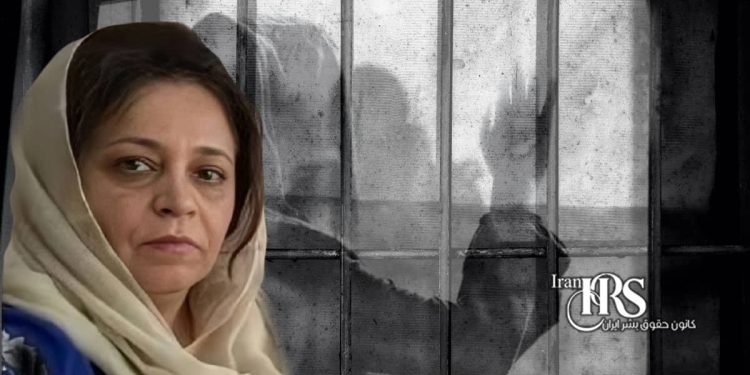
Roya Sabet, a Baha’i citizen residing in the UAE who traveled to Iran to visit her elderly parents, was sentenced by the Shiraz Revolutionary Court to 25 years in prison and additional penalties on political and religious charges.
Issuance of a Heavy Sentence Against a Baha’i Citizen in Shiraz
Iran Human Rights Organization, Saturday, May 31, 2025 – The Shiraz Revolutionary Court, in the latest example of the systematic suppression of religious minorities in Iran, sentenced Roya Sabet, a Baha’i citizen and resident of the United Arab Emirates, to 25 years of imprisonment and multiple social deprivations on security and religious charges. According to human rights sources, Roya Sabet, who had traveled to Iran to care for her elderly parents, was arrested without access to a fair trial and, after months of uncertainty, faced severe penalties.
This Baha’i citizen was convicted by Branch One of the Shiraz Revolutionary Court, presided over by Judge Seyed Mahmoud Sadati, on charges of “collaboration and communication with citizens and institutions of the Israeli government,” “forming and managing a group with the intent to act against national security” (10 years imprisonment), and “engaging in sectarian propaganda contrary to Islamic Sharia” (5 years imprisonment). Additionally, she was sentenced to two years of travel bans and passport cancellation, five years of deprivation of social rights, and a five-year ban on online activities as supplementary punishments.
Targeting Religious Minorities Under Security Pretexts

This verdict is part of the broader trend of suppressing followers of the Baha’i faith, with the government consistently violating the fundamental rights of religious minorities through security-related accusations, religious pretexts, and pressure from intelligence agencies. In Roya Sabet’s case, no credible evidence or clear documentation of activities against national security or collaboration with foreign governments was presented. The basis for such a severe sentence appears to be solely her religious beliefs and Baha’i identity.
Accusations such as “collaboration with Israel” are among the most common tools of suppression used against Baha’is in Iran, despite these charges often lacking any basis in reality and primarily serving to intensify pressure on this religious minority. Furthermore, the vague charge of “sectarian propaganda” is effectively used as a legal tool to restrict the freedom of expression and thought of Baha’i individuals.
A Case with Political and Religious Underpinnings
According to informed sources, the process of Roya Sabet’s arrest and trial lacked the minimum standards of a fair judicial process and was conducted under the supervision and interference of security institutions. During her detention, she was denied regular contact with her family, adequate legal counsel, and the opportunity for a fair defense. The heavy sentence issued against her is indicative of an organized policy aimed at socially marginalizing Baha’is from Iran’s public and cultural spheres.
Moreover, the imposition of supplementary punishments, such as bans on using social media, travel restrictions, and deprivation of social rights, are clear examples of psychological pressure and continuous restrictions against religious minorities, which are in direct conflict with Iran’s international human rights obligations.
Article 18 – Freedom of Thought, Conscience, and Religion:
Roya Sabet has faced severe charges solely due to her belief in the Baha’i faith and her peaceful religious activities. This article guarantees every individual’s right to hold or express religious beliefs.
Article 19 – Freedom of Expression:
Her conviction on charges of “sectarian propaganda contrary to Sharia” contradicts the right to freedom of expression and belief guaranteed by this article, even if those beliefs conflict with those of the majority.
Article 26 – Equality Before the Law and Prohibition of Discrimination:
Her trial and the issuance of a heavy sentence due to her affiliation with the Baha’i community is a clear example of religious discrimination and a violation of the principle of equality before the law.
Article 14 – Right to a Fair Trial:
Roya Sabet was denied effective legal counsel and a fair trial. This article ensures that every individual is tried with judicial independence and in accordance with the principles of justice.
Article 12 – Right to Return to One’s Country:
As a resident of the UAE, she was arrested upon returning to Iran to visit her elderly parents and was subsequently sentenced to a travel ban, violating her right to freedom of movement and return to her country.
Follow Iran Human Rights Society on social networks:
Telegram /Twitter /Instagram / YouTube / Facebook
Join Iran Human Rights Society on Twitter






Discussion about this post