
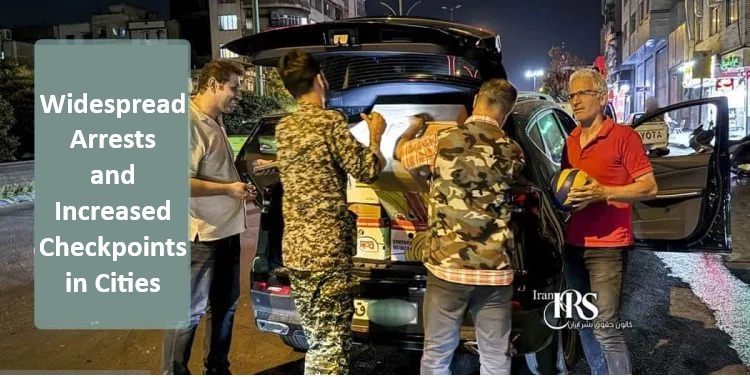
In a move that has heightened concerns, Nabi Mousavi-Fard, the Friday Prayer Leader of Ahvaz, has called for field trials for the detainees.
Iran Human Rights Society, Thursday, June 26, 2025 – Following the relative cessation of military tensions, the country’s security institutions have launched a new wave of internal repression, marked by widespread arrests of social media users, an increase in checkpoints across cities, and rapid changes to security laws. Official reports and local sources indicate that in recent days, hundreds of citizens have been detained across various parts of the country, particularly in the western and southwestern regions.
Over 700 Arrests Nationwide
According to statistics released by the Islamic Republic’s security and judicial institutions, over 700 citizens have been arrested in connection with social media activity and comments regarding the recent war. Reports indicate that the majority of arrests have occurred in the provinces of Kermanshah, Isfahan, Khuzestan, Fars, and Lorestan. Official figures for Tehran have not yet been disclosed.
Official sources have justified these arrests as part of efforts to counter “infiltration” and “safeguard national security.” However, human rights observers argue that these measures aim to suppress freedom of expression and create an atmosphere of fear and intimidation within society.
Tight Control Over Social Media and Security Case Fabrication
Coinciding with missile attacks and the declaration of a quasi-war state, security forces have imposed extensive control over social media users’ activities. Several users have been arrested and charged with offenses such as “propaganda against the state,” “collaboration with a hostile government,” or even “bomb-making” and “drone recording” simply for expressing opinions about the war.
This approach by security institutions has drawn criticism from human rights organizations. According to Article 19 of the International Covenant on Civil and Political Rights, to which Iran is a signatory, freedom of expression is a fundamental right that can only be restricted in exceptional circumstances with necessary and lawful justification. Arresting users for posting content on social media is considered a violation of these global principles.
Rapid Revision of “Espionage” Law to Expand Repression
Simultaneously with the ceasefire, the judiciary announced an immediate redefinition of the espionage law, a change that legal experts say could pave the way for harsher and more ambiguous judicial actions against critics.
Amir Jahangiri, spokesperson for the judiciary, stated that the “current law is too general” and does not cover all new “security” cases. Consequently, the judiciary, in collaboration with the Supreme National Security Council, intelligence, and military forces, plans to rewrite the espionage law to enable the prosecution of a broader range of citizens, including those involved in protests or social media activities.
Increased Checkpoints and a Securitized Atmosphere in Cities
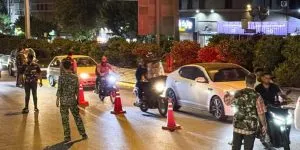
Another sign of the heightened security climate is the proliferation of checkpoints across cities and neighborhoods. Local reports indicate the deployment of police and security forces in high-traffic areas, particularly in ethnically and religiously sensitive regions. According to civil activists, this measure has created an atmosphere of fear and psychological pressure, effectively undermining citizens’ rights to freedom of movement and public tranquility.
Targeted Repression in Khuzestan: Widespread Arrests in Ahvaz and Surrounding Areas
Khuzestan province has been a particular focus of security institutions. According to Ahvaz’s prosecutor, Amir Khalafian, over the past few days, 23 individuals have been issued security indictments, charged with offenses such as “propaganda against the state” and “collaboration with a hostile government.”
In the recent wave of arrests, dozens of citizens in Ahvaz, Andimeshk, Izeh, Shush, Lali, Masjed Soleyman, Omidiyeh, Mahshahr, and Ramshir have been detained. Reports indicate that a significant portion of those arrested are social media activists who had previously been summoned and interrogated by security institutions.
In a move that has heightened concerns, Nabi Mousavi-Fard, the Friday Prayer Leader of Ahvaz, has called for field trials for the detainees—a proposal that starkly contradicts fair trial standards.
Law in Service of Repression
The recent actions of security and judicial institutions following the end of military tensions reflect a systematic effort to intensify internal control and suppress any form of social discontent. Widespread arrests, revisions to the espionage law, increased checkpoints, and pressure on social media users are all interpreted as measures to create a police state and repressive atmosphere.
Follow Iran Human Rights Society on social networks:
Telegram /Twitter /Instagram / YouTube / Facebook
Join Iran Human Rights Society on Twitter




Discussion about this post