
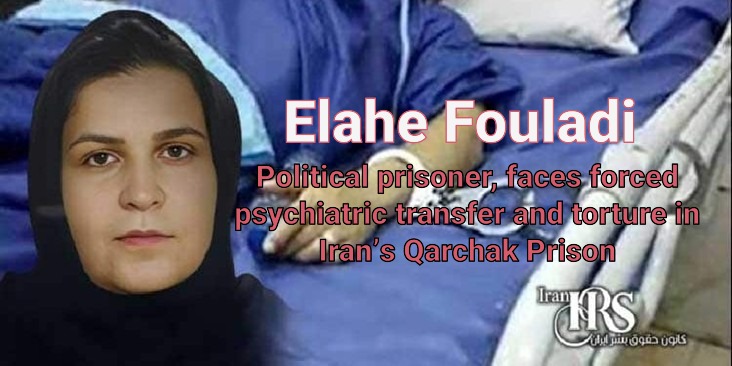
Elahe Fouladi, political prisoner, faces forced psychiatric transfer and torture in Iran’s Qarchak Prison, violating human rights. UN standards demand action.
Iran Human Rights Society, Saturday, August 30, 2025)** –Elahe Fouladi, a 47-year-old political prisoner in Iran’s Qarchak Prison, endures a new plot for forced transfer to a psychiatric hospital. Denied medical care for her heart condition, she faces psychological torture. On August 30, 2025, the Iran Human Rights Society reported this alarming escalation, exposing systemic human rights violations. This article details Fouladi’s ordeal, the regime’s tactics, and the urgent need for global action.
Forced Psychiatric Transfer as Torture
Qarchak Prison security forces recently transferred Elahe Fouladi to a hospital in handcuffs and shackles, ordering her compulsory admission to a psychiatric facility. This act aims to break her spirit and resistance. Human rights activists call this “white torture,” noting that such transfers often involve unidentified medications, causing severe harm. Fouladi’s heart condition worsens under these pressures, yet authorities deny her proper treatment, intensifying her suffering.
This tactic targets political prisoners to undermine their mental health. Activists warn that forced psychiatric transfers inflict irreparable damage, violating international human rights standards and signaling a cruel escalation of state repression.
Arrest and Unfair Conviction

Elahe Fouladi, born in 1978 in Khalkhal, is a mother and former university student. On January 23, 2020, authorities arrested her and her husband, Sattar Babaei, at the airport, transferring them to Evin Prison. She faced intense pressure and threats during interrogations. Released on bail in August 2020, Fouladi later received an 8-year sentence from Tehran’s Revolutionary Court for “propaganda against the system” and “assembly and collusion” tied to alleged Mujahedin-e Khalq connections.
Her family and lawyer protested the baseless charges and lack of fair trial standards. The court’s reliance on security reports without evidence highlights Iran’s flawed judicial system targeting dissidents.
Torture and Unknown Drugs
During her initial detention in Khalkhal, Fouladi endured illegal methods, including injections of unidentified substances by intelligence agents. The threat of psychiatric transfer now revives this trauma, raising fears for her safety. Such tactics aim to destabilize and silence dissent through health deterioration. Activists condemn these actions as deliberate state violence, part of a pattern against political prisoners.The use of unknown drugs underscores Iran’s disregard for prisoners’ well-being. Fouladi’s case reflects a broader strategy to suppress opposition through fear and harm.
Harsh Conditions in Qarchak Prison
Qarchak Prison in Varamin, notorious for its inhumane conditions, lacks basic medical and hygiene services. Fouladi, needing regular care for her heart condition, faces neglect that aggravates her health. Authorities not only deny treatment but also impose psychological pressures through the planned psychiatric transfer. These conditions violate prisoners’ rights to health and dignity.
Reports confirm Qarchak’s overcrowding and poor sanitation endanger inmates. For political prisoners like Fouladi, medical neglect serves as a punitive tool, amplifying the regime’s cruelty.
Activists Condemn “White Torture”
Human rights activists label forced psychiatric transfers as “white torture,” targeting mental health to suppress dissent. In Fouladi’s case, this tactic mirrors pressures on other female political prisoners. International organizations protest these methods as organized state violence. The Iran Human Rights Society demands action to halt these abuses and protect prisoners like Fouladi.
Global condemnation highlights Iran’s use of medical tools for suppression. Activists urge intervention to ensure Fouladi receives proper care and freedom from torture.
Human Rights Violations in Fouladi’s Case
Fouladi’s treatment reveals systemic violations:
- Right to Life and Security: Article 3 of the Universal Declaration of Human Rights protects life. Denying medical care endangers Fouladi’s life.
- Prohibition of Torture: Article 5 bans torture. Forced psychiatric transfer and shackling constitute cruel treatment.
- Prohibition of Arbitrary Detention: Article 9 prohibits unlawful detention. Fouladi’s arrest and conviction lack fair process.
- Right to a Fair Trial: Article 10 of the International Covenant on Civil and Political Rights ensures fair trials. The Revolutionary Court’s baseless ruling violates this right.
- Right to Health: Article 12 of the International Covenant on Economic, Social and Cultural Rights mandates health access. Denying treatment breaches this standard.
These violations expose Iran’s disregard for international human rights obligations, using judicial and medical systems to oppress dissidents.
Pattern of Suppressing Female Prisoners
Fouladi’s case reflects a broader strategy against female political prisoners. The regime uses psychiatric transfers and medical neglect to silence opposition, especially amid protests. Similar tactics have targeted others, drawing global criticism. This pattern shows Iran’s reliance on fear and torture to maintain control, despite international outcry.
The use of medical tools as suppression weapons marks a new level of cruelty. Fouladi’s struggle symbolizes the plight of political prisoners facing state violence.
Urgent Global Response Needed
Elahe Fouladi’s case demands immediate international action. The Iran Human Rights Society urges governments to pressure Iran to stop forced psychiatric transfers and provide medical care. Her ordeal violates fundamental rights, threatening her life. Global silence risks enabling further abuses against political prisoners.
Human rights groups call for sanctions and diplomacy to hold Iran accountable. Fouladi’s case underscores the urgent need to address Iran’s human rights crisis.
See also the below articles:
Follow Iran Human Rights Society on social networks:
Telegram /Twitter /Instagram / YouTube / Facebook
Join Iran Human Rights Society on Twitter







Discussion about this post