
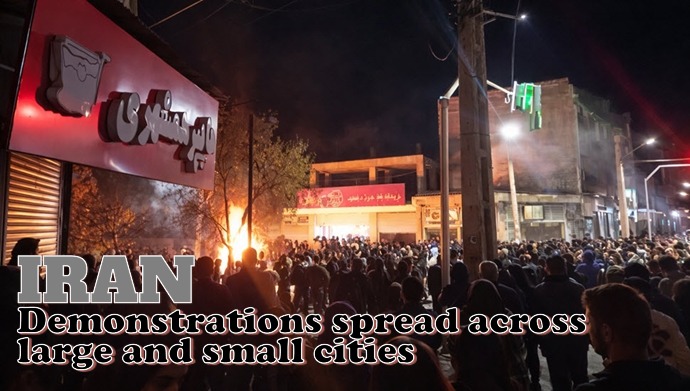
Iran protests January 2026: Nationwide demonstrations spread from Malekshahi and Abdanan to Tehran, Mashhad and Shahrekord. Merchants strike, security forces retreat in some areas.
Iran Human Rights Society, Tuesday, January 6, 2026 – Nationwide protests in Iran entered a new phase on Tuesday, January 6, 2026, simultaneously encompassing several large and small cities across the country. Field reports from Tehran, Ilam, Mashhad, Shahrekord, and cities in Ilam Province indicate that the scope of the protests has extended beyond markets and economic centers into streets and neighborhoods. The intensity of clashes, the extensive presence of security forces, and the significant participation of people have been prominent features of today’s protests.

Tehran’s Grand Bazaar once again became one of the main centers of protests on January 6, 2026. In the areas of 15 Khordad, the Grand Bazaar, Molavi, and busy shopping centers, large crowds of merchants and citizens gathered. Reports indicate that riot police forces used tear gas in most shopping centers, including the Champs-Élysées Passage, to prevent protesters from moving toward the parliament.
Hand-to-hand clashes between merchants, people, and security forces intensified, creating a highly tense atmosphere in the bazaar. At the same time, merchants in the Molavi Bazaar pulled down their shutters and went on strike, emphasizing the continuation of their protests. Many merchants stated that economic pressure, unprecedented price increases, and livelihood instability have brought them to a point where silence is no longer possible.
Security Atmosphere in Central Tehran
In Ferdowsi Square and Valiasr Square in Tehran, field reports speak of the extensive deployment of riot police vehicles and motorcycles, as well as plainclothes forces. These forces have created a highly securitized environment in these areas through constant patrolling. Eyewitnesses report an atmosphere of fear and concern among citizens, along with restrictions on movement.
In the Abu Saeed intersection, protest gatherings formed with slogans such as “Death to the Dictator” and “This year is the year of the home; Seyed Ali will be overthrown.” Despite the presence of repressive forces, the protesters emphasized the continuation of the protests.
Ilam Province: Security Forces Retreat in Some Cities
Protests in Ilam Province took an especially bold form. In Ilam city, demonstrators set fire to a police vehicle. Anti-riot guards fled the scene after the attack. Security forces opened fire on crowds in several districts. These actions increased public anger significantly.
Abdanan witnessed one of the most striking developments. People filled the streets in massive numbers. Local sources reported that almost no one stayed indoors. Security forces retreated to the roof of the police station. Some officers even waved hands when protesters chanted support.
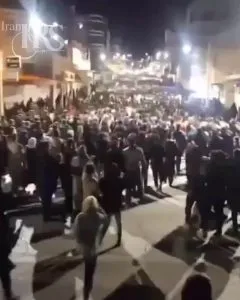
Malekshahi; Public Anger Following the Death of Protesters
The city of Malekshahi has also witnessed a sharp escalation of protests. Following the deaths of several citizens — referred to as the “champions of the city” — a wave of anger swept across the entire city. Reports indicate heavy clashes between people and riot police forces, ultimately forcing security forces to retreat.
Local witnesses say that at times, the city of Malekshahi was completely cleared of the presence of IRGC and Basij forces, allowing the protests to continue in an unprecedented manner. These developments demonstrate the high level of public discontent in various regions of the country.
Mashhad; Connection Between People’s and Merchants’ Protests
In Mashhad, protests were reported simultaneously in several parts of the city. On the old Mashhad road, protesters chanted “Iranians die, they do not accept humiliation.” Protests by people and merchants also began on 17 Shahrivar Street and faced attacks by repressive forces along with tear gas.
The presence of merchants alongside the people has once again highlighted the connection between economic protests and social demands. Many protesters cited high prices and livelihood pressure as the main reason for their presence in the streets.
Shahrekord; Symbol of Civil Resistance
In Shahrekord, the image of a young girl standing alone in front of a water cannon vehicle used by repressive forces gained widespread attention. This scene became a symbol of civil resistance and the courage of the protesters, sparking numerous reactions on social media.
Human Rights Violations During the Protests
Numerous reports from various cities show that security forces have violated the fundamental rights of protesters through the use of violence.
- Violation of Article 19 of the International Covenant on Civil and Political Rights (freedom of expression): The firing of tear gas and violent treatment of citizens chanting protest slogans constitute a restriction on freedom of expression.
- Violation of Article 21 of the International Covenant on Civil and Political Rights (right to peaceful assembly): Attacks on gatherings of merchants and people in Tehran, Mashhad, and Ilam demonstrate a clear violation of the right to assembly.
- Violation of fundamental principles for the protection of civilians: Firing at defenseless people and creating an atmosphere of terror in residential areas pose a serious threat to citizens’ physical security.
The protests on January 6, 2026, showed that the wave of social and economic discontent continues to expand. From Tehran’s bazaar to small towns, the people’s presence in the streets indicates that the protests have not only not subsided but have entered a new and more widespread phase.
See also the below articles:
- UN Secretary-General Expresses Concern Over Protester Deaths in Iran Nationwide Protests
- EU expresses deep concern over suppression of nationwide protests and killing of at least 19 protesters
Follow Iran Human Rights Society on social networks:
Telegram /Twitter /Instagram / YouTube / Facebook
Join Iran Human Rights Society on Twitter








Discussion about this post