
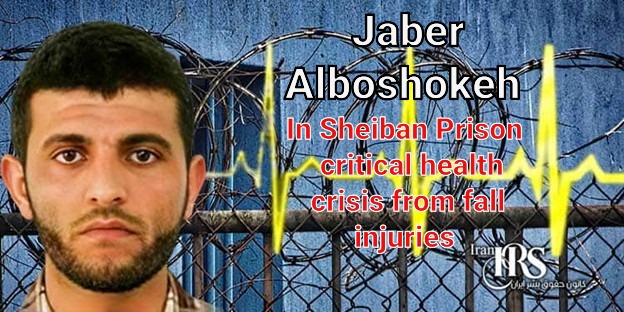
Jaber Alboshokeh in Sheiban Prison faces critical health crisis from fall injuries and untreated pterygium eye disease.
Iran Human Rights Society, Monday, September 15, 2025 – Jaber Alboshokeh Sheiban Prison detention highlights severe health risks. He suffers from long-term eye disease pterygium. Doctors warn that lack of treatment threatens his vision. Recently, he fell badly. This incident injured his lip and eyebrow deeply. Infections spread due to poor medical access. Prison officials refuse hospital transfer. Therefore, his condition worsens dangerously. Iran Human Rights Society reports on September 16, 2025 detail this crisis. Jaber endures 15 years without leave. Harsh conditions harm his body and mind daily. Relatives call denial of care a form of gradual execution. This tactic targets political prisoners often. Furthermore, it raises alarms about his survival.
Jaber Alboshokeh’s Pre-Existing Health Issues in Sheiban Prison
Jaber Alboshokeh battles pterygium for years. This eye condition demands urgent care. Doctors stress that delays risk blindness. However, authorities ignore these warnings. Judicial and security forces fail to act. Therefore, his vision hangs in peril. In addition, prison life adds daily strain. He lacks proper facilities. Relatives note his physical and mental health decline steadily. Such neglect pushes him closer to catastrophe.
Recent Fall and Infection Risks for Jaber Alboshokeh
Jaber Alboshokeh suffered a severe fall recently. Injuries struck his lip and eyebrow hard. Wounds now infect badly. Sheiban Prison offers no medical help. Officials block hospital visits. Therefore, his state turns critical. This event compounds his eye problems. Experts view it as deliberate harm. Furthermore, it exemplifies broader prisoner mistreatment.
Roots of Jaber Alboshokeh’s Case in Cultural Activism
Security forces arrested Jaber Alboshokeh in March 2011. He joined several Al-Hiwar cultural group members. This group provided free education to deprived students. It hosted Arabic poetry and story sessions. Members strengthened Arab cultural identity in Khuzestan. However, authorities accused them of acting against national security. They also charged enmity against God. Sentences came heavy from the start. Jaber and others faced death initially. In February 2014, Hadi Rashedi and Hashem Shaabani died by execution. This sparked domestic and international outrage. That year, courts changed Jaber Alboshokeh’s and Mohammad Ali Amouri Nejad’s sentences to life. Yet, conditions stay inhumane. He endures without relief.
Harsh Realities of Sheiban Prison for Jaber Alboshokeh
Sheiban Prison in Ahvaz holds Jaber Alboshokeh. It ranks among Iran’s worst facilities. Overcrowding plagues the place. Power outages hit often. Medical and hygiene lacks severely. Guards treat inmates violently. Therefore, it becomes hell for political prisoners. Jaber faces repeated health issues over years. Officials deny treatment routinely. Grueling conditions threaten his life constantly. Furthermore, risks loom imminent at any time.
Broader Suppression in Khuzestan Beyond Jaber Alboshokeh
Jaber Alboshokeh’s plight mirrors wider Khuzestan oppression. Arab people endure structural discrimination. Economic deprivation strikes hard. Security crackdowns persist for years. Civil, cultural, or social activities draw harsh labels. Authorities tag them as enmity against God or acting against security. Mass arrests follow. Bulk sentences issue freely. Executions and exiles target Arab activists. This pattern spans decades. Therefore, Jaber Alboshokeh’s crisis fits a systematic picture. It reveals ongoing suppression in the province.
Human Rights Violations in Jaber Alboshokeh Sheiban Prison Case
Jaber Alboshokeh’s situation shows blatant human rights breaches. Multiple layers emerge clearly. First, Article 5 of the Universal Declaration of Human Rights bans torture and inhuman treatment. Prolonged denial of care leaves him critical. It amounts to white torture. Second, Article 9 prohibits arbitrary arrest and exile. His capture lacked legal basis. It stemmed solely from cultural work. Third, Article 19 protects freedom of expression and cultural activity. Authorities criminalized his educational efforts. Associates faced severe penalties. Fourth, Article 25 ensures medical services and welfare. Despite grave illnesses, he gets no basic care. Today, health crises define Jaber Alboshokeh more than ever. After 15 years without leave, pressures mount heavily. A human catastrophe looms possible at any moment. Therefore, urgent action demands attention to prevent disaster.
See also the below articles:
- 90-Day Uncertainty for Farbed Hassanvand; 22-Year-Old Political Prisoner with Prosthetic Leg in Masjed Soleyman Prison
- Security Forces Fire on Protesters at Qalqala Gold Mine in Saqqez
Follow Iran Human Rights Society on social networks:
Telegram /Twitter /Instagram / YouTube / Facebook
Join Iran Human Rights Society on Twitter


Discussion about this post