
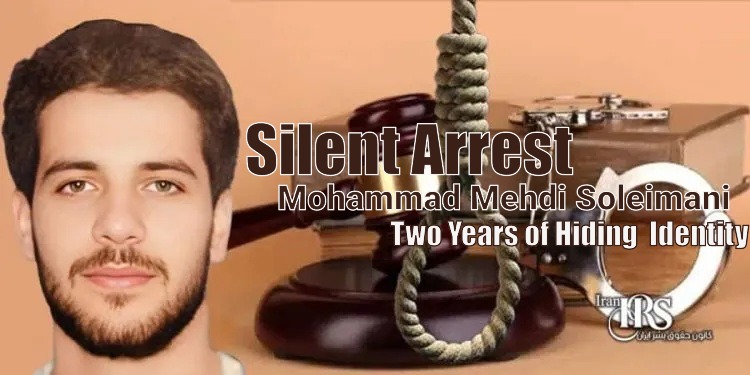
Mohammad Mehdi Soleimani faces execution after 2022 protests in Iran. Explore ambiguities, family threats, and fair trial violations in this urgent human rights case.
Iran Human Rights Society, Tuesday, November 18, 2025 – Mohammad Mehdi Soleimani stares down a death sentence. Authorities issued it quietly amid the 2022 Iran protests. This young Mashhad resident, born in the 2000s, endures media blackout and no lawyer access. Security forces pressure his family into silence. The case reeks of coercion and secrecy. Human rights groups raise alarms. They highlight torture risks and unfair trials. Dive deeper into this troubling story. Learn how it echoes Iran’s protest crackdowns. Act now to spotlight Mohammad Mehdi Soleimani’s plight.
Issuance of Death Sentence: A Shadow Over Mohammad Mehdi Soleimani’s Life
Iran Human Rights Society reports this Tuesday, November 18, 2025. They expose the death ruling for Mohammad Mehdi Soleimani. He joined the 2022 nationwide protests. Yet, his case drowns in ambiguities. Security pressures crush his family. Judicial transparency vanishes. This pattern repeats in protester trials. Judges fabricate charges. They extract forced confessions. Families face dire threats.

Mohammad Mehdi Soleimani hails from Mashhad. Born in the 2000s, he now confronts qisas—retaliatory execution. The court added two and a half years in prison. Plus, 74 lashes for alleged incendiary materials. Judge Mohammad Shoja-Pour-Fadaki presided over Branch 5 of Razavi Khorasan’s Criminal Court One. However, details stay murky. No one knows his exact age. The family stays gagged.
Silent Arrest: Two Years of Hiding Mohammad Mehdi Soleimani’s Identity
The nightmare began on September 21, 2022. Protests erupted in Mashhad’s Abkooh neighborhood. Security force Rasoul Dost-Mohammadi died that day. Just 48 hours later, the governor boasted. He claimed captors nabbed the “assailant.” Yet, no name surfaced. No photo appeared. Details evaporated.
This veil held for nearly two years. Then, on November 18, 2024, Khorasan newspaper broke through. Their headline screamed: “Killer of Rasoul Dost-Mohammadi Sentenced to Execution.” For the first time, “M.M. Soleimani” flashed. Reporters later pinned it to Mohammad Mehdi Soleimani.
Therefore, the delay fueled suspicions. Why hide the suspect? Authorities built a narrative in shadows. Protesters like Mohammad Mehdi Soleimani vanish into this void. Media blackouts protect the regime’s script.
Judicial Black Hole: No Lawyer, No Family, Endless Ambiguities for Mohammad Mehdi Soleimani

Clarity eludes Mohammad Mehdi Soleimani’s trial. Did he ever meet an independent lawyer? Interrogators and courts offer no answers. Officials withhold trial logs. They skip charge proofs. Evidence? Absent.
His family cowers under security boot. Agents ban comments. They forbid photos. Even his precise age stays secret. Local whispers reveal the drill. “Media noise worsens the case,” warn the threats. This script runs in every protester saga lately.
Moreover, these walls block justice. Families twist in fear. They can’t rally support. Courts steamroll ahead unchecked. Mohammad Mehdi Soleimani pays the price. His voice? Muffled forever. Such opacity invites errors—or worse, setups.
Prison Whispers: A Knife Found, Not a Murder—Mohammad Mehdi Soleimani’s Claim
Fellow inmates spill secrets about Mohammad Mehdi Soleimani. One recounts his arrest tale. “I found a bloody knife on the street,” he insisted. That snag led to cuffs. Officials ignore this line. No word on knife forensics. Does it tie to the scene? Medical reports? Silent.
These scraps hint at frame-ups. Pressures mount in Iran’s cells. Confessions twist under duress. Torture lurks. Threats dangle like swords. Mohammad Mehdi Soleimani’s words ring true to patterns. However, without probes, doubts fester. His life hangs on unproven yarns.
Torture’s Grip: Forced Confessions in Iran’s Protest Crackdowns
Prisons under Iran’s regime brim with horror tales. Protesters break under fists and mind games. Physical beatings scar bodies. Psychological barrages shatter wills. Solitary cells drag on endlessly. Family arrests loom as leverage.
Interrogators bark ultimatums. “Cooperate, or we grab your kin.” “Deny us, face the noose.” Releases later confirm it. Survivors recount the hell. Confessions? Tainted fruits of pain. Mohammad Mehdi Soleimani likely swam in this tide. Therefore, his “admission” crumbles under scrutiny. Fair trials demand clean proofs. Iran delivers dirt.
Family Terror: Threats Fuel Secret Executions Like Mohammad Mehdi Soleimani’s
Fear chains families in these cases. Convicted protesters’ kin hear the same refrain. “Go public? Your child’s doom deepens.” Silence becomes survival.
This cycle breeds darkness. Cases slink unseen. No oversight pierces the gloom. Defenses wither. Executions strike at dawn—unannounced. Recall Mohammad Mehdi Karami. Majidreza Rahnavard fell too. Mohsen Shekari followed. All vanished in hush.
Life on the Line: Mohammad Mehdi Soleimani’s Case Signals Deeper Dangers
A youth unnamed in years battles execution. Media hushes. Lawyers? Denied. Family? Bullied. Confessions? Likely ripped from torment. Past hangings haunt the script. This mess spotlights dozens more. Closed courts churn death warrants. No full defenses shine. Oversight? A joke. Mohammad Mehdi Soleimani teeters on the brink. One hidden noose away from oblivion.
Human Rights Breaches: Dissecting Violations in Mohammad Mehdi Soleimani’s Ordeal
- Violation of Fair Trial Principles- Article 9 and 10 of the Universal Declaration of Human Rights (UDHR) – Article 9 and 14 of the International Covenant on Civil and Political Rights (ICCPR)
The secret arrest of Mohammad Mehdi Soleimani, lack of access to an independent lawyer, pressure on the family for silence, and lack of transparency in the trial process indicate a serious violation of the right to a fair trial, the right to a public hearing, and the right to access a lawyer.
- Violation of the Prohibition on Torture and Compulsory Confession-Taking – Article 5 UDHR – Article 7 ICCPR
Numerous reports about confession-taking under psychological and physical torture, prolonged interrogations, and threats to the prisoner and his family indicate that international standards prohibiting torture have been violated, and potential confessions cannot form the basis for a death sentence.
- Violation of the Right to Freedom of Expression and Personal Security of the Prisoner’s Family – Article 19 UDHR – Article 19 ICCPR –
Security officials’ threats to the family that “if you make it media-covered, the situation will worsen” is a clear violation of freedom of expression and creates pressure and intimidation against the accused’s relatives, putting the family’s personal security at risk as well.
- Violation of the Right to Life and Prohibition on Death Sentences in Unfair Processes – Article 3 UDHR – Article 6 ICCPR
Issuing a death sentence in conditions where the judicial process has not been transparent, evidence has not been presented, and there is a likelihood of torture and compulsory confession-taking is a clear violation of the fundamental right to life and is in complete contradiction with international standards regarding the issuance of death sentences.
See also the below articles:
- 95th week of the “No To Execution Tuesdays” campaign in 54 prisons
- Continued Detention of Baha’i Couple Kourosh Ziari and Sholeh Shahidi in Iran
Follow Iran Human Rights Society on social networks:
Telegram /Twitter /Instagram / YouTube / Facebook
Join Iran Human Rights Society on Twitter




Discussion about this post