
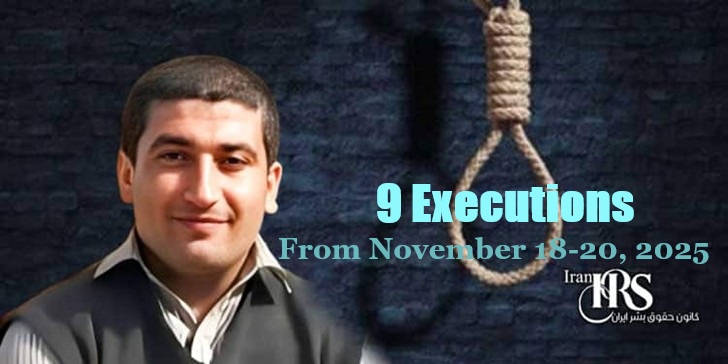
Iran executes 9 prisoners across Kashmar, Mashhad, Kermanshah, Ilam, Behbahan, Kerman, Qazvin, and Isfahan from November 18-20, 2025. Surge signals regime weakness amid societal change.
Iran Human Rights Society, Thursday, November 20, 2025, The execution of 9 prisoners in Iran draws sharp criticism. Authorities hanged these men in prisons across Kashmar, Mashhad, Kermanshah, Ilam, Behbahan, Kerman, Qazvin, and Isfahan. This wave hit from November 18 to 20, 2025. Human rights groups view the rise in death penalties as a clear sign of power weakness. Society advances toward deep reforms.
Increase in Executions Reveals Power Weakness

Leaders ramp up executions as society shifts. Citizens demand fundamental changes. They refuse to revert to old ways. Power structures falter under this pressure. Therefore, authorities tighten their grip through fear. Officials target inmates swiftly. However, such acts only fuel unrest. Watchdogs worldwide condemn the pattern. Furthermore, it underscores failures in governance.
Details of the 9 Executions from November 18-20, 2025
Guards carried out these executions over three days. Families received scant notice. Reports detail the grim events clearly.
Dawn on Thursday, November 20, 2025, brought Erfan Azadi’s end in Kashmar Prison. Police had charged him with murder earlier. Judges imposed the death sentence without mercy.
Dawn on Wednesday, November 19, 2025, claimed five lives. Nemat Shamloo hanged in Mashhad’s Vakilabad Prison. Peyman Azizi met death in Kermanshah’s Dizelabad Prison. Mohammadreza Hosseini died in Ilam Prison. Fardin Khani suffered in Behbahan Prison. Ali-Asghar Izadkhah (Damani) faced the noose in Kerman Prison.
Dawn on Tuesday, November 18, 2025, took two more in Qazvin and Isfahan. Farshid Jamyari perished in Qazvin Prison. Akbar Faraji died in Isfahan’s Dastgerd Prison. Officials probe the second inmate’s identity there.
Contradiction of Death Sentence with Universal Declaration of Human Rights
Death penalties clash head-on with global norms. Article 3 of the UDHR affirms everyone’s right to life, liberty, and security. Courts deprive this only via fair trials for grave crimes. However, Iran’s rulings often bypass these safeguards.
Conflicts run deep. Life forms a core, unbreakable right. Executions strip it away forever. Judicial mistakes offer no fix after hanging. Moreover, methods like hanging inflict torture and cruel pain. These violate UDHR terms outright. Therefore, such punishments demand scrutiny.
Violation of Human Rights Commitments on Death Penalty
Iran pledged to the ICCPR yet breaks Article 6 repeatedly. This treaty allows executions solely for dire crimes with robust fair trial protections. Courts require full independence and clarity. However, many trials lack transparency. Defendants endure legal barriers. Judges show bias often. Therefore, verdicts defy core human rights. Groups press for international intervention. Reforms could halt the cycle now.
See also the below articles:
- Suspicious Death of Amir Nisi: Sunni Prisoner Denied Care in Sheiban Prison, Ahvaz
- UN Third Committee Adopts Resolution on Iran’s Human Rights Crisis
Follow Iran Human Rights Society on social networks:
Telegram /Twitter /Instagram / YouTube / Facebook
Join Iran Human Rights Society on Twitter






Discussion about this post