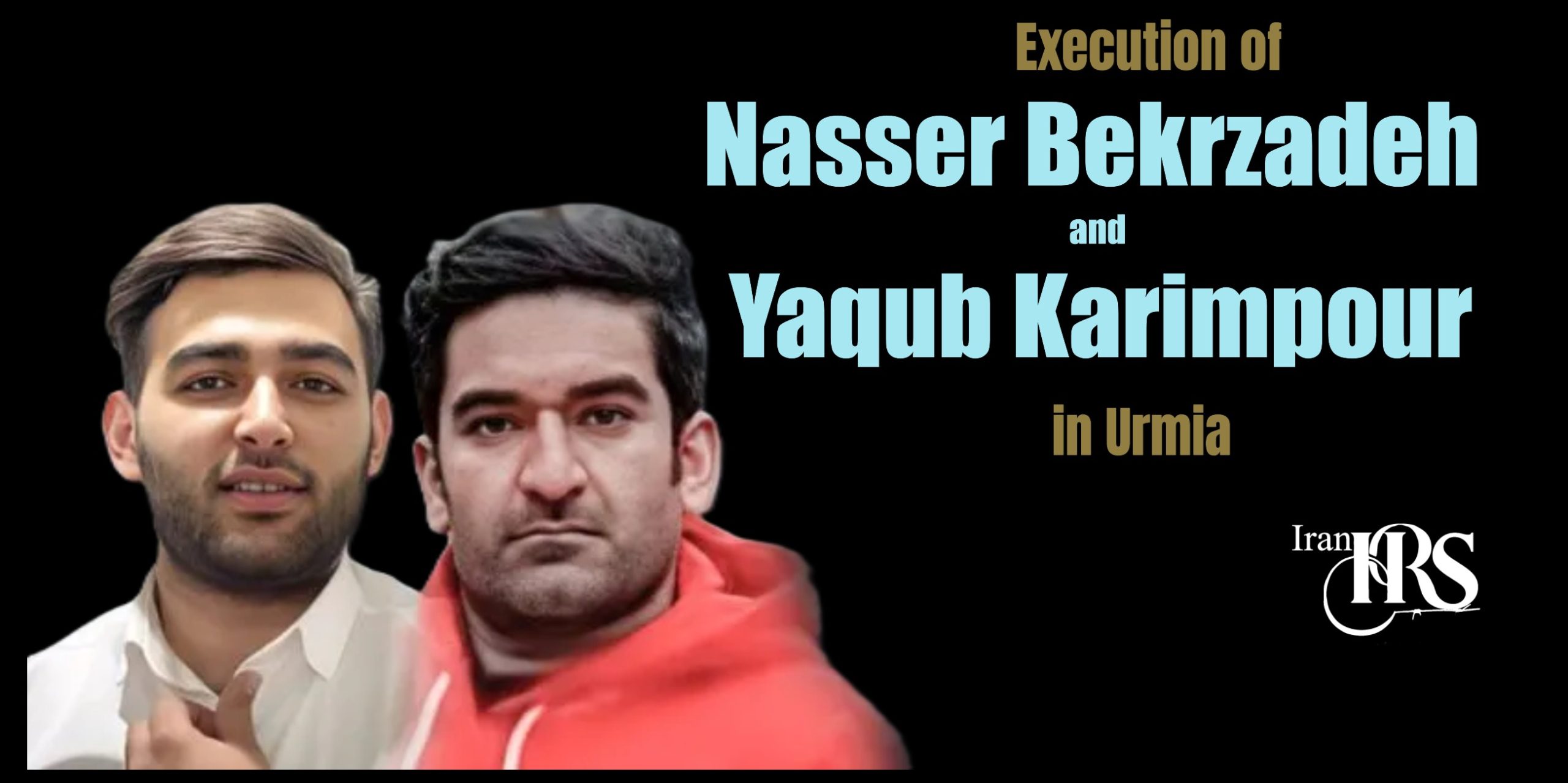
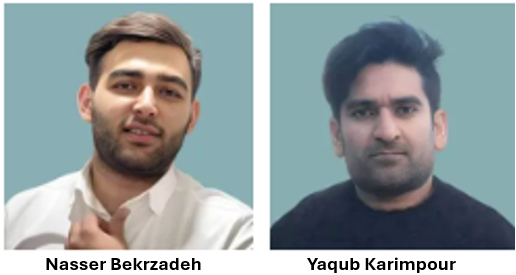
Nasser Bekrzadeh and Yaqub Karimpour were executed at dawn on May 2, 2026 in Urmia; two cases where reports indicate torture, forced confessions, deprivation of a lawyer, and serious flaws in their trial proceedings.
Iran Human Rights Society, Saturday May 2, 2026 – At dawn today, the execution sentence of Nasser Bekrzadeh and Yaqub Karimpour was carried out in Urmia Central Prison. The execution of these two prisoners took place while published reports show that their cases were formed based on confessions obtained under torture, deprivation of access to a lawyer, and judicial processes lacking fair trial standards.
Execution of Nasser Bekrzadeh and Yaqub Karimpour in Urmia
According to published reports, Nasser Bekrzadeh and Yaqub Karimpour were executed at dawn on Saturday May 2, 2026 in Urmia.
Nasser Bekrzadeh had been sentenced to death by Branch Two of the Urmia Revolutionary Court presided over by Judge Shahini on the charge of “espionage for Israel.”
Yaqub Karimpour was also sentenced to death in the primary court on the charge of “corruption on earth through espionage in favor of Israel.”
How Did Yaqub Karimpour’s Case Lead to Execution?
Yaqub Karimpour was arrested by security forces in Miandoab in June 2025 and was subsequently transferred to the Urmia Intelligence Administration detention center for interrogation.
According to informed sources, he was subjected to severe security pressures for about two months in the detention center. These pressures were applied with the aim of obtaining forced confessions about cooperation with Israel. During this period, Yaqub Karimpour was deprived of access to a lawyer and no family visits were arranged for him.
Torture and Deprivation of Medical Treatment in Yaqub Karimpour’s Case
Reports indicate that Yaqub Karimpour was subjected to severe physical and psychological torture during his detention. His interrogators accused him of cooperation with Mossad and sending intelligence data and applied extensive pressures on him to establish these accusations.
It has also been reported that his wife was also summoned and arrested and placed under pressure. Sources close to the case have stated that Yaqub Karimpour had been deprived of neurological and psychiatric medications and this deprivation played a significant role in forcing him to make forced confessions.
15-Minute Trial and Non-Transparent Proceedings for Yaqub Karimpour
The hearing for Yaqub Karimpour’s case was held via video conference. Sources close to the case have stated that the proceedings for his case were extremely rushed and the possibility of effective defense for him was effectively denied. Lack of access to a lawyer, holding the court non-in-person, and restrictions on legal defense are among the issues that have called into question the legitimacy of the process of issuing the death sentence against him.
Nasser Bekrzadeh ; A Case with Two Overturns of the Death Sentence
Nasser Bekrzadeh’s case had faced two overturns of the death sentence in the Supreme Court before the execution of the sentence. The first time, in November 2024, Branch Three of the Urmia Revolutionary Court sentenced him to death, which was overturned in March 2025.
The second time, a similar sentence was issued in September 2025, which was also overturned by the Supreme Court in November 2025. The repeated overturns of the sentences in the highest judicial authority indicate the existence of fundamental flaws in the case.
Torture and Security Pressure in Nasser Bekrzadeh’s Case
Nasser Bekrzadeh was first arrested by IRGC Intelligence forces in July/August 2023 and was released on bail after some time. He was arrested again in December 2023/January 2024 and transferred to the IRGC Intelligence detention center in Urmia.
According to sources close to the family, he was subjected to physical and psychological torture during detention and the interrogators sought to obtain confessions in accordance with the security scenario through pressure and threats. It has also been reported that he faced threats of intensified punishment, deprivation of visits, and pressure on the family.
Execution Based on Forced Confessions and Security Cases
According to published information, the confessions obtained under pressure in both cases were the main basis for issuing the death sentence. Nasser Bekrzadeh had previously announced in a message from prison that all confessions attributed to him were obtained under physical and psychological torture and he rejected the charges against him.
The execution of sentences in such cases has once again highlighted the issue of using forced confessions in security cases leading to death sentences.
Execution in Urmia; Implementation of Death Sentences in the Shadow of Torture and Unfair Proceedings
The execution of Nasser Bekrzadeh and Yaqub Karimpour was carried out in conditions where both cases were accompanied by serious accusations regarding torture, forced confessions, pressure on the family, and deprivation of fair trial. The implementation of death sentences in such cases has intensified concerns about the use of the death penalty in non-transparent judicial processes.
Violated Articles:
- Violation of the Right to Life – Article 3 of the Universal Declaration of Human Rights:Everyone has the right to life, liberty and security of person.
- Violation of the Prohibition of Torture and Forced Confession – Article 5 of the Universal Declaration of Human Rights:Obtaining confession under torture for issuing a death sentence is a fundamental violation of human rights.
- Violation of the Right to Fair Trial – Article 10 of the Universal Declaration of Human Rights:Deprivation of a lawyer and non-transparent trial violates fair trial.
- Violation of the Right to Effective Defense – Article 11 of the Universal Declaration of Human Rights:Every accused person has the right to enjoy all the necessary guarantees for his defense.
See also the below articles:
- Iran Sentences Detainee Mohammad Reza Tabari to Death Following January Protests
- Urmia Prison Transfers Spark Fears of Secret Executions in Iran
Follow Iran Human Rights Society on social networks:
Telegram /Twitter /Instagram / YouTube / Facebook
Join Iran Human Rights Society on Twitter