
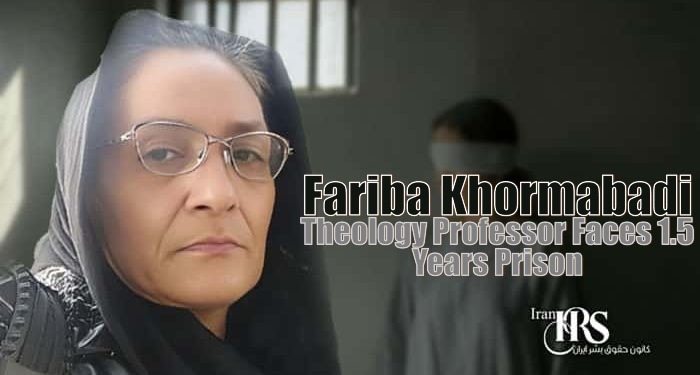
Theology professor Fariba Khormabadi sentenced to 1.5 years in prison for propaganda against regime. Arrested without warrant, denied fair trial—urgent human rights violation calls for her release.
Iran Human Rights Society, Friday, October 24, 2025 – Fariba Khormabadi conviction shocks human rights advocates. Security forces arrested this theology professor in August 2025 without a warrant. They seized her laptop and phone during the raid at her Karaj home. Now, the Revolutionary Court of Karaj hands her 1.5 years in prison. Charges? “Propaganda against the regime” and “membership in hostile networks.” Her case highlights Iran’s crackdown on free thought. Furthermore, it violates key international rights. Read on to uncover the details of this alarming Fariba Khormabadi conviction.
Arrest Without Judicial Warrant and Confiscation of Belongings
Fariba Khormabadi lives in Karaj but hails from Khorramabad. In August 2025, security agents stormed her private home. They showed no arrest warrant. Agents grabbed her personal items right away. This included her laptop and mobile phone. Then, they rushed her straight to Fardis Prison in Karaj. Such actions ignore basic legal protections. However, they fuel fears of arbitrary detentions in Iran.
Harsh Prison Conditions Worsen Her Health
Ms. Khormabadi already battles heart issues. She suffered a heart attack before her arrest. Doctors treated her for it previously. Yet, in Fardis Prison, guards gave her the wrong medication. This triggered nervous tics and repeated seizures. Her condition turned critical fast. Sources near her family report deep worry. Therefore, they demand better care. Prison life adds unbearable stress to her fragile health.
Transfer to Hospital: Humiliation Over Help
When her health hit rock bottom, agents finally acted. They planned a hospital transfer. But first, they handcuffed and shackled her. This rough handling worsened her pain. Ms. Khormabadi protested the degrading treatment. She refused to go. Her stand shows the toll of inhumane prison tactics. Furthermore, it spotlights the need for dignified medical access.
Her Background and Family Struggles
Fariba Khormabadi shines as a theology professor and religious researcher. She raises one child alone. In recent years, she dives into scientific and social work. She boasts no prior criminal record. Friends and family voice sharp concerns now. They fear for her body and mind in detention. Her active life contrasts sharply with this sudden fall. Yet, it proves authorities target thinkers like her.
Human Rights Violations in Her Case
International law condemns Fariba Khormabadi’s treatment.
- Article 9 of the Universal Declaration of Human Rights: Arbitrary arrest and indefinite detention.
- Article 10 of the Universal Declaration of Human Rights: Deprivation of fair trial and access to a lawyer.
- Article 5 of the International Covenant on Civil and Political Rights: Inhumane treatment due to unsuitable physical conditions and lack of treatment.
- Article 19 of the Universal Declaration of Human Rights: Restricting freedom of thought and expression due to scientific and cultural activities.
Urgent Calls for Release
Human rights groups rally for Fariba Khormabadi. They spotlight her dire physical and mental state. Organizations push for her immediate, unconditional freedom. Her ongoing lockup exemplifies Iran’s war on ideas. It stifles speech and culture systematically. Therefore, activists urge pressure on Tehran. Release her now—end this injustice.
See also the below articles:
- Family of Hamzeh Darvish Expresses Concern After Two Weeks of Solitary Confinement and Cut-Off Contact and Visits
- Rejection of Manoochehr Fallah’s Retrial Request; Political Prisoner on the Verge of Execution
Follow Iran Human Rights Society on social networks:
Telegram /Twitter /Instagram / YouTube / Facebook
Join Iran Human Rights Society on Twitter


Discussion about this post