
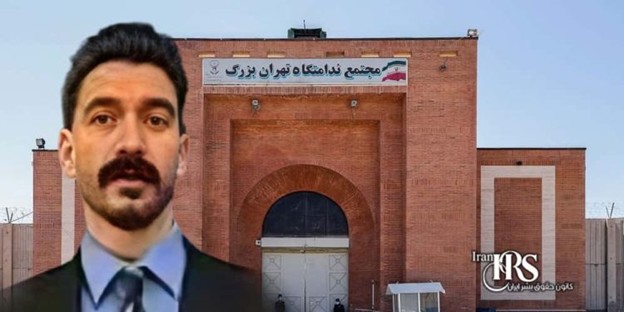
Knife attack on political prisoners Ali Ghanadzadeh and Mahmoud Daraei-Manesh in Fashafuyeh Prison highlights ongoing human rights abuses and systemic violence.
Iran Human Rights Center, Sunday, August 3, 2025 – The recent Fashafuyeh Prison attack on political prisoners Ali Ghanadzadeh and Mahmoud Daraei-Manesh exposes a grim reality. This incident, involving a violent inmate armed with a knife, underscores the systemic failures within Iran’s prison system. Credible testimonies reveal that prison authorities deliberately endanger political prisoners, turning Fashafuyeh into a hub of torture and silent killings.
Violent Assault in Fashafuyeh Prison
On August 3, 2025, Ali Ghanadzadeh, a prominent Gonabadi Dervish, and Mahmoud Daraei-Manesh, arrested during the 2022 protests, faced a brutal Fashafuyeh Prison attack. The assailant, Omid Khandaei, a prisoner with a violent criminal history, stabbed both men, injuring Ghanadzadeh’s hand and waist and Daraei-Manesh’s waist. Other prisoners’ swift intervention prevented a fatal outcome. However, authorities failed to act, raising concerns about their role in enabling such violence.
Echoes of Alireza Shirmohammadali’s Murder

This Fashafuyeh Prison attack mirrors the 2019 murder of Alireza Shirmohammadali, a young political prisoner killed by two dangerous inmates in a similar ward. His mother blamed prison officials for leaving the cell door open, allowing the fatal stabbing. The failure to enforce the “separation of crimes” principle—a global standard ignored in Fashafuyeh—continues to put lives at risk.
Prison Authorities’ Role in Violence
Testimonies from Fashafuyeh reveal a chilling pattern. Prison officials reportedly use violent inmates to suppress political prisoners, offering them privileges like temporary release or access to drugs. This tactic, disguised as internal conflicts, shields authorities from accountability. Consequently, political prisoners face constant threats, living in fear of orchestrated attacks.
Inhumane Conditions in Fashafuyeh
Fashafuyeh Prison, originally built to ease overcrowding, has become a symbol of injustice. Inmates endure horrific conditions: poor sanitation, inedible food, and no medical care. Overcrowding and corruption exacerbate the suffering. For instance, a journalist described the prison’s quarantine as “hell,” with no proper toilets or ventilation. Political prisoners also face torture, solitary confinement, and restricted family contact.
Human Rights Community Demands Action

Human rights activists are sounding the alarm. They demand:
- Transfer of political prisoners to secure wards
- Independent investigation into the Fashafuyeh Prison attack
- Enforcement of crime separation
- Access to medical care and counseling
- An end to using inmates for suppression
These demands aim to address the blatant violations of international human rights standards, including Articles 5, 6, and 10 of the Universal Declaration of Human Rights and International Covenant on Civil and Political Rights.
Violations of International and Local Standards
The Fashafuyeh Prison attack violates key human rights principles. Article 5 prohibits torture and inhuman treatment, yet prisoners face degrading conditions. Article 6 ensures the right to life, which is undermined by violent attacks. Additionally, Article 22 of Iran’s prison regulations mandates crime separation, a rule consistently ignored. These failures highlight a systemic disregard for prisoners’ rights.
Silence Fuels Injustice
Authorities’ silence on the Fashafuyeh Prison attack deepens the crisis. Families live in fear, with no updates on their loved ones’ safety. This inaction erodes trust in Iran’s judicial system. If unchecked, Fashafuyeh’s model of violence and neglect could spread to other prisons, silencing dissidents through fear and indifference.
Political prisoners deserve safety, humane treatment, and respect for their rights. Without immediate action, Fashafuyeh risks becoming a blueprint for state-sanctioned violence, where dissidents are silenced through orchestrated attacks and neglect. The international community must press for accountability to protect vulnerable prisoners.
Follow Iran Human Rights Society on social networks:
Telegram /Twitter /Instagram / YouTube / Facebook
Join Iran Human Rights Society on Twitter




Discussion about this post