
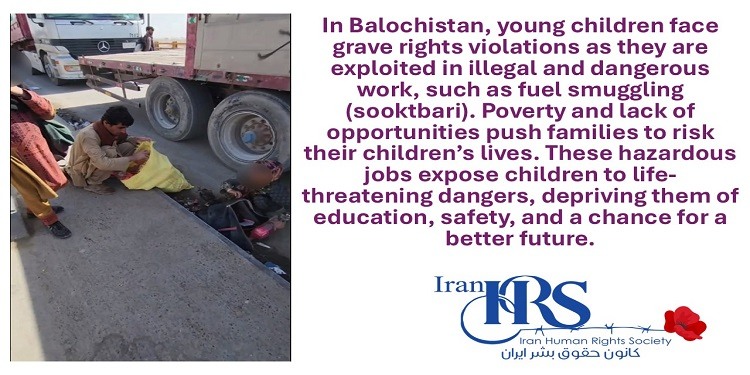
Fuel smuggling by young Baloch girls at the zero-point border in the Milak district of Hirmand
A video recorded and sent from the zero point border in Milak, showing two young Baloch girls under the age of ten engaged in fuel smuggling.
According to Halvash, on Thursday, March 25th, 2025, a video recorded and sent from the zero-point border in Milak, located in the Hirmand district, showing two young Baloch girls under the age of ten engaged in fuel smuggling. The video depicts these young girls filling one-and-a-half-liter soda bottles with gasoline and transporting them to buyers from across the border at the border market.
These children, forced to work instead of attending school, are transferring fuel without any safety equipment or adult supervision. The age of these two girls, along with most children engaging in fuel smuggling at this border, estimated to be less than ten years, and their involvement in such activities presents a shocking image of the deprivation and poverty prevailing in this region.
Sistan and Baluchestan province is considered one of the most deprived areas of Iran, and many border families resort to fuel smuggling for their livelihoods. In such conditions, even young children, including girls, compelled to participate in this dangerous occupation.
The phenomenon of child fuel smuggling has previously led to tragic incidents; in one case, security forces shot and killed two child smugglers while they were transporting gasoline.
This incident highlights the problem of child labor in deprived areas
This incident once again highlights the problem of child labor in deprived areas, especially among young girls in border regions like Hirmand. Economic reasons such as severe household poverty, widespread educational deprivation, and neglect from supportive institutions are key factors driving children to engage in such hazardous work.
In Sistan and Baluchestan, the poverty rate in some rural areas reported to be between 75% and 90%; this chronic poverty has forced many families to send their children to work instead of school. Moreover, the lack of facilities and schools in this province has led to a record rate of school dropouts, with reports indicating that 46% of girls in Sistan and Baluchestan drop out of school due to a lack of educational institutions.
Blatant violation of children’s rights in Iran
The insufficient support from responsible agencies and the absence of social safety nets further exacerbate this situation; despite the Iranian Constitution declaring that education should be free and accessible for all children until the end of secondary school, many children remain deprived of education due to poverty and marginalization.
Child labor in hazardous and difficult jobs like fuel smuggling represents a blatant violation of their fundamental rights; these children are deprived of the right to education and safe living, and their physical health and future are gravely threatened.
Follow Iran Human Rights society on social networks:
Telegram /Twitter /Instagram / YouTube / Facebook
Join Iran Human Rights Society on Twitter





Discussion about this post