
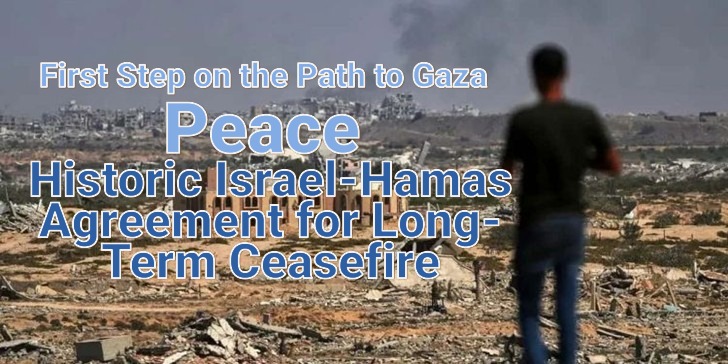
Israel-Hamas agree on Gaza ceasefire first phase: Hostage releases, troop pullbacks, aid influx spark hope for lasting Middle East peace.
Iran Human Rights Society, Thursday, October 9, 2025 – The Gaza ceasefire agreement marks a turning point. Israel and Hamas finalized this historic deal on Thursday. It launches the first phase of a peace plan. The agreement covers ceasefires, hostage releases, and Gaza reconstruction. It ends two years of devastating conflict. Over 67,000 lives were lost. The war reshaped the Middle East. Now, this step fuels the Gaza peace process. Indirect negotiations in Cairo, mediated by Egypt, Qatar, and the United States, made it possible. The U.S. proposed a 20-point framework.
Details of the Gaza Ceasefire Agreement

Donald Trump shared the breakthrough on Truth Social Wednesday evening. “Israel and Hamas signed the first phase of our peace plan,” he announced. “Hostages release soon. Israeli forces withdraw from parts of Gaza.” This step excites millions. It sets the stage for lasting peace.
Qatar’s Foreign Ministry spokesperson detailed the terms. The deal secures a long-term ceasefire. It includes prisoner exchanges. It also ensures humanitarian aid flows into Gaza. Israeli officials confirm the next move. Tel Aviv’s cabinet will approve the agreement soon. Official signing follows immediately.
The Israeli Prime Minister’s Office clarified the process. “Implementation begins after cabinet approval,” they stated. “We expect a vote within hours.” Therefore, momentum builds fast. Hostages return in days. Troops pull back quickly. This Gaza ceasefire agreement meets urgent needs. Both sides see gains. Details unfold rapidly.
Reactions and Public Joy Over Gaza Ceasefire Agreement
The Gaza ceasefire agreement sparks widespread celebration. Israelis and Palestinians unite in joy. Hostage families in Tel Aviv and Haifa embrace tearfully. In Gaza, residents hoist white flags. They welcome the war’s end with open hearts.
The United Nations applauds the deal. Their statement urges commitment. “We welcome this agreement,” it declares. “Both parties must uphold international humanitarian law.” They demand full adherence. Yet, analysts raise concerns. Security guarantees worry them. Disarmament in Gaza proves complex. Effective oversight becomes critical.
Regional Impacts of the Gaza Ceasefire Agreement
Experts call the Gaza ceasefire agreement a game-changer. Moreover, it reshapes Middle East geopolitics. Qatar and Egypt led the mediation. Their influence surges now. Arab nations take charge of the Palestinian crisis. They wield unprecedented authority.
Iran and Lebanon stand sidelined. These countries faced the war’s fallout for years. Now, they lack a direct role. A Middle East Peace Think Tank analyst explains clearly. “If this holds, it redraws the political map,” he says. “Israel secures borders. Palestinians address humanitarian needs. Arab states advance their interests.”
Domestic Shifts Following Gaza Ceasefire Agreement
In Israel, Benjamin Netanyahu’s government faced relentless pressure. Citizens demanded hostages back. They urged an end to the war. Weekly Tel Aviv protests drove urgency. Crowds rallied for peace. Observers credit these demonstrations. They accelerated decisions.
Hamas leaders face their own tests. They accepted bold commitments. They halt attacks. They begin phased disarmament. This shift surprises many. “Hamas moves from combat to politics,” an analyst notes. “It reshapes Gaza’s future.”
Challenges Looming in Gaza Ceasefire Agreement Rollout
The world celebrates the Gaza ceasefire agreement. Yet, doubts linger about its execution. Who monitors the ceasefire? How does disarmament unfold? Preventing renewed violence tops priorities. Egyptian security sources share plans. Joint Arab and UN forces explore on-ground oversight. They aim for tight control.
Gaza’s reconstruction poses another hurdle. Two years of war destroyed infrastructure. Homes lie in rubble. Experts estimate $53 billion needed.
Gaza Ceasefire Agreement Tests Global Diplomacy
The Gaza ceasefire agreement does more than stop fighting. It challenges the world to build lasting Middle East peace. Past attempts collapsed. Mistrust fueled failures. Political divides widened gaps. Now, this deal brings fresh hope.
UN Secretary-General António Guterres speaks out. “The world has a rare chance,” he says. “End this brutal conflict. Show courage. Stop civilian suffering.” Millions await relief. Trump pledges continued engagement. He eyes a broader reset.
Future Outlook for Gaza Peace After Ceasefire Agreement
Full implementation could unlock bigger steps. Talks for a Palestinian state may follow. Israel-Arab normalization gains traction. Analysts see a tough road ahead. “The path remains long,” one warns.
A European diplomat sums it up. “Sustainable peace needs comprehensive talks,” he says. “Address refugees, borders, security.”
Hamas eyes political leverage. Israel secures its borders. Gaza rebuilds stronger. This Gaza ceasefire agreement starts the journey. It builds on shared dreams. No side claims total victory.
See also the below articles:
- Ehsan Faridi Death Sentence Upheld by Iran’s Supreme Court: Urgent Calls for Justice Amid Unfair Trial Fears
- Supreme Court Halts Mohammad Javad Vafaei-Sani’s Death Sentence After Three Confirmations
Follow Iran Human Rights Society on social networks:
Telegram /Twitter /Instagram / YouTube / Facebook
Join Iran Human Rights Society on Twitter








Discussion about this post