Coinciding with the end of the second week of a collective hunger strike at Ghezel Hesar Prison, the transfer of prisoners serving non-death sentences from Unit 2 has continued. This move has heightened concerns over the segregation of death-row inmates, increased pressure on protesters, and official indifference to their physical conditions.
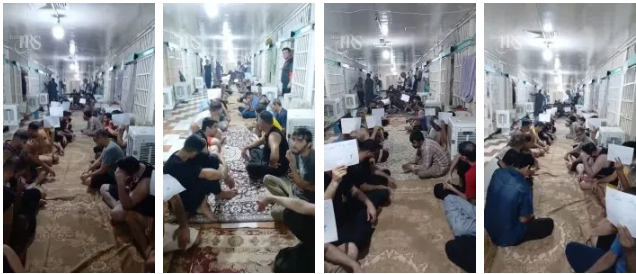
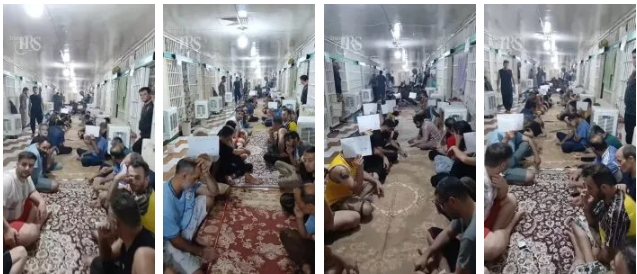
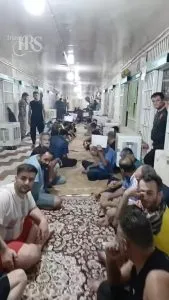
Iran Human Rights Society, Sunday, July 26, 2026 – The collective hunger strike and sit-in by prisoners in Unit 2 of Ghezel Hesar Prison entered its 14th day. Hundreds of death-row inmates protesting the resumption of executions continue to refuse their food rations; meanwhile, prison authorities have proceeded with transferring prisoners serving non-death sentences out of this unit.
According to incoming reports, over the course of about a week, at least 240 prisoners have been moved from Unit 2 to other areas of Ghezel Hesar Prison. Last week, nearly 100 prisoners were moved, and in the latest phase, approximately 140 prisoners serving prison terms were taken out of this unit and transferred to Hall 3 of Unit 1.
Sources close to the families of prisoners say that if this trend continues, only death-row inmates will remain in Unit 2. This situation has generated deep concern regarding the authorities’ objectives in altering the ward’s demographic makeup, as well as the potential for imposing further restrictions and pressure on the hunger strikers.
Transfer of 140 Prisoners from Unit 2 of Ghezel Hesar Prison
An informed source close to the family of one of the prisoners stated that prison officials are transferring inmates convicted of non-capital drug-related offenses from Unit 2 to Hall 3 of Unit 1.
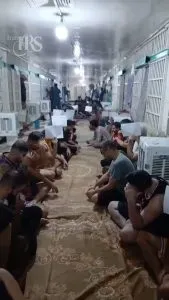
According to this source, nearly 100 prisoners were transferred last week, and in the most recent phase, approximately 140 additional prisoners were moved. Consequently, the total number of relocated prisoners over the past week has reached at least 240.
Thus far, Ghezel Hesar Prison authorities have provided no transparent explanation regarding the reasons for these transfers, the selection criteria, or their final plan for Unit 2. Families of death-row prisoners are concerned that these relocations serve as a prelude to the complete segregation of the hunger strikers and the restriction of their communications with other parts of the prison.
Prisoners and their families emphasize that instead of engaging in dialogue with the protesters and addressing their demands, authorities are altering the ward’s structure and demographic composition. In their view, continuing this trajectory increases the capacity to control, restrict, and crackdown on death-row inmates.
Second Week of Protests by Death-Row Prisoners
The collective hunger strike in Unit 2 began on Monday, July 13, 2026. This protest was triggered following the transfer of six death-row prisoners convicted of drug-related offenses to solitary confinement.
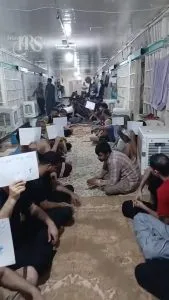
Since then, prisoners have refused food rations and conducted sit-ins inside Unit 2, demanding an immediate end to the execution of death sentences. Reports also indicate that a number of prisoners have sewn their lips together in protest.
The prisoners’ protest is not limited solely to the situation of the six individuals transferred to solitary. A significant portion of the protesters face execution themselves and are demanding a halt to executions pending case reviews and the determination of proposed amendments to anti-narcotics laws.
With the conclusion of the second week of the strike, no reports have emerged regarding official dialogue with prisoner representatives or any concrete response to their grievances.
Deteriorating Physical Condition of Strikers in Ghezel Hesar Prison
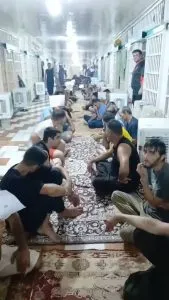
Reports covering the 13th and 14th days of the strike indicate that the physical condition of a large number of prisoners is worsening.
Informed sources report acute weakness, weight loss, low blood pressure, lethargy, dizziness, and a noticeable drop in physical stamina among strikers. Due to sustained fasting, several inmates have largely lost the ability to carry out basic daily functions.
Describing the situation inside the ward, one prisoner noted that despite visible and alarming symptoms among the strikers, no medical team has been dispatched to Unit 2 to perform a collective health assessment.
A prolonged hunger strike without systematic medical monitoring significantly elevates the risk of severe and irreversible health complications. Families assert that prison authorities must regularly monitor the prisoners’ health and provide necessary medical care, regardless of the protest’s nature.
Infirmary’s Indifference to Protesting Inmates
Protesting prisoners state that Ghezel Hesar Prison management and its medical facility have taken no effective measures to care for the strikers’ health.
According to them, not only has no medical team visited Unit 2 to examine the inmates, but no officials have entered the ward to negotiate, hear demands, or review conditions.
Prisoners warn that any further delay in medical attention places the health and lives of strikers in immediate danger. They hold prison management, the medical unit, and relevant judicial authorities fully responsible for any potential consequences stemming from medical neglect.
Unfulfilled Promises from Last October
The current strike follows a similar protest by Unit 2 prisoners in October of last year. At that time, after seven days of a collective hunger strike, prisoners met with representatives from the judiciary, the Prisons Organization, and Ghezel Hesar management.
Based on reports published regarding those discussions, prisoners were promised that execution procedures would be halted for at least six months, cases would be re-evaluated, and legislative reforms to anti-narcotics laws would be pursued.
Prisoners ended their strike based on those assurances while stressing that their concession was conditional upon practical execution of those commitments.
Protesters now state that resuming transfers to solitary confinement and continuing executions constitutes a complete disregard for previous promises. They add that no transparent mechanism has been provided to inform prisoners or their families of case reviews or legislative updates.
Strike Coincides with Anti-Narcotics Law Revision
The strike continues at a time when, on July 22, Hossein Zolfaghari, the Presidential Representative and Secretary-General of the Anti-Narcotics Headquarters, met with the Chief of the Judiciary.
According to reports covering the meeting, discussions focused on amending the anti-narcotics law, examining legal loopholes, and reviewing key points of a government draft bill aimed at revising regulations on drug offenses.
These developments hold particular significance for Unit 2 inmates, as a substantial portion of the protesters consist of death-row drug offenders. One of their central demands is staying executions until legal amendments are completed, allowing for judicial reviews of cases sentenced under current statutes.
Families argue that executing individuals while government officials themselves publicly acknowledge legal gaps and the necessity of statutory reform risks irreversible outcomes.
Concerns Over Segregating Death-Row Inmates
The continuous transfer of non-capital prisoners out of Unit 2 has raised fears that this section is being converted into a specialized ward exclusively for death-row inmates.
Families fear that concentrating death-row prisoners in a single ward facilitates tighter communication restrictions, stricter movement control, suppression of news from within the ward, and sudden transfers to solitary confinement.
The lack of official explanations regarding the relocation of 240 prisoners has further fueled these ambiguities. Families demand a formal explanation for the transfers, guarantees for the strikers’ safety, the immediate dispatch of medical teams, and the initiation of dialogue regarding the prisoners’ demands.
Legal Review of the Case Based on Domestic Laws
The judicial framework governing Iran in recent years has drawn repeated criticism from legal scholars and human rights organizations over fair trial standard violations, ambiguous security proceedings, and the extensive application of capital punishment.
Legal Ambiguities in Ghezel Hesar Prison Conditions
Based on published reports, despite the deteriorating health of the strikers, no effective medical treatment has been provided. Furthermore, reports regarding prisoner transfers, demographic restructuring in Unit 2, and ongoing executions highlight the urgent need for official transparency.
Relevant Legal Provisions
- Article 22 of the Constitution: Human life, property, rights, residence, and dignity are inviolable except as authorized by law.
- Article 39 of the Constitution: Insulting or degrading the dignity and honor of any arrested, imprisoned, or exiled individual is prohibited.
- Executive Regulations of the Prisons Organization: Mandates prison authorities to provide medical services, care, and ensure prisoner health.
- Code of Criminal Procedure: Requires respect for the legal rights of prisoners, preservation of human dignity, and protection of convict rights during sentence enforcement.
Potential Violations of Law
- Failure to provide effective medical attention despite the severe health decline of hunger strikers.
- Creating grave risks to the health and lives of inmates through continued fasting coupled with lack of medical intervention.
- Mass transfer of prisoners without providing official justifications regarding the reasons and objectives of the relocation.
- Failure to take immediate steps to safeguard prisoner health and uphold their legal rights under domestic law.
Human Rights Violations Regarding Ghezel Hesar Prison
The ongoing hunger strike and reported lack of appropriate medical care fall squarely under international human rights monitoring. Under international standards, even during inmate protests, prison authorities retain an absolute duty to protect human life, supply adequate medical care, respect human dignity, and safeguard the fundamental rights of incarcerated individuals.
In this case, reports of deteriorating health, absence of medical intervention, demographic shifts in Unit 2, and heightened pressure on death-row prisoners raise significant international concerns, emphasizing the necessity for independent monitoring.
Relevant International Standards
- Article 3 of the Universal Declaration of Human Rights: The right to life, liberty, and security of person.
- Article 5 of the Universal Declaration of Human Rights: Prohibition of torture and cruel, inhuman, or degrading treatment or punishment.
- Article 10 of the International Covenant on Civil and Political Rights: Mandate for humane and respectful treatment of all persons deprived of liberty.
- Article 6 of the International Covenant on Civil and Political Rights: Protection of the right to life.
- UN Nelson Mandela Rules: Obligating prison administration to provide necessary health services, ensure medical access, and preserve the inherent dignity of all detained persons.
See also the below articles:
- Isa Chari Death Sentence Issued for Political Prisoner in Ghezel Hesar
- UN Fact-Finding Mission Demands Immediate Halt to Protester Executions in Iran
Follow Iran Human Rights Society on social networks:
Telegram /Twitter /Instagram / YouTube / Facebook
Join Iran Human Rights Society on Twitter