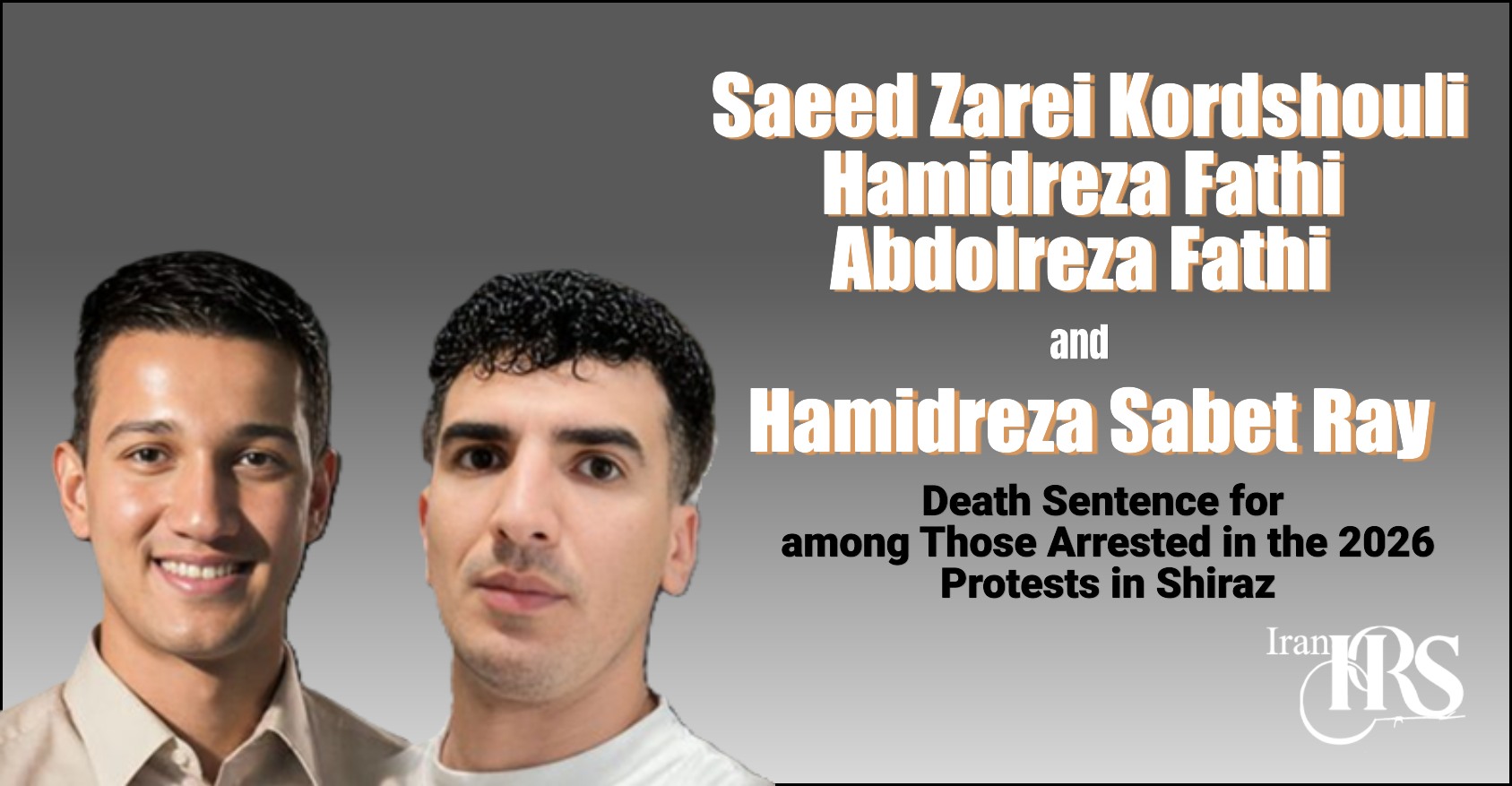
The Shiraz Revolutionary Court sentenced four of those arrested in the 2026 protests—Saeed Zarei Kordshouli, Hamidreza Fathi, Abdolreza Fathi and Hamidreza Sabet Ray—to death; informed sources say the case was formed based on confessions obtained under severe torture and in conditions of solitary confinement.
Iran Human Rights Society, Thursday 30 April 2026 – The death sentence for Saeed Zarei Kordshouli, Hamidreza Fathi, Abdolreza Fathi and Hamidreza Sabet Ray, among those arrested in the nationwide 2026 protests in Marvdasht, has been issued by Branch One of the Shiraz Revolutionary Court. Informed sources have stated that these defendants were subjected to severe physical and psychological torture during the detention period to confess to charges including the killing of a Basij member. Reports indicate that the main documents of the case are based on confessions obtained under pressure, beatings and electric shocks.
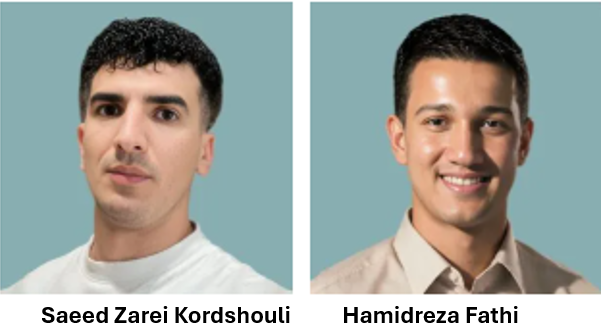
Issuance of Death Sentence for Saeed Zarei Kordshouli, Hamidreza Fathi, Abdolreza Fathi and Hamidreza Sabet Ray
According to published reports, the Shiraz Revolutionary Court has sentenced four of those arrested in the nationwide 2026 protests in Marvdasht to death.
The identities of these individuals are as follows:
The identities of these individuals are as follows:
Saeed Zarei Kordshouli
Hamidreza Fathi
Abdolreza Fathi
Hamidreza Sabet Ray
The charge attributed to these four people is titled “corruption on earth.”
These verdicts were issued by Branch One of the Shiraz Revolutionary Court presided over by Judge Seyed Mahmoud Sadati.
The Judge of the Case and History of Issuing Controversial Verdicts
The presidency of the court that issued the verdict against Saeed Zarei Kordshouli, Hamidreza Fathi, Abdolreza Fathi and Hamidreza Sabet Ray was held by Judge Seyed Mahmoud Sadati; a judge who previously also had a role in the case of the Afkari brothers and has been sanctioned by the United States government.
Human rights activists say assigning political and security cases to judges with a history of issuing heavy verdicts has intensified concerns about the impartiality and independence of the judiciary.
Severe Torture to Obtain Confessions
Informed sources from the case have stated that Saeed Zarei Kordshouli and the other three defendants in this case were subjected to severe torture during the detention period. According to these sources, security interrogators tried to force the defendants to confess about the killing of a Basij member during the Dey protests through physical and psychological pressure.
Reports indicate that the main goal of the tortures was to obtain confessions consistent with the security scenario of the case.
Electric Shock to the Head and Fabricated Confessions
Based on published testimonies, including statements by former political prisoner Abuzar Bargahi in a published audio file, the defendants in this case Saeed Zarei Kordshouli, Hamidreza Fathi, Abdolreza Fathi and Hamidreza Sabet Ray were kept in solitary confinement and tortured with electric shockers.
According to this source:
Electric shockers were applied directly to the heads of the defendants
Prisoners were forced to express fabricated confessions due to the intensity of the torture
Some of them under pressure had said: “We set fire to all the banks in the country”
Severe Physical Injury to the Defendants under Torture
Previous reports indicate the intensity of the torture applied to the defendants in this case. Regarding Saeed Zarei Kordshouli, it has been stated that he suffered serious eye injury as a result of severe torture. Also, Hamidreza Fathi’s hand was broken due to the tortures inflicted.
Also, regarding the other defendants, reports of bone fractures and severe physical injuries have been published. Human rights activists say the severity of these injuries shows that torture in this case was not a general claim, but a central part of the interrogation process.
Forced Confessions; the Main Pillar of the Case
Sources close to the case have emphasized that against Saeed Zarei Kordshouli and the other defendants, no independent evidence and sufficient technical documentation has been presented and the main part of the case is based on confessions obtained during the detention period.
This is while according to domestic and international legal principles, confessions obtained under torture lack legal and judicial validity.
The Case Awaiting the Supreme Court
Despite the issuance of the death sentence for Saeed Zarei Kordshouli, Hamidreza Fathi, Abdolreza Fathi and Hamidreza Sabet Ray, the case has not yet been sent to the Supreme Court for final review.
Legal activists have demanded the immediate halt of the judicial process and an independent investigation into the claims of torture in this case.
Concern about Repetition of the Pattern of Security Case Fabrication
The case of Saeed Zarei Kordshouli, Hamidreza Fathi, Abdolreza Fathi and Hamidreza Sabet Ray is raised within the framework of broader concerns about the handling of cases of those arrested in nationwide protests.
Human rights observers say the use of torture to obtain confessions, prolonged solitary confinement, deprivation of effective defense and issuance of heavy verdicts have become a repeating pattern in these cases.
The Case of Saeed Zarei Kordshouli; Torture and Forced Confession on the Path to Issuing a Death Sentence
The case of Saeed Zarei Kordshouli, Hamidreza Fathi, Abdolreza Fathi and Hamidreza Sabet Ray is an example of serious concerns about the use of torture and forced confessions in cases leading to execution in Iran.
Violated Provisions:
- Violation of the prohibition of torture – Article 5 of the Universal Declaration of Human Rights: No individual should be subjected to torture or inhuman treatment.
- Violation of the principle of prohibition of reliance on confession under torture – International Criminal Law: Confessions obtained under torture conditions lack judicial validity.
- Violation of the right to a fair trial – Article 10 of the Universal Declaration of Human Rights: A fair trial requires independent examination of evidence and prohibition of the use of forced confessions.
- Violation of the right to life – Article 3 of the Universal Declaration of Human Rights: Issuing a death sentence based on confessions obtained under torture is considered a serious violation of the right to life.
See also the below articles:
Follow Iran Human Rights Society on social networks:
Telegram /Twitter /Instagram / YouTube / Facebook
Join Iran Human Rights Society on Twitter