
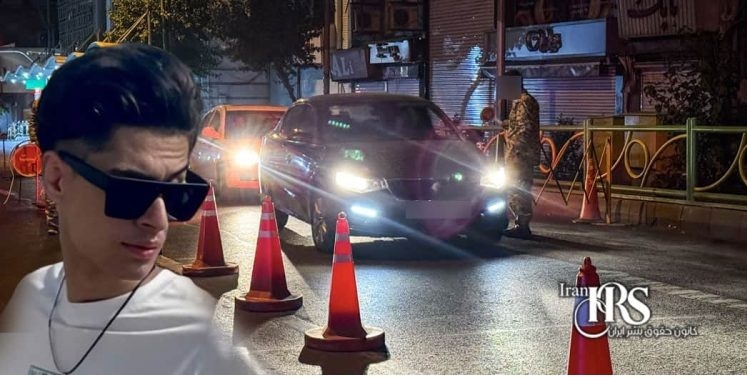
Reza Hamidavi, a 21-year-old, was killed on the evening of June 25, 2025, by direct gunfire from Basij forces in Abadan.
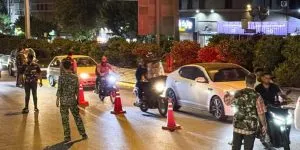
Iran Human Rights Society, June 28, 2025 – On the evening of Wednesday, June 25, 2025, Reza Hamidavi, a 21-year-old resident of Abadan, was killed after being shot in the head by Basij forces. According to local sources, the incident occurred when Reza refused to stop at a Basij checkpoint at Pirouz Mosque. The direct shot to his head caused his immediate death.
Hours after Reza’s death, security institutions began fabricating a narrative. What was initially a killing by armed state forces quickly morphed into accusations of “espionage” and the “discovery of micro-drones and explosive primers” by the Revolutionary Guard’s intelligence unit—a claim that observers recognize as a familiar script.
A Familiar Scenario: Securitization After Killings
According to Reza Hamidavi’s family, hours after their son’s death, IRGC intelligence officials informed them that “numerous micro-drones and explosive primers” were found in his vehicle. Additionally, the Pirouz Mosque Basij patrol claimed to have discovered “documents of collaboration with a foreign enemy” among his belongings.
Such narratives, often deployed after the killing of protesters or critics by state forces, are met with significant skepticism by the public. Typically, no independent evidence is provided, and in most cases, families are denied timely access to the body or the ability to hold mourning ceremonies.
Diverting Public Attention from Domestic Crises
The espionage allegations surfaced amid economic crises, labor protests, and escalating social tensions within the country. Religious authorities frequently use such security-related claims during these periods to divert public attention from genuine societal demands.
An unarmed young man, killed solely for not stopping at a checkpoint, is subsequently accused of espionage. This scenario, repeated multiple times, is part of the regime’s broader policy of suppression against its people.
Media Silence and Widespread Censorship
Domestic state media have made no mention of Reza Hamidavi’s killing. This heavy silence persists while his family has yet to receive his body or hold a ceremony. Similar cases, from the November 2019 Mahshahr massacre to the suspicious deaths of political prisoners, indicate that this silence is part of the regime’s deliberate information control strategy.
Human Rights Analysis: Multiple Violations of International Law
Reza Hamidavi’s death is not only shocking from a human and social perspective but also clearly violates several articles of international human rights law:
– Article 6 of the International Covenant on Civil and Political Rights: Every human has an inherent right to life, which must be protected by law. Killing a citizen without trial via direct gunfire is a gross violation of this article.
– Article 9 of the ICCPR: No one should be arbitrarily arrested or detained. In Reza’s case, the action without a judicial warrant and absent any immediate threat to the forces constitutes arbitrary killing.
– Article 14 of the ICCPR: Everyone has the right to a fair, public hearing by a competent authority. Accusing a deceased individual without transparency or a chance to defend themselves completely denies this fundamental right.
One Young Man, One Bullet, One Big Lie
Reza Hamidavi’s killing is just one link in a chain of brutal suppression, baseless accusations, and the securitization of citizens. This cycle of repression persists amid media silence, structural censorship, and the denial of basic human rights.
While society grapples with discrimination, crises, and systemic corruption, the regime uses military, propaganda, and security tools to bury the truth. Yet, the call for justice will, sooner or later, break through the barriers of censorship.
Follow Iran Human Rights Society on social networks:
Telegram /Twitter /Instagram / YouTube / Facebook
Join Iran Human Rights Society on Twitter

Discussion about this post