
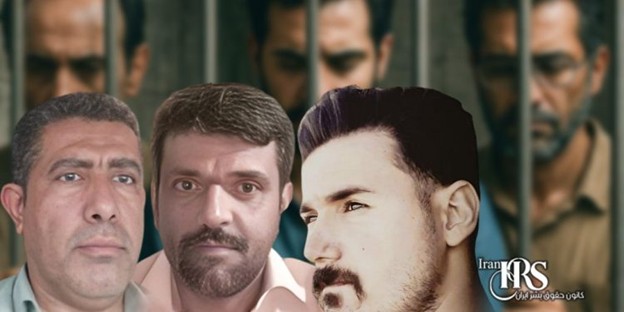
Urgent concern for Masoud Jamei, Alireza Mardasi, and Farshad Etemadi Far, political prisoners facing death sentences in Iran. Demand justice now!
Iran Human Rights Society, Thursday, July 24, 2025 The plight of political prisoners Masoud Jamei, Alireza Mardasi, and Farshad Etemadi Far has sparked global outrage. These three men, sentenced to death in Iran, face severe human rights violations. Their case highlights the regime’s use of torture, forced confessions, and unfair trials to suppress dissent. On July 11, 2025, Branch One of the Ahvaz Revolutionary Court issued double death sentences and one-year imprisonment for each. This article explores their dire situation, ongoing appeals, and the urgent need for international action to save their lives.
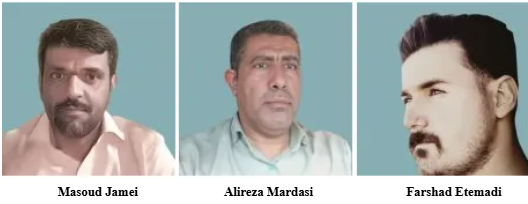
Death Sentences for Political Prisoners
The Ahvaz Revolutionary Court, led by Judge Adibi-Mehr, sentenced Masoud Jamei, Alireza Mardasi, and Farshad Etemadi Far to death on July 11, 2025. They face charges of “corruption on earth,” “membership in opposition groups,” and “propaganda against the system.” These accusations often target political activists to silence dissent. Additionally, two others in the case, Saman Hormatnejad and Davood Hormatnejad, received 12 and 15 years in prison, respectively. The judicial process lacked transparency, raising serious concerns about fairness.
Arrests and Torture of Political Prisoners
Authorities arrested Farshad Etemadi Far on June 16, 2023, in Pichab village, Kohgiluyeh and Boyer-Ahmad Province, alongside Saman and Davood Hormatnejad. Masoud Jamei and Alireza Mardasi, both Arab activists from Ahvaz, joined the case after their arrests in August 2023. Reports confirm that intelligence forces subjected them to brutal torture at the Yasuj detention center. Interrogators used physical and psychological abuse to extract forced confessions. The prisoners had no access to lawyers during interrogations, violating their right to a fair defense.
Masoud Jamei’s Health Crisis and Family Persecution

Masoud Jamei endures particularly harsh treatment. Security forces arrested his wife, Zainab Hazbapour, and his children, Nahid, Delal, and Roghayeh. The Bavi County Revolutionary Court charged them with “association with the Mujahedin-e Khalq Organization.” This tactic aims to break Jamei’s resistance. Furthermore, Jamei suffers from stomach cancer, fatty liver, high blood pressure, and infections. Poor prison conditions and lack of medical care worsen his health. Despite requests for hospital transfer, authorities have provided no treatment, endangering his life.
Other Defendants Facing Harsh Sentences
The case extends beyond Masoud Jamei, Alireza Mardasi, and Farshad Etemadi Far. Saman Hormatnejad and Davood Hormatnejad face 12 and 15 years in prison, respectively, on charges like “enmity against God” and “collusion against national security.” The defendants had no access to independent lawyers, and their trials occurred behind closed doors. Human rights activists condemn this as a violation of fair trial principles. The lack of transparency fuels concerns about the judicial process.
Urgent Concerns Over Imminent Executions
Human rights activists and international organizations express alarm over the death sentences. The interrogation and trial processes were opaque, violating the defendants’ rights. Legal experts argue that confessions obtained under torture lack validity. Such practices breach international covenants on civil and political rights. The prisoners’ families insist on their innocence, stating that confessions resulted from threats and abuse. Masoud Jamei, Alireza Mardasi, and Farshad Etemadi Far symbolize resistance against repression.
Call for Justice Amid Uncertain Fate
The fate of Masoud Jamei, Alireza Mardasi, and Farshad Etemadi Far remains uncertain. Their lawyers have filed appeals, but there is no guarantee the sentences will be overturned. Human rights advocates urge global attention to this case to prevent unjust executions. The international community must pressure Iran’s judicial system to uphold fair trial standards. Activists emphasize the need for immediate action to save these political prisoners’ lives.
Systematic Human Rights Violations
This case exposes widespread human rights abuses in Iran. Key violations include:
- Denial of Fair Trials: The prisoners had no access to independent lawyers, and secret trials violated legal standards.
- Torture and Inhuman Treatment: Reports confirm physical and psychological torture to extract confessions, breaching human dignity.
- Lack of Medical Care: Masoud Jamei’s serious illnesses, including stomach cancer, remain untreated, threatening his life.
- Unlawful Arrests: Authorities detained the prisoners and their families without legal procedures.
- Suppression of Free Expression: Charges stem from the defendants’ political beliefs and peaceful activism.
These violations contradict international human rights principles and Iran’s own laws. The case underscores the regime’s use of security charges to silence dissent.
Follow Iran Human Rights Society on social networks:
Telegram /Twitter /Instagram / YouTube / Facebook
Join Iran Human Rights Society on Twitter







Discussion about this post