

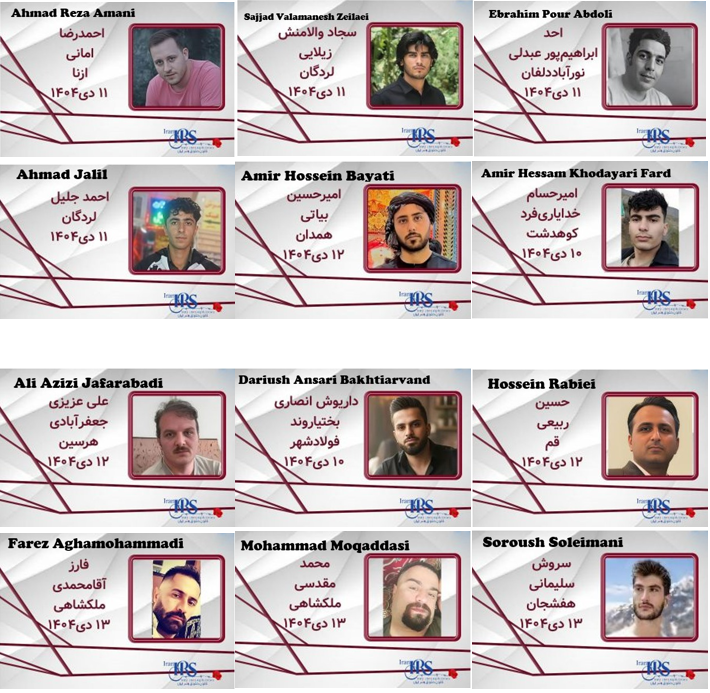
Discover the list of names and pictures of the 19 victims killed during the 2026 nationwide protests in Iran. Get verified details from human rights reports.
Iran Human Rights Society, Monday, January 5, 2026 –According to reports from field sources and local observations, the widespread protests in recent weeks have been met with a violent response from security agencies. Meanwhile, the killing of 19 protesting citizens has once again raised the way the ruling structure deals with dissatisfaction as a fundamental issue. Analysis of the available data shows that these people died in conditions where there was no sign of any violent or threatening action on their part.
Social composition of the dead
According to the information obtained, the dead were from diverse social groups, including students, workers, and teenagers. Their central commonality is opposition to the current situation and efforts to bring about change in the ruling structure. A review of their personal records confirms their lack of affiliation with armed movements or violent groups. The main demands of these individuals have centered around fundamental freedoms, the elimination of discrimination, and respect for human dignity.
Nature of the protests and reactions
Eyewitnesses and independent media reports emphasize that the recent gatherings have generally been peaceful in nature. Protesters have expressed their protest against the status quo and put forward their demands by chanting slogans. In contrast, the repressive institutions have increased the level of violence by using live ammunition, tear gas, and physical methods of confrontation. This contradiction has raised serious questions about the legitimacy of the control tools used.
Recurring accusation: opposition to the status quo
Analysis of the narratives related to these 18 dead protesters shows that the core of the accusations made against them has been opposition to the current structure. In many cases, even being near the gatherings was enough for some victims to be targeted. This situation provides a clear picture of the low level of political tolerance of the regime towards various forms of protest. It also indicates the use of lethal force as a means of social control in the context of widespread repression.
Narratives of families and post-mortem interventions
While rejecting the unofficial accusations against their loved ones, the families of the dead have emphasized that they not only had no criminal records but were also pursuing legal claims. In some cases, the handover of the bodies of the deceased has been accompanied by delays and security pressure. There have also been reports of threats to relatives to avoid interviews with the media or holding public mourning ceremonies, which have challenged the possibility of public advocacy.

Performance of security institutions and accountability of the regime
Field evidence indicates that the majority of these deaths were caused by direct fire from the repressive forces. Despite the large volume of reports, no official has yet taken clear responsibility for these actions. The lack of accountability mechanisms and the obstruction of independent investigations have fueled a crisis of public trust in official institutions. Domestic and international human rights organizations have called for immediate transparency and prosecution of the perpetrators of this repression.
Analysis of security and social consequences
The continued deadly clashes with protests have exacerbated the gap between the ruling structure and society and are a sign of the government’s inability to confront crises of legitimacy. The killing of 18 unarmed protesters not only reflects the high cost of the protests, but can also lead to the spread of security crises and increased social instability. The repressive response to social demands disrupts the dynamics of society and pushes the political atmosphere towards further blockage.
Recent events indicate a deepening crisis in the relationship between citizens and the government. The deaths of unarmed protesters are a clear symbol of the power structure’s use of organized violence to contain social discontent. In the absence of transparency, responsibility, and accountability, this approach not only undermines the legitimacy of governance, but also casts deep doubts on the future of society. The fundamental question is: How long can protest be met with death?
See also the below articles:
- Iran 2026 Protests Arrests: Verified List of Detained Names
- Iran Protests Escalate Dramatically on January 2, 2026
Follow Iran Human Rights Society on social networks:
Telegram /Twitter /Instagram / YouTube / Facebook
Join Iran Human Rights Society on Twitter




Discussion about this post