
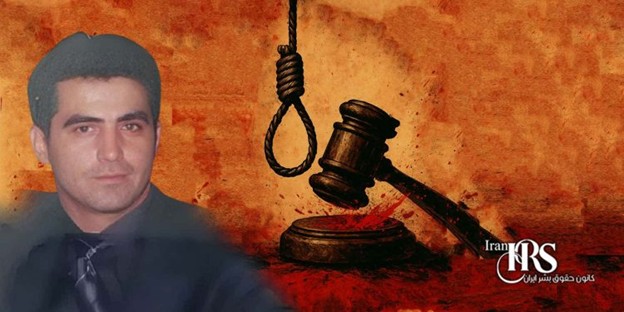
Mehdi Hassani, a political prisoner, faces execution risk after Iran’s Supreme Court rejected his fourth retrial request in 2025, raising human rights concerns.
Iran Human Rights Society, Saturday, July 11, 2021 – Mehdi Hassani, a political prisoner in Iran, faces imminent execution after the Supreme Court rejected his fourth retrial request on July 11, 2025. This decision highlights Iran’s ongoing human rights violations and lack of fair trial processes. Held in Ghezel Hesar Prison, Hassani endures torture and an unfair judicial system. His case demands urgent global attention to halt his execution and ensure justice.
Supreme Court’s Repeated Rejection of Mehdi Hassani’s Retrial

Iran’s Supreme Court dismissed Mehdi Hassani’s fourth retrial request without reviewing the case file. His lawyer, Amin Adel Ahmadian, stated on X, “The court rejected the request without accessing the file, and I couldn’t review it.” Consequently, this marks the fourth denial since April 2025, raising fears of imminent execution. The judiciary’s refusal to suspend the execution violates international law.
Unfair Trial and Torture Allegations
In September 2024, Branch 26 of Tehran’s Revolutionary Court sentenced Hassani to death for “baghi” (armed rebellion) and “moharebeh” (enmity against God). Amnesty International reported that Hassani endured torture, including prolonged solitary confinement, to extract coerced confessions. Moreover, his trial, lasting mere minutes, lacked transparency. Therefore, human rights groups label it “grossly unfair,” urging Iran to halt his execution.
Iran’s Surging Execution Rates Spark Global Outcry
Iran’s execution rates soared in 2024 and 2025, with over 900 executions reported last year. Human Rights Watch noted 113 executions in May 2025 alone. This alarming trend intensifies fears for Hassani’s life. International organizations, including the UN, demand a moratorium on executions and fair trials. However, Iran’s judiciary continues to ignore these calls, escalating global condemnation.
Hassani’s Family Pleads for International Support
Maryam Hassani, Mehdi’s daughter, took to social media, writing, “My father faces execution due to an unjust process. Please help us.” Her plea urges the UN and human rights groups to intervene. Furthermore, the family’s anguish reflects the broader suffering of those targeted by Iran’s repressive judiciary. Public support is crucial to save Hassani’s life.
Judiciary as a Tool of Political Repression

Hassani’s case exposes Iran’s judiciary as a mechanism to silence dissent. The repeated denial of retrial requests, restricted access to case files, and coerced confessions indicate a lack of independence. Additionally, the judiciary’s actions aim to instill fear and maintain regime control. Thus, Hassani’s plight underscores systemic human rights abuses in Iran’s legal system.
Violations of International Human Rights Law
Mehdi Hassani’s treatment breaches key international laws:
- Article 5 (UDHR): Torture and cruel treatment are prohibited, yet Hassani faced both.
- Article 9 (ICCPR): His arbitrary detention violates his right to liberty.
- Article 14 (ICCPR): Hassani was denied a fair, impartial trial.
- Article 6 (ICCPR): Death penalties require fair processes, which Iran ignored.
These violations highlight Iran’s disregard for global human rights standards.
Urgent Call for Global Action
Mehdi Hassani’s imminent execution demands immediate action. The international community must pressure Iran to halt his execution and grant a fair trial. By amplifying his case, we can support his family’s fight for justice. Let’s stand against Iran’s human rights violations and work to save Mehdi Hassani’s life.
Follow Iran Human Rights Society on social networks:
Telegram /Twitter /Instagram / YouTube / Facebook
Join Iran Human Rights Society on Twitter







Discussion about this post