
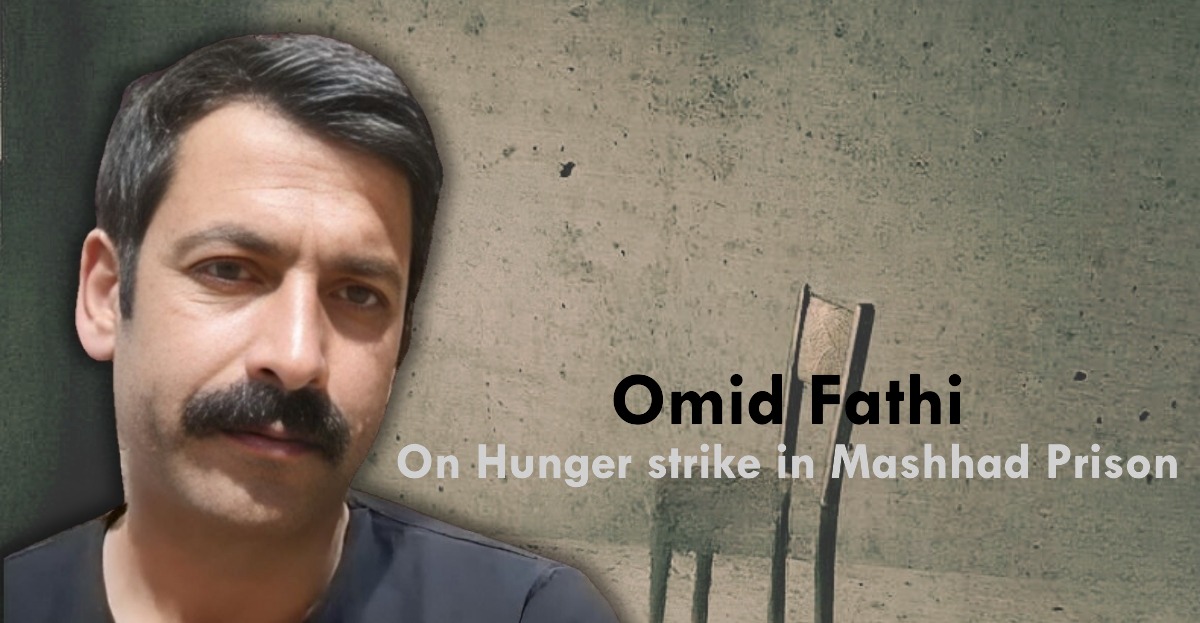
Omid Fathi’s hunger strike in Vakilabad Prison protests inhumane conditions and rights violations.
Iran Human Rights Society, Thursday, September 4, 2025 – Omid Fathi, a political prisoner in Mashhad’s Vakilabad Prison, began a hunger strike on September 4, 2025, to protest inhumane detention conditions and systemic abuses. His defiance against psychological torture, unfair trials, and lack of basic facilities highlights Iran’s ongoing violations of political prisoners’ rights. Fathi’s case, marked by arbitrary detention and punitive transfers, demands urgent action. This article explores his hunger strike, the harsh conditions in Vakilabad Prison, and the need for global intervention to secure justice.
On September 4, 2025, Omid Fathi launched a hunger strike in Vakilabad Prison to protest dire conditions. In an audio message, he vowed to continue until authorities address his plight and that of other political prisoners. After exposing the prison’s harsh environment, officials transferred him to a punitive ward for “exiled and punished” inmates, lacking rest, sleep, or safety facilities. Despite this, Fathi remains steadfast, refusing to let authorities break his spirit.
A Resilient Voice of Defiance
Fathi’s audio message boldly challenged Mashhad’s intelligence service, declaring, “Your solitary confinement and toxic injections couldn’t break me.” He also criticized the regime’s leadership, accusing it of orchestrating executions, torture, and imprisonment of Iran’s youth. His words highlight the growing distrust between the public and the regime. Through his hunger strike, Fathi amplifies the call for justice, inspiring others to resist oppression.
Unfair Charges and Judicial Limbo

The Mashhad Revolutionary Court convicted Fathi of “propaganda against the system” and “disturbing public opinion” for social media posts advocating election boycotts. He received a six-month prison sentence or a 50 million toman fine, which he couldn’t afford, leading to his imprisonment. Pending charges of “insulting the leadership” in Mashhad’s Criminal Court 2 remain unresolved, prolonging his uncertainty and adding psychological pressure, a common tactic against political prisoners.
Arrest and Ongoing Repression
On June 2, 2025, security forces raided Fathi’s home in Mashhad, arresting him and transferring him to Vakilabad Prison. Interrogations began immediately, with charges filed for his peaceful activism. Fathi’s prior arrest during the 2022 nationwide protests shows a pattern of targeting his social media activity and opposition to state policies. His repeated detentions reveal the regime’s relentless surveillance of dissidents.
Inhumane Conditions in Vakilabad Prison
Fathi’s hunger strike underscores Vakilabad Prison’s failure to separate political prisoners from those convicted of violent crimes, endangering their safety. He described the punitive ward as devoid of basic amenities, with no safe or hygienic space for rest. These conditions, combined with psychological pressure, aim to silence dissent. The prison’s practices violate both international standards and Iran’s own regulations, intensifying inmates’ suffering.
Health Risks of Hunger Strike
Fathi’s hunger strike, a desperate protest, endangers his physical and mental health. Prolonged fasting in unsanitary conditions risks organ failure and long-term damage. The prison’s neglect of his well-being violates global human rights standards, particularly the prohibition of torture. Fathi’s family and activists fear for his life, urgently calling for action to protect him and address his plight.
Vakilabad Prison: A Symbol of Oppression
Vakilabad Prison in Mashhad is notorious for its brutal treatment of political prisoners. Overcrowding, pest infestations, and lack of medical care create a hostile environment designed to crush inmates’ spirits. The prison’s history of executing political prisoners underscores its role in Iran’s repressive system. Fathi’s transfer to a punitive ward exemplifies the regime’s strategy to escalate pressure on dissidents.
Human Rights Abuses in Fathi’s Case
Fathi’s detention highlights systemic violations of human rights:
- Right to Life and Security: Neglecting Fathi’s health during his hunger strike endangers his life.
- Prohibition of Torture: Psychological pressure and punitive ward conditions constitute cruel treatment.
- Arbitrary Detention: Fathi’s arrests for peaceful activism violate protections against arbitrary detention.
- Fair Trial: Opaque judicial processes deny Fathi an impartial trial.
- Freedom of Expression: His conviction for social media posts suppresses free speech.
- Right to Health: Unsanitary conditions and lack of medical care threaten his well-being.
These abuses reflect Iran’s broader policy of silencing political dissent.
A Beacon of Resistance
Omid Fathi’s hunger strike symbolizes unwavering resistance against oppression. His courage, despite torture and inhumane conditions, inspires other political prisoners and activists. His actions align with broader campaigns, like hunger strikes in dozens of Iranian prisons protesting executions and rights abuses. Fathi’s defiance amplifies the call for justice from behind prison walls.
Urgent Need for Global Action
Fathi’s hunger strike demands immediate international response. Human rights organizations must press Iran to ensure his health, provide fair trials, and end arbitrary detentions. The global community should amplify Fathi’s voice and those of other political prisoners, holding the regime accountable. Public advocacy and family support remain crucial in challenging Iran’s oppressive policies.
See also the below articles:
- Two Years of Limbo for Ruhollah Khosravi
- Iran Executions: A Surge in Capital Punishment Across Multiple Prisons
Follow Iran Human Rights Society on social networks:
Telegram /Twitter /Instagram / YouTube / Facebook
Join Iran Human Rights Society on Twitter







Discussion about this post