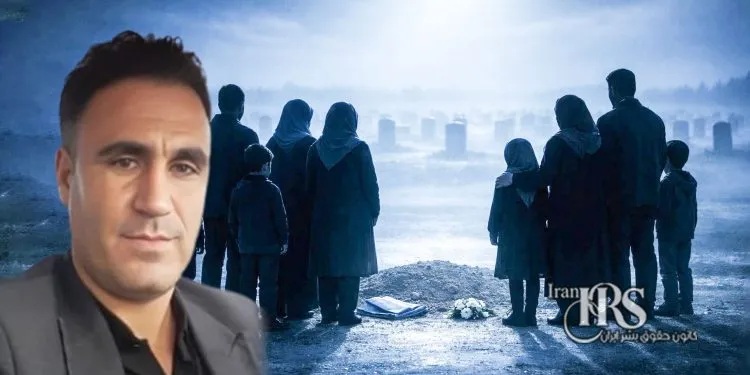
The family of Hamid Hossein-Nejad Heidranlou is still searching for the burial location of their son; failure to hand over the bodies of executed prisoners continues as a tool for pressure and psychological torture
Iran Human Rights Society, Sunday, April 19, 2026 – With the passage of one year from the execution of Hamid Hossein-Nejad Heidranlou, his family is still unaware of the location of his body’s burial. This is while reports show that failure to hand over the bodies of executed political prisoners, as a continuous practice, has turned into a tool for applying psychological pressure on families.
Who was Hamid Hossein-Nejad and how was he executed?

Hamid Hossein-Nejad Heidranlou, born on 30 Shahrivar 1364, from the village of Segrik in the suburbs of Chalderan, was married and the father of three children. He was sentenced to execution based on case-building by security institutions in conditions where he did not enjoy a fair trial.
The execution sentence of this political prisoner was carried out on Saturday, April 19, 2025 in an unknown location in Urmia. This sentence was executed without transparent notification and in media silence, and his family remained unaware of the details of its execution.
No news of the burial location; one year of waiting for an answer
Now, with the passage of one year from the execution of the sentence, the authorities still refuse to provide any information about the location of the burial of Hamid Hossein-Nejad Heidranlou’s body. This situation has placed his family in a state of uncertainty and confusion.
The family of this executed prisoner has been searching for months for any trace of his burial location, but they have received no clear answer. This lack of news has become one of their main concerns.
What was the last visit and the contradictory statements of the authorities?
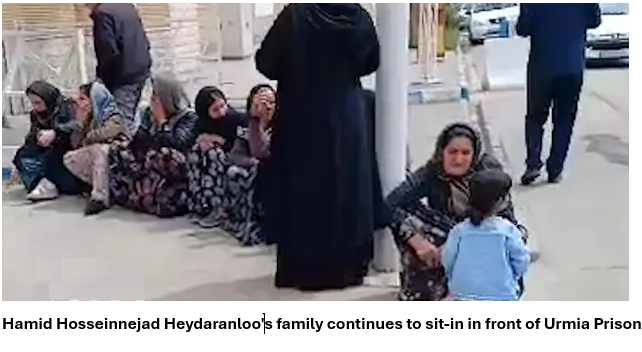
The family of Hamid Hossein-Nejad Heidranlou succeeded in having a final few-minute visit with him on Friday, April 18, 2025. After this visit, they gathered in front of Urmia Prison and demanded re-examination of the case and cancellation of the sentence.
At the same time, the authorities made contradictory statements. The head of Urmia Prison announced that the Intelligence Administration had taken over this prisoner and had no information about his place of detention, while the Urmia prosecutor claimed that he had not signed the execution sentence and that the case would be reviewed again. These contradictions have added to the ambiguities of the case.
Has failure to hand over bodies become a practice?
Reports show that from the beginning of the current year 2026, at least several political prisoners including Vahid Bani-Amirian, Mohammad Taghavi, Babak Alipour, Pouya Ghabadi, Abolhassan Montazer and Akbar Daneshvar Kar and 4 of those arrested in the nationwide protests of 2025, Amirhossein Hatami, Mohammad Amin Biglari, Shahin Vahed-Parast and Ali Fahim have been executed.
In these cases as well, the bodies were not handed over to the families and no clear information was provided about their burial locations. This trend has increased concerns about the fate of other prisoners.
What is the historical background of failure to hand over bodies of prisoners?
Failure to hand over the bodies of executed political prisoners has a long history and has been repeated many times over the past decades. In cases such as Mehdi Hassani and Behrouz Ahsani as well, the bodies were not handed over to the families.
Also during the massacre of political prisoners in 1988, many of the executed were buried in mass graves or unknown locations and the families never learned of their burial places. This history shows that this action is part of a repetitive policy.
What effect does hiding the bodies have on the families?
Hiding the burial location of executed prisoners is not limited only to the time of execution of the sentence, but acts as a tool for continuous pressure on the families. This action deprives the families of the right to mourn and hold burial ceremonies.
The psychological consequences of this situation can continue for years. Reports show that some families have suffered serious damage due to the mental pressures resulting from this lack of news and have even lost their lives in some cases. For this reason, this action is considered a form of psychological torture.
What is the goal of the “Where are the bodies?” campaign?
In reaction to the continuation of this trend, a call titled “#Where are the bodies?” has been published. This campaign has been formed with the aim of identifying the burial locations of executed prisoners and registering complaints by the families.
This action seeks to draw the attention of public opinion to the situation of families who have been deprived of knowing the fate of their loved ones and are still waiting for an answer.
Violation of the rights of families by failure to hand over bodies of executed prisoners
Failure to hand over the body of Hamid Hossein-Nejad and other executed prisoners has placed the families in a state of uncertainty and continuous suffering and is recognized as a form of psychological torture and a clear violation of human rights.
Violated articles:
- Violation of the prohibition of torture – Article 5 of the Universal Declaration of Human Rights: Keeping families in ignorance about the burial location of their loved ones is considered a continuous form of psychological torture and inhuman treatment.
- Violation of human dignity – Article 1 of the Universal Declaration of Human Rights: Depriving families of the right to mourn and a decent burial seriously violates their human dignity.
- Violation of the right to private and family life – Article 12 of the Universal Declaration of Human Rights: Preventing access to information about the fate of loved ones violates the right to family life and respect for privacy.
- Violation of the right to fair trial – Article 10 of the Universal Declaration of Human Rights: Issuing and executing the sentence without transparency and accountability has violated the principles of fair trial and adds to the ambiguities of the case.
See also the below articles:
- Secret Execution of Hamed Validi and Nima Shahi Sparks Global Outrage
- Qazalhasar Prison Transfer: Political Prisoners Moved from Evin in Secrecy
Follow Iran Human Rights Society on social networks:
Telegram /Twitter /Instagram / YouTube / Facebook
Join Iran Human Rights Society on Twitter