
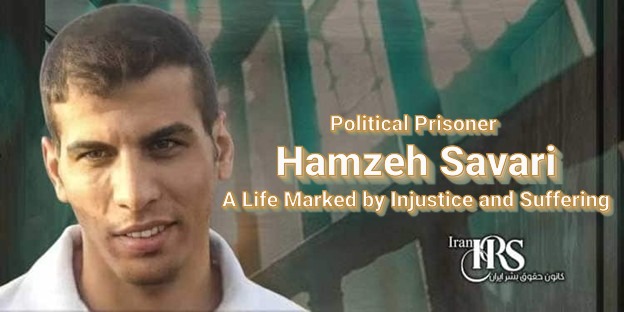
The story of Hamzeh Savari is not merely the tale of a political prisoner’s life; it is a mirror reflecting the pain and injustice that loom over many political prisoners in Iran.
Hamzeh Savari’s Arrest and Unfair Trial

Iran Human Rights Society, Monday, August 25, 2025 – Security forces arrested 18-year-old Hamzeh Savari Lafteh on September 2, 2005. The Ahvaz Revolutionary Court charged him with “corruption on earth,” “enmity against God,” and “acting against national security.” Initially sentenced to death, his punishment later changed to life imprisonment. The trial process was deeply flawed. Hamzeh spent five months in solitary confinement at the Ahvaz Intelligence Detention Center, followed by three months in Shiraz under inhumane conditions. Blindfolded and handcuffed, he met his court-appointed lawyer just five minutes before the trial. The court gave him less than five minutes to defend himself, and his lawyer, unaware of the case details, could not prepare. The prosecution attributed all incidents in Koot Abdullah to him, demanding the harshest penalty. The next day, authorities delivered the death sentence.
Two Decades of Imprisonment and Suffering
Hamzeh has endured immense hardship over the past 20 years. He spent nearly nine months in solitary confinement, which led to multiple health issues. He suffers from varicocele, requiring surgery that later failed. Additionally, he battles Baker’s cyst behind his right knee, arthritis, chronic stomach pain, and respiratory problems. Last year, severe chest pain revealed pleurisy, worsening his condition. These untreated ailments reflect the neglect political prisoners face in Iran’s prisons.
Torture and Forced Exile
From the moment of his arrest, Hamzeh faced brutal treatment. He spent eight years in Karun Prison in Ahvaz, enduring physical and psychological torture, humiliation, and verbal abuse. To escape these conditions, he accepted exile to a prison far from his family, leading to his transfer to Rajai Shahr Prison. During his time in Karun, authorities briefly moved him to Sheiban Prison with other political prisoners. After another prisoner’s escape, guards violently returned him to Karun, transporting him with a bag over his head and plastic handcuffs to the murderers’ ward. This traumatic experience prompted Hamzeh to request a transfer to Evin Prison, but authorities sent him to Rajai Shahr and later Ghezel Hesar Prison instead.
The Tragic Loss of Two Brothers
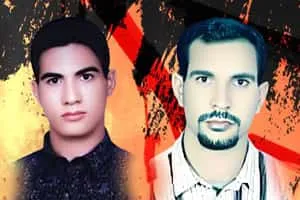
The execution of Hamzeh’s brothers, Mohammad Ali and Jafar, marks the most painful chapter of his life. Arrested alongside Hamzeh, both brothers received death sentences. On September 11, 2007, authorities executed them, while Hamzeh’s sentence was commuted to life imprisonment. He recalls the night of their execution, saying his heart felt torn from his chest as childhood memories in the impoverished Koot Abdullah neighborhood flooded back. Both brothers, educated teachers, became victims of injustice. During his first family visit after their execution, Hamzeh brought sweets, urging his parents not to cry, declaring his brothers martyrs for freedom. Two years ago, his mother passed away, still longing to see her sons.
Eight Years in Karun Prison: The Bitterest Period
Hamzeh describes his eight years in Karun Prison as the most agonizing period of his imprisonment. He faced brutal physical torture, humiliation, and confinement in medieval-like cells. Many others suffered similar fates, some unable to survive the torture. Authorities often dismissed these deaths as drug overdoses, erasing their stories. To escape this torment, Hamzeh accepted exile to Rajai Shahr, far from his family and city.
A Mirror of Pain and Injustice
Hamzeh Savari’s story reflects the suffering of countless political prisoners in Iran. Twenty years of imprisonment, torture, illness, and the loss of his brothers reveal the cruelty of Iran’s judicial and security systems. From an 18-year-old youth to a middle-aged man, Hamzeh continues to endure harsh imprisonment while holding onto hope for freedom and justice. His resilience highlights the strength of those fighting against oppression.
Human Rights Violations in Hamzeh’s Case
Hamzeh Savari’s case exposes multiple human rights abuses:
- Torture and Inhumane Treatment: Authorities subjected Hamzeh to repeated physical and psychological torture and prolonged solitary confinement.
- Arbitrary Arrest: His 2005 arrest lacked justifiable cause.
- Unfair Trial: He met his lawyer minutes before the trial, with no chance for a private discussion, and the trial lasted mere minutes.
- Right to Life: The death sentences for Hamzeh and his brothers, and their subsequent execution, violated this right.
- Access to Healthcare: Untreated conditions like varicocele, arthritis, and respiratory issues highlight the neglect of his medical needs.
- Freedom of Expression: His arrest stemmed from alleged political beliefs and activities.
These violations underscore the systematic human rights abuses political prisoners face in Iran.
The Fight for Justice Continues
Hamzeh Savari’s story is a call to action. His 20 years of suffering, marked by torture, loss, and illness, demand attention to the plight of political prisoners in Iran. Despite the pain, Hamzeh remains a symbol of resilience, inspiring others to advocate for justice. His case urges the international community to address human rights violations and support those enduring oppression. By sharing his story, we amplify the voices of those silenced and push for a future where freedom and fairness prevail.
See also the below articles:
- Destruction of Political Prisoners’ Graves in Iran: A Shameful Erasure of History
- Sheiban Prison: Political Prisoners Face Life-Threatening Conditions
Follow Iran Human Rights Society on social networks:
Telegram /Twitter /Instagram / YouTube / Facebook
Join Iran Human Rights Society on Twitter







Discussion about this post