
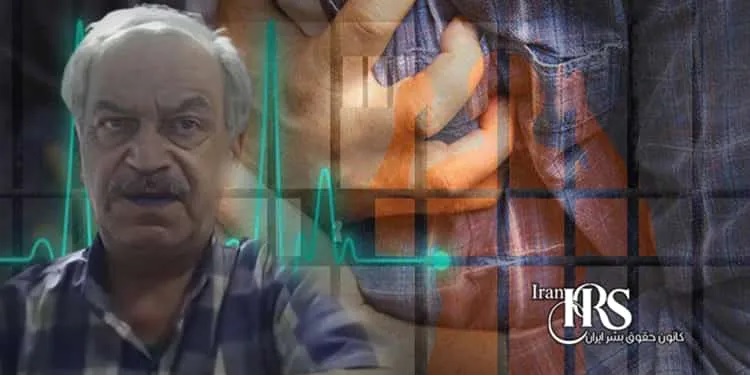
Seyed Abolhassan Montazer previously underwent open-heart surgery. Following his re-arrest in prison, he was brutally beaten by officers, causing his heart surgery stitches to reopen and several ribs to break, severely impairing his breathing.
Iran Human Rights Society, June 13, 2025 – Seyed Abolhassan Montazer, a 66-year-old political prisoner sentenced to death, is in a highly concerning physical condition in Qezel Hesar Prison, Karaj. He suffers from multiple chronic illnesses, including heart, lung, and kidney stone issues. Despite repeated requests from his family and prison doctors, authorities have refused to transfer him to medical facilities outside the prison.
History of Open-Heart Surgery and Assault
According to case documents and statements from sources close to the family, Seyed Abolhassan Montazer previously underwent open-heart surgery. Following his re-arrest, he was brutally beaten by prison officers, causing his heart surgery stitches to reopen and several ribs to break, severely impairing his breathing.
He also suffers from kidney stones, diaphragmatic hernia, digestive and liver issues, diabetes, and a bony growth in his neck, all requiring urgent medical attention. However, prison authorities have only made empty promises of hospital transfers without taking any concrete action.
Denial of Access to Medication and Medical Follow-Up
A reliable source stated:
“In April 2025, Seyed Abolhassan Montazer was taken to a hospital for initial tests but was returned to prison without receiving medication or specialized care.”
Human rights organizations have repeatedly warned about the systematic denial of medical care to political prisoners, describing it as not only a life-threatening act but also a gross violation of fundamental human rights.
History of Arrest and Death Sentence
Seyed Abolhassan Montazer, born in 1959 in Tehran, is married with two children. He was a political prisoner during the Pahlavi era, detained for six months in Vakilabad Prison, Mashhad, in 1977. During his military service, he was also arrested by the Army’s ROKN 2 and held for 45 days.
After the Islamic Revolution, he was arrested in Mashhad on June 3, 1981, and sentenced to four years and three months in prison. He was released in October 1985. However, in June 2018, he was arrested again and sentenced to five years in prison. After being transferred to Gohardasht Prison, he was released on March 30, 2022, but was re-arrested less than two years later on December 22, 2023.
Following his transfer from Evin Prison to Qezel Hesar, Montazer’s condition worsened. The fragile stitches from his surgery were torn open due to beatings by prison officers, and repeated delays and clear neglect by prison authorities regarding his medical transfer have been reported. According to the prison’s medical director, arrangements for his transfer were prepared, but the prison administration failed to cooperate despite verbal promises, putting his life at constant risk.
Human Rights Concerns and Reactions
This situation has sparked outrage among the public, Montazer’s family, and human rights activists. Organizations such as Amnesty International and the Iran Human Rights Center have warned about similar cases, labeling them as a “systematic violation of prisoners’ rights to life and medical care.”
Human Rights Violations Cited:
Article 12 of the International Covenant on Economic, Social and Cultural Rights: Right to the highest attainable standard of health.
Article 10 of the International Covenant on Civil and Political Rights: Humane treatment of prisoners without torture.
Articles 7 and 14 of the International Covenant on Civil and Political Rights: Prohibition of torture and denial of fair trial rights.
Follow Iran Human Rights Society on social networks:
Telegram /Twitter /Instagram / YouTube / Facebook
Join Iran Human Rights Society on Twitter








Discussion about this post