
The Independence of the Bar Association: A Historical Ideal
From Evin Prison to Latin America, Struggles for Freedom and Independence
Prison, especially for political and ideological detainees, despite all the restrictions it imposes and the hardships it brings, can serve as an opportunity for intellectual and academic growth, as well as the development of various skills. If used wisely, this time can enable individuals—those who have been separated from their communities, homes, and professions for honorable reasons and in defense of people’s rights against authoritarian regimes and human rights violators in political, legal, economic, and social spheres—to continue their struggle and efforts to change inhumane conditions by studying and acquiring valuable knowledge.
Prison: Deepening Awareness, Elevating Struggle
During authoritarian regimes such as the Pahlavi era—particularly under the son, and even more so under the father—as well as under theocratic despotism in the form of the Supreme Leader’s rule, Iran witnessed one of its most significant periods of political struggle. One of the key responsibilities of political prisoners during these times was to study and gain awareness to better understand the nature of dependent and oppressive regimes and to analyze effective methods of resistance in the pursuit of freedom and social justice.
Fortunately, this valuable tradition continues under the rule of the Supreme Leader’s regime. A notable example of this is the important and historic letter from Mohammadreza Faghihi, a courageous and free-spirited lawyer.
In this letter, while outlining the conditions of a crisis-stricken society, he proposes the establishment of the “National Foundation for the Defense of Rights and Fundamental Freedoms” from within the cells of Evin Prison to protect and strengthen the wounded independence of the Bar Association.
On the anniversary of the Bar Association’s independence, now more than 72 years old. He has published a significant letter advocating for the restoration of the association’s autonomy.
Evin Prison – A University for Gaining Freedom and Resilience
Mr. Faghihi Shares His Experience from the Most Notorious Prison in the Middle East
During his time in detention, Mr. Faghihi has dedicated himself to study, making the most of this opportunity. He states:
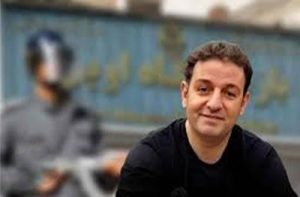
*”In these days, as I endure my sentence—one that is unjust, baseless, and dictated—within walls of Evin Prison. I have found an opportunity to read and reflect. One of the books I am currently reading is ‘Michel Ben Sayag: Struggle, Resistance. And Life’ by Anne Dufourmantelle, translated by Hamid Noohi.
Michel Ben Sayag, an Argentinian partisan fighter and psychoanalyst, in response to one of the interviewer’s questions, says:
‘… Prison does not make fighters retreat; in fact, the struggle does not stop, especially inside prison—it continues. In prison, I realized that freedom is not merely about being outside or beyond prison walls. I learned that freedom is about fulfilling our responsibilities, whatever the circumstances may be.’”
Inspired by these words, I wish to remind my esteemed and honorable colleagues. Our pursuit of freedom, as a fundamental human right, must never cease…**
Michel Ben Sayag: Struggle, Resistance, and Life
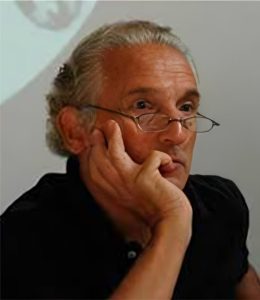
It is worth recalling that Miguel Benasayag (born June 4, 1953, in Buenos Aires), known as Michel Ben Sayag, is a French-Argentinian philosopher, psychoanalyst, researcher, and former guerrilla fighter of the Guevarist resistance, closely associated with the libertarian leftist movement.
Ben Sayag was a professional revolutionary who fought against Argentina’s military regime in the 1970s using Che Guevara-style guerrilla warfare. At the same time, he is a distinguished thinker influenced by philosophers such as Spinoza, Deleuze, and Lacan. His philosophy seeks to transform struggle into a dynamic concept of everyday life, offering alternatives like meaning and the joy of responsibility in opposition to feelings of helplessness, incapacity, and the dominance of oppressive social systems. He remains an active member of new social and political movements in Latin America and Europe and currently lives in Paris as a refugee.
The book “Struggle, Resistance, and Life” is a story about refusing to surrender, finding meaning in suffering, and continuing the fight for freedom, even in the worst possible conditions.
His book, Struggle, Resistance, and Life, narrates his struggles, life, and the thoughts of his comrades in Latin America and France. Despite intense physical and psychological torture in prisons, the assassination of his revolutionary wife, and the kidnapping of his newborn child by torturers, Ben Sayag never abandoned his humanist ideals and continued his resistance. As a theorist of freedom and “situational philosophy”, he reinterprets and critiques modern experiences. Hoping to spark a new passion for strengthening freedom and democracy.
For the past 23 years, forced into exile from Argentina and taking refuge in France. Ben Sayag has dedicated his life to acquiring fundamental knowledge and analyzing global developments.
On the 72nd anniversary of the Bar Association’s independence and Lawyer’s Week, we honor the efforts of lawyers in upholding justice and defending human rights. Lawyers play a critical role in ensuring justice and establishing a law-abiding society, empowering people to claim their rights through their expertise and dedication.
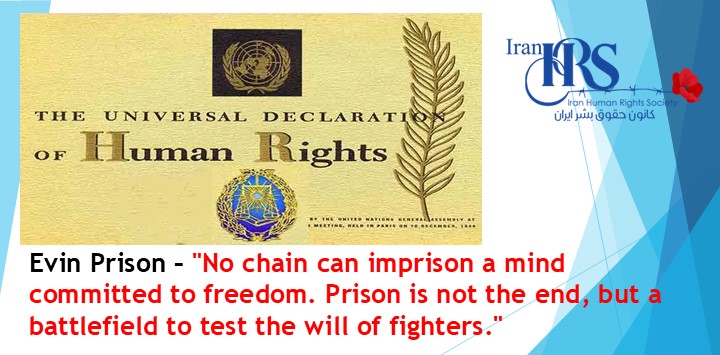
“No chain can imprison a mind committed to freedom. Prison is not the end, but a battlefield to test the will of fighters.”
Today, honorable Iranian lawyers face imprisonment in Evin Prison, threats, arrests, and asset confiscation, as seen in the case of Mrs. Mohibi. Yet, they stand firm alongside political prisoners, human rights defenders, and especially grieving families who have lost their loved ones in nationwide uprisings, never giving up on the hope for a free and just Iran.
We must do everything in our power to protect the independence of the Bar Association.
Follow Iran Human Rights society on social networks:
Telegram / Twitter / Instagram / YouTube / Facebook
Follow the Iranian Human Rights Society on social networks:
Join Iran Human Rights Society on Twitter





Discussion about this post