
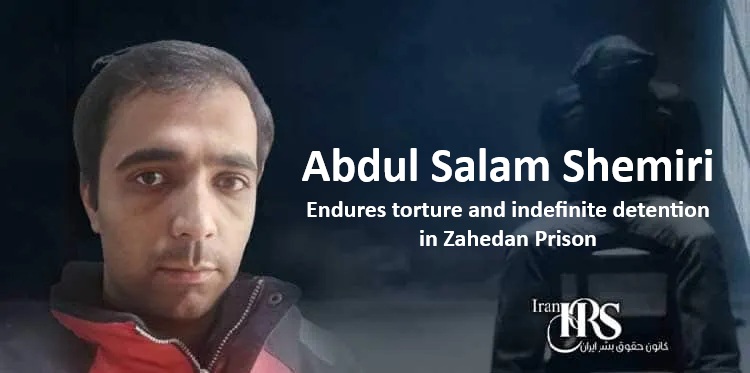
Abdul Salam Shemiri endures torture and indefinite detention in Zahedan Prison. This Baloch activist highlights Iran’s repression in Sistan and Baluchestan.
Iran Human Rights Society, Friday, September 12, 2025 – Reliable sources confirm Abdul Salam Shemiri’s plight. As a 31-year-old Baloch political prisoner, he endures severe mental and physical pressures in Zahedan Central Prison. He has waited over nine months for judicial resolution. Authorities arrested him in Iranshahr on December 2024. First, they transferred him to Ward One of the Iranshahr Rehabilitation Camp. However, after arrest, security agents tortured him brutally. They even pulled out his nails to force confessions. Shemiri hails from Iranshahr. He serves as father to two young children. His transfer to Zahedan marks one of many repression cases against the Baloch minority. In recent years, Sistan and Baluchestan has turned into a hotspot for human rights violations. These include arbitrary arrests and extrajudicial executions. Therefore, Shemiri’s story urges global attention to these issues.
Baseless Charges Against Abdul Salam Shemiri

Abdul Salam Shemiri confronts charges like “membership in insurgent groups” and “propaganda activities against the regime.” These accusations remain vague and broad. Authorities often use them against Baloch activists, Sunni clerics, and local protesters. This tactic clears the path for harsh sentences. The pattern has grown stronger after recent popular uprisings. Hundreds in Sistan and Baluchestan province now face arrest and imprisonment on similar grounds.
Independent lawyers and human rights groups stress key points. They note that such charges lack valid documents or evidence. Instead, they rely on forced confessions from torture. In Shemiri’s situation, violations of fair trial principles stand out clearly. For instance, he endures indefinite detention without proper proceedings. Furthermore, torture taints any confession he might give. This approach undermines justice entirely.
Sistan and Baluchestan: A Symbol of Repression and Discrimination
Sistan and Baluchestan stands as one of Iran’s most deprived regions. At the same time, it faces intense repression. International human rights organizations document this repeatedly. The Baloch people endure structural discrimination in education, employment, healthcare, and political participation. For years, these issues persist.
Popular protests have erupted widely in the province. Especially after the bloody events of Friday in Zahedan in 2022, repression deepened. These uprisings revealed organized violence and control. Abdul Salam Shemiri emerges as one victim in this endless cycle. Mass arrests occur frequently. Torturers extract confessions routinely. Courts issue heavy sentences without mercy. Secret executions add to the horror. Therefore, daily life for Baloch residents remains bitter and fearful.
Human and Social Consequences of Indefinite Detention
Prolonged uncertainty hits prisoners like Abdul Salam Shemiri hard. It destroys their physical and mental health. Families suffer deeply too. Shemiri’s two young children grow up without their father for months now. His wife shoulders the full load of providing for the family. She also battles psychological strain.
These harsh conditions form part of a deliberate policy. The government applies pressure and intimidation. They aim to crush protests in Sistan and Baluchestan. However, this strategy only fuels more resentment. Families face economic hardship and emotional trauma. Children lose stability. Communities feel the ripple effects. Thus, indefinite detention creates lasting social damage.
Egregious Violation of Human Rights in Abdul Salam Shemiri’s Case
Abdul Salam Shemiri’s case screams Iran’s breach of international human rights pledges. Several key articles suffer violation here. Article 5 of the International Covenant on Civil and Political Rights bans torture and cruel treatment. Shemiri endured nail-pulling and beatings. Article 9 protects liberty and security. It forbids arbitrary arrests. Yet, authorities grabbed him without cause.
Article 14 guarantees a fair trial and independent counsel. Shemiri gets neither. Article 18 upholds freedom of thought, conscience, and religion. Repression targets his Baloch and Sunni identity. These breaches appear obvious in his ordeal. Therefore, the world must monitor Iran’s political prisoners closely. Shemiri’s story revives old scars of discrimination and violence. It warns the international community about Iran’s human rights crisis. Abdul Salam Shemiri embodies the Baloch people’s agony. He highlights systematic repression in Sistan and Baluchestan. For nine months, limbo grips him in Zahedan Prison. No final verdict arrives. No independent lawyer helps. Inhumane torture scars him. His plight not only reopens wounds but also alerts the globe to Iran’s dire situation.
See also the below articles:
- Death of Arak Aluminum Workers Behind the Scorching Furnaces of Poverty
- Execution of 10 Prisoners in Gorgan, Ahvaz, Kermanshah, Dezful, and Qom Prisons
Follow Iran Human Rights Society on social networks:
Telegram /Twitter /Instagram / YouTube / Facebook
Join Iran Human Rights Society on Twitter






Discussion about this post