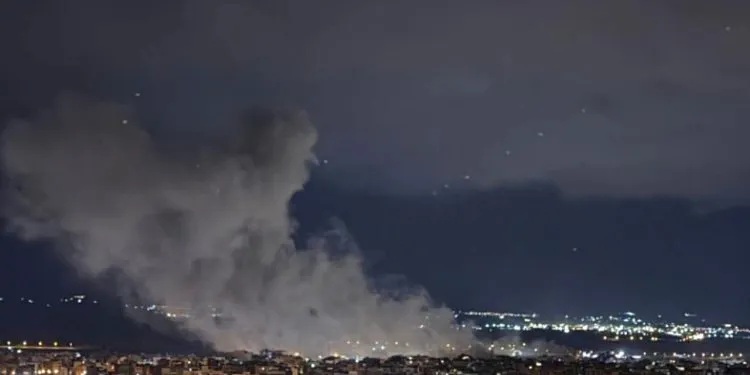
On day 32 of the US-Israel war on Iran, bombings continue in Tehran and Isfahan. Negotiations face ambiguity due to weakened decision-making after key figures’ deaths. Internet blackout persists as military strikes target key sites.
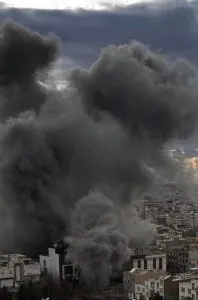
Iran Human Rights Society, Tuesday, March 31, 2026 – With the passage of thirty-two days since the beginning of the war, reports indicate the continuation of bombing in Tehran, Isfahan, and some other cities. At the same time, published reports show that ambiguity in the decision-making structure within the ruling system has faced the negotiations with complexity and uncertainty.
Why Have Negotiations Faced Ambiguity in the Midst of War?
While the war has entered its thirty-second day, reports indicate that negotiations are also facing serious ambiguities. According to reports, due to the unclear position and authority of some negotiators, the course of talks has been placed in a halo of ambiguity. This situation has caused the negotiation process to be accompanied by more slowness and complexity.
According to published reports, due to the weakening of the decision-making structure in the ruling system and the killing of some key figures during the war, it is not clear which individual or institution will make the final decision in the negotiations. This very issue has caused the negotiating parties to look at the outcome of the negotiations with doubt.
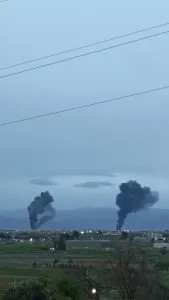
Reports of the Weakening of the Decision-Making Structure During the War
Reports indicate that the war has caused the killing of dozens of senior officials, and this very issue has faced the decision-making structure with serious disruption. Also, disruption in communications between military and political institutions has faced the coordination of operations and political decisions with problems.
According to these reports, in some cases decisions are made in a scattered and uncoordinated manner, and this very issue has reduced the ability to carry out operations and also to advance negotiations. This situation has occurred while the war is still continuing and military and political pressures have increased simultaneously.
Continuation of the War and Attacks on Military Positions in Isfahan
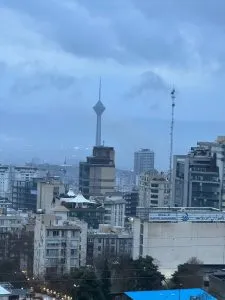
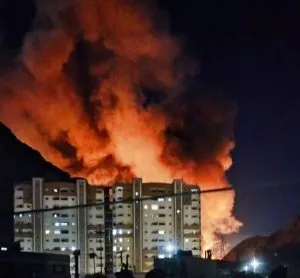
In the continuation of the war, on Monday evening and Tuesday dawn, several cities in Isfahan province including Isfahan, Najafabad, Mobarakeh, Kashan, and Shahreza were targeted by aerial attacks. Reports indicate the occurrence of severe explosions around Isfahan.
According to reports, in these attacks a large ammunition warehouse was targeted using bunker-buster bombs. Also, some local officials have confirmed that several military targets in this area were hit, although more details about these attacks have not been published.
In images published from these attacks, explosions with very intense light and mushroom-shaped columns of smoke are observed, which indicate the high intensity of the explosion at the impact site. It is said that missile sites around Isfahan in Kuh-e Sofeh and Badr military airport were among the targets of these attacks.
Bombing of Tehran and Targeting of Several Urban Areas
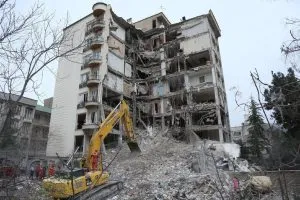
In Tehran as well, simultaneously with the continuation of the war, several points were targeted by attacks. According to reports, the attack on the Gisha neighborhood in northwest Tehran has caused extensive destruction. Also, a building in the ninth alley of Balochistan Street in Gisha was hit at 5:58 a.m.
In eastern Tehran, Zeynabiyeh neighborhood near Abbasabad was targeted at 5:53 a.m. At the same time, thick smoke was observed in some areas including around Sarkheh-Hesar. Around noon, the presence of suppression forces in Kaj Square in Saadatabad was also reported.
These attacks have been carried out while the war is still continuing and various areas are targeted by attacks at different hours of the day and night.
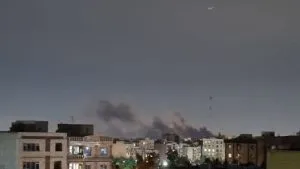
NetBlocks Warning: Continuation of Widespread Internet Outages in Iran
The internet monitoring group “NetBlocks” has announced that the widespread internet outage in Iran has entered its thirty-second day and many users have been effectively deprived of contact with the outside world for more than 744 hours.
According to this report, this long-term digital isolation has created new challenges for the people; including the failure of domains and user accounts, and also the non-updating of servers in conditions where the internal network has gradually suffered a decline in quality.
Previously, reports had also shown that this nationwide outage has been one of the longest recorded in the country and internet communications have reached close to zero at some points.
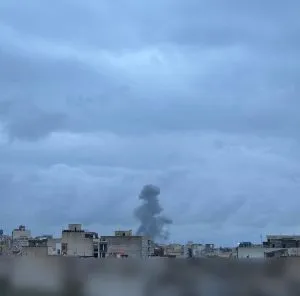
Reports of Regional Developments Simultaneously with the Continuation of the War
Simultaneously with the continuation of the war, reports have also been published of missile and drone attacks on some infrastructure in the region. According to these reports, some non-military infrastructure including airports, hotels, and energy facilities have also been damaged in these attacks.
Meanwhile, in conditions where passage through the Strait of Hormuz has been accompanied by restrictions, maritime data shows that some commercial ships have still passed through this gateway. This issue indicates that despite the continuation of the war, maritime traffic has not completely stopped.
At the same time, some officials have also made statements about the presence of foreign forces in the region and relations with some countries in the region. These developments indicate that the war, in addition to its military dimension, has also acquired political and regional dimensions.
Summary of Developments on the Thirty-Second Day of the War
The totality of developments indicates that while the war has entered its thirty-second day, military attacks are still continuing and at the same time the political situation and negotiations are also in a complex condition. Ambiguity in the decision-making structure, weakening of coordination within the ruling system, and continuation of military attacks have moved the conditions of the war into a more complex stage. In such conditions, simultaneously with the continuation of the war and military attacks on various positions, the outlook for negotiations has also faced uncertainty due to ambiguity in the structure of power and lack of coordination in decision-making, and it is not clear in which direction the course of developments will go in the coming days.
See also the below articles:
- Execution of Pouya Ghobadi and Babak Alipour in Qezelhesar Prison
- Increase in Concerns about Prisoners in Qezelhesar Prison After Executions
Follow Iran Human Rights Society on social networks:
Telegram /Twitter /Instagram / YouTube / Facebook
Join Iran Human Rights Society on Twitter