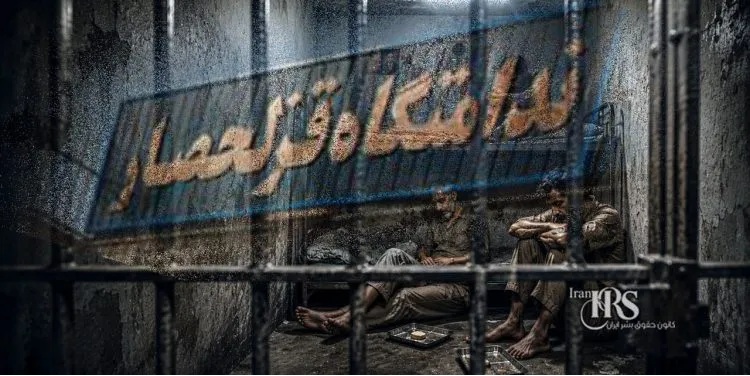
Reports received from Unit 2 of Qazal Hesar Prison indicate the intensification of pressure on prisoners, a severe reduction in food rations, an alarming increase in costs, and the lack of basic facilities for meeting daily necessities.
Iran Human Rights Society, Tuesday, May 12, 2026 – Informed sources from Qazal Hesar Prison say that the situation in Unit 2 of this prison has become severely critical, and prisoners are facing food shortages, severe price increases in goods, and extensive restrictions on welfare facilities. According to these reports, after the start of the war and the intensification of the economic crisis, many of the prison’s limited facilities, including shops, have effectively become inaccessible to prisoners, and a large number of them no longer have the ability to purchase their basic necessities.
What is the situation of prisoners in Unit 2 of Qazal Hesar Prison?
Reports received from Unit 2 of Qazal Hesar Prison indicate that the living conditions of prisoners have become significantly worse in recent weeks.
Informed sources say that although in some cases the execution of death sentences for some drug prisoners has been stopped or reduced, in contrast, livelihood pressures and harsh prison conditions have increased severely; to the extent that many prisoners describe the current situation as a kind of “gradual torture.”
According to these sources, the increase in costs and severe price increases in goods have caused even basic and essential items to become unattainable for many prisoners.
Why have Qazal Hesar prisoners faced a food supply crisis?
Based on published reports, prisoners’ food rations have decreased significantly in recent months. Prisoners say the amount of food has decreased and its quality has also dropped severely.
Sources close to the prisoners emphasize that many prisoners previously met part of their food needs through the prison shop, but after the start of the war and the intensification of the economic crisis, the prison’s limited welfare facilities have also been disrupted.
According to them, prison shops have either faced severe restrictions or the prices of goods in them have increased to such an extent that a large part of the prisoners no longer have the ability to buy. Human rights activists warn that the reduction in food rations alongside severe price increases in goods has effectively placed prisoners in conditions of hunger.
What impact has the price increase of goods in Qazal Hesar Prison had on prisoners?
Reports show that the increase in prices of goods in Qazal Hesar Prison has put heavy pressure on prisoners and their families. Informed sources say that many prisoners do not have money to meet their daily expenses, and their families are also unable to provide financial support to the prisoners due to the economic crisis.
In such conditions, even buying the simplest items such as food, medicine, or hygiene items has become difficult or impossible for a large number of prisoners. Human rights observers say this situation is especially more dangerous for sick, elderly prisoners and those with physical problems and can seriously threaten their health.
Why has the risk of disease outbreaks in the prison increased?
Human rights activists warn that reduced proper nutrition, physical weakness caused by hunger, and the unsanitary conditions of the prison provide the ground for the spread of diseases.
According to them, malnutrition and the lack of proper medical facilities can cause an increase in infectious diseases, digestive problems, and weakening of the prisoners’ immune systems. Sources close to the prisoners say that in some wards, prisoners face serious problems even in meeting the minimum food materials needed, and this very issue has caused the intensification of the humanitarian crisis in the prison.
Why are solitary cells used for holding political prisoners?
Based on published reports, part of the solitary cells in Qazal Hesar has been turned into a place for holding political prisoners.
Human rights activists say that using solitary cells for long-term holding of political prisoners, in addition to physical pressure, also leaves severe psychological effects on the prisoners. According to observers, transferring political prisoners to solitary sections alongside severe livelihood restrictions is considered part of the policy of pressure and greater control over prisoners.
Human rights violations; Hunger, livelihood deprivation, and holding prisoners in inhuman conditions
Published reports from Unit 2 of Qazal Hesar Prison have created widespread concerns about the humanitarian situation of the prisoners. Human rights activists say that the reduction in food rations, severe price increases in goods, deprivation of prisoners from meeting basic needs, and the use of solitary cells for political prisoners are examples of inhuman behavior and violation of prisoners’ rights.
Violated articles:
- Violation of the right to enjoy an adequate standard of living and nutrition – Article 25 of the Universal Declaration of Human Rights: Every person has the right to enjoy an adequate standard of living, nutrition, and health. Depriving prisoners of sufficient food and basic facilities violates this right.
- Violation of the prohibition of inhuman and degrading treatment – Article 5 of the Universal Declaration of Human Rights: Creating conditions that expose prisoners to hunger, disease, and severe pressure can be considered an example of inhuman treatment.
- Violation of the right to health – International Covenant on Economic, Social and Cultural Rights: Lack of access for prisoners to proper nutrition and hygiene facilities threatens their physical and mental health.
- Violation of the principles of humane treatment of prisoners – Nelson Mandela Rules: Based on international standards, prisoners must enjoy sufficient food, hygiene facilities, and humane conditions. Holding prisoners in conditions that lead to malnutrition and disease violates these principles.
See also the below articles:
- Iran Forces Prisoners Into Street Propaganda in Babol
- Evin Prison Extends Visiting Ban for Women Political Prisoners
Follow Iran Human Rights Society on social networks:
Telegram /Twitter /Instagram / YouTube / Facebook
Join Iran Human Rights Society on Twitter