

Qezel Hesar prisoners end historic hunger strike after judiciary promises to halt executions. A symbol of resistance against the death penalty in Iran.
Iran Human Rights Society, Sunday, October 19, 2025- The Qezel Hesar prison strike, a bold protest against executions, forced Iran’s judicial authorities to pause and listen. On October 27, 2025, prisoners in Karaj’s Qezel Hesar Prison temporarily halted their six-day hunger strike. Over 1,500 inmates, many with sewn lips, demanded an end to death sentences. Their collective action led to a rare promise from the judiciary to suspend executions. However, prisoners vowed to resume protests if authorities fail to deliver. This unprecedented movement marks a turning point in the fight against the death penalty.
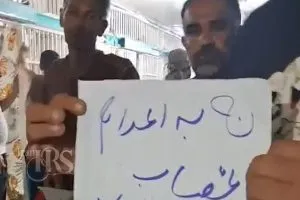
Prisoners’ Defiance Sparks Change
The Qezel Hesar prison strike began on October 21, 2025, with inmates refusing food and chanting “No to execution.” Their drastic action—sewing their lips shut—symbolized their desperate plea for justice. Consequently, the judiciary faced immense pressure. On October 27, officials returned six death-row prisoners from solitary confinement to their ward in Unit 2. This move signaled the strike’s impact. Prison sources confirmed that concerns over the strikers’ deteriorating health prompted the authorities’ response.
Moreover, senior officials, including Hayat al-Ghaib, head of Tehran’s prisons, and Azizi, head of Qezel Hesar Prison, met with the inmates. An individual named Asadi, claiming to represent the judiciary, addressed the prisoners directly. Their presence underscored the strike’s ability to compel action from the regime.
Judiciary’s Promise: A Temporary Reprieve?

During the meeting, Asadi made a significant promise. He stated, “On behalf of the judiciary, I assure you no executions will occur for the next few months.” He also mentioned plans to amend the drug-related execution law, a key demand of the prisoners. However, he warned that continued protests could be seen as links to “hostile groups.”
The prisoners responded fiercely. They demanded, “Change the execution law. Does Iran belong only to you?” Their defiance highlighted the flawed legal system. Furthermore, they rejected accusations of political ties, asserting their protest was about survival and justice.
As a result, the prisoners paused their hunger strike. They agreed to give authorities time to fulfill their promises. Nevertheless, they emphasized that any failure to act would reignite their protests. This temporary halt reflects cautious optimism but also unwavering resolve.
Harsh Conditions Test Prisoners’ Resolve

The Qezel Hesar prison strike unfolded under brutal conditions. Authorities cut off Unit 2’s water supply, intensifying the prisoners’ suffering. Additionally, they restricted access to the infirmary, leaving sick inmates untreated. Reports indicated that prisoners fainted every few hours due to low blood pressure. To silence their voices, officials installed jammers to block phone communications with the outside world.
Despite these hardships, the prisoners remained united. They declared, “Silent death under oppression is worse than hunger.” Their solidarity transformed Qezel Hesar into a beacon of resistance. The strike, involving over 1,500 inmates, stands as the largest collective protest in Iran’s prison history under the current regime.
Families Amplify the Cry for Justice
On October 27, 2025, families of death-row prisoners gathered outside Iran’s Islamic Consultative Assembly. They chanted “Do not execute” and “No to execution,” echoing the prisoners’ demands. Security forces dispersed the crowd violently. However, citizens showed support by honking car horns, amplifying the families’ plea. This public solidarity added pressure on the regime, reinforcing the strike’s impact.
A Historic Retreat by the Regime

The Qezel Hesar prison strike forced a rare retreat from Iran’s judiciary. Human rights analysts view this as a landmark event. For the first time, authorities publicly promised to halt executions, driven by grassroots resistance. The prisoners’ sewn lips and starving bodies broke through censorship, compelling the regime to act.
However, activists remain skeptical. They question the reliability of “verbal and temporary promises.” Still, they recognize the strike as a pivotal moment in the fight against the death penalty. The collective action exposed the regime’s vulnerabilities and showcased the power of unified resistance.
Qezel Hesar: A Symbol of Resistance
The Qezel Hesar prison strike has redefined the prison’s legacy. No longer just a place of confinement, it now stands as a symbol of defiance against executions. The prisoners’ courage, despite brutal suppression, proved that even behind high walls, the cry of “No to execution” resonates. This historic protest, with its unprecedented scale and impact, marks a new chapter in Iran’s struggle for justice.
See also the below articles:
- Critical Condition of Hoda Mehrganfar in Shiraz’s Adel Abad Prison; Her Life Hangs in Balance
- Omid Fathi Beating in Vakilabad Prison: Urgent Human Rights Crisis
Follow Iran Human Rights Society on social networks:
Telegram /Twitter /Instagram / YouTube / Facebook
Join Iran Human Rights Society on Twitter







Discussion about this post