Mohtaram Parandin, known as Mahshar, an artist and miniaturist imprisoned in Evin, faces severe medical restrictions despite suffering from cancer, two tumors in her head and throat, and heart disease. Reports indicate her transfer to chemotherapy while in handcuffs and leg shackles, alongside the denial of required medications
Iran Human Rights Society, Wednesday, October 14, 2026– Mohtaram Parandin, a painter and artist from Kermanshah who has been incarcerated in the women’s ward of Evin Prison for months, is denied proper medical treatment despite suffering from serious illnesses and requiring urgent specialized care. According to received information, her physical condition has severely deteriorated due to delays in hospital transfers, her cancer diagnosis, and restrictions imposed on her treatment process.
Cancer Diagnosis and the Urgent Necessity of Surgery for Mohtaram Parandin
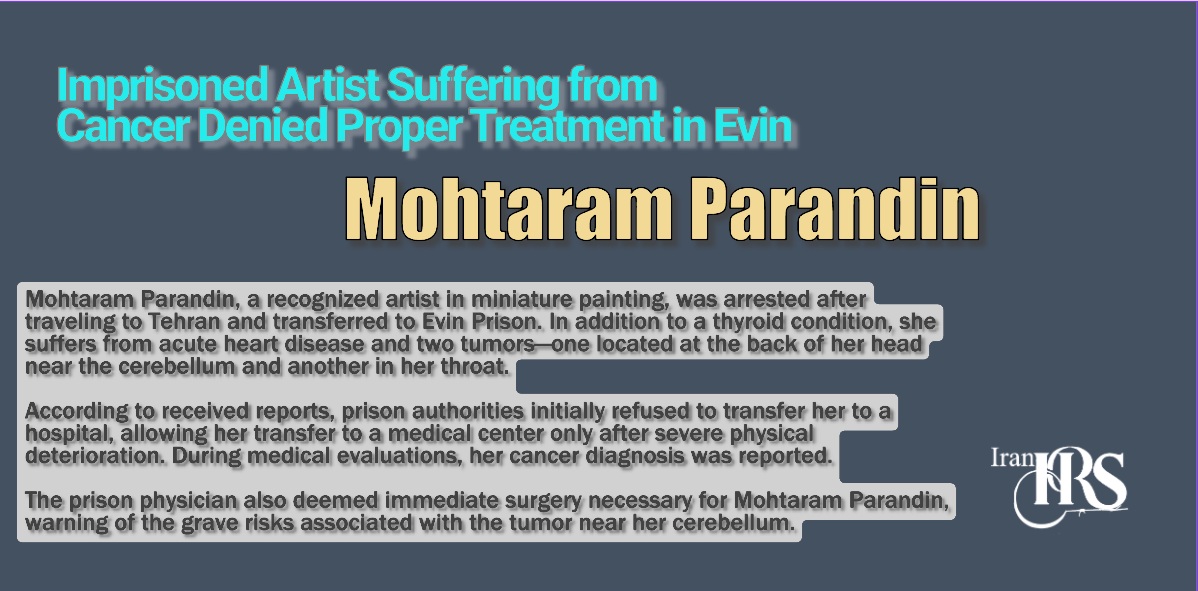
Mohtaram Parandin, a recognized artist in miniature painting, was arrested after traveling to Tehran and transferred to Evin Prison. In addition to a thyroid condition, she suffers from acute heart disease and two tumors—one located at the back of her head near the cerebellum and another in her throat.
According to received reports, prison authorities initially refused to transfer her to a hospital, allowing her transfer to a medical center only after severe physical deterioration. During medical evaluations, her cancer diagnosis was reported.
The prison physician also deemed immediate surgery necessary for Mohtaram Parandin, warning of the grave risks associated with the tumor near her cerebellum.
Impairment in Vision, Speech, and Mobility
According to informed sources, the tumor near her cerebellum has caused impairments in Mohtaram Parandin’s vision, speech, and physical movement.
Her cellmates report that the effects of the illness are fully visible in her walking and speaking. Despite medical warnings, necessary therapeutic measures and urgent surgery have not yet been carried out.
Chemotherapy in Handcuffs and Leg Shackles
One of the most alarming aspects of Mohtaram Parandin’s condition is the manner of her transfer for chemotherapy.
According to received information, officers utilize handcuffs and leg shackles when transferring this sick prisoner to medical facilities. These physical restraints, under conditions of extreme physical weakness and chemotherapy procedures, cause increased physical pain, stress, and psychological pressure.
It is also reported that Mohtaram Parandin requires calcium supplements, but this medication is withheld from her.
Opposition to Medical Furlough and Conditional Release
Despite the severe deterioration of her physical health and the passage of more than half of her prison sentence, judicial authorities have opposed her conditional release and medical furlough.
This comes while, according to informed sources, the necessary property deed required for medical furlough has already been placed at the prosecutor’s office.
Following the passing of her husband, Mohtaram Parandin served as the sole guardian of her teenage student child. Her child also suffers from a specific medical condition and faces severe hardship in the mother’s absence.
Legal Review of Mohtaram Parandin’s Case Based on Domestic Laws
This review does not signify an endorsement of the dictatorship’s laws governing Iran, but serves to demonstrate the failure to observe even these regulations. Article 137 of the Executive Regulations of the Prison Organization provides for the immediate transfer of sick prisoners to medical facilities in emergency situations. Article 140 also emphasizes the provision of medication and medical services. The delay in treatment, deprivation of required medication, and disregard for the necessity of surgery for Mohtaram Parandin conflict directly with these statutory provisions.
Human Rights Review of the Case and Violation Standards
Denying Mohtaram Parandin essential medical treatment and restraining her with handcuffs and leg shackles during chemotherapy constitute alarming violations of prisoner rights. Article 3 of the Universal Declaration of Human Rights emphasizes the right to life and personal security, while Article 5 strictly prohibits any cruel, inhuman, or degrading treatment. Furthermore, Article 25 recognizes the right to medical care. The reported restrictions on medical treatment conflict directly with these international standards.
See also the below articles:
- Death of Political Prisoner Behzad Rezvanmehr in Karaj Central Prison Following Torture and Denial of Medical Treatment
- Varisheh Moradi Sentenced to Death a Second Time in Tehran
Follow Iran Human Rights Society on social networks:
Telegram /Twitter /Instagram / YouTube / Facebook
Join Iran Human Rights Society on Twitter