
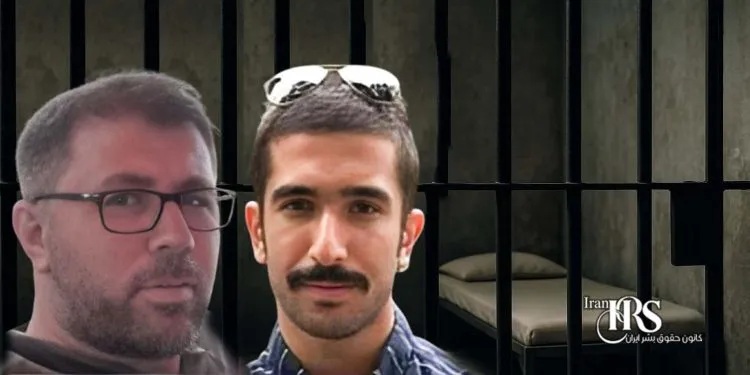
Two political prisoners, Mohammad Hassani and Mehdi Beyrami, have been transferred to solitary confinement in Karaj Central Prison following recent war-related events, with no information available regarding their physical or mental condition.
Iran Human Rights Society, Tuesday, July 1, 2025 – Two political prisoners, Mohammad Hassani and Mehdi Beyrami, have been transferred to solitary confinement in Karaj Central Prison following recent war-related events, with no information available regarding their physical or mental condition. This action is part of an ongoing pattern of heightened security measures and suppression of political prisoners in this facility, where numerous reports of torture, beatings, and widespread human rights violations have emerged.
Mohammad Hassani: Master’s Student, Six Years in Prison Without Furlough
Mohammad Hassani, a master’s student from Sanandaj, Kermanshah, has been detained in Karaj Central Prison since January 2020. He has not been granted any furlough since his arrest and has served his entire sentence under strict security conditions. Initially sentenced to 12 years in prison, with 6 years enforceable, his sentence was later increased to 12 years following direct intervention by the Ministry of Intelligence, which canceled the consolidation of his case.
Hassani faces charges including “supporting the Mujahedin-e Khalq,” “propaganda against the state,” and “destruction of public property.” Reports indicate that he endured intense interrogations and physical and psychological torture during his detention, the effects of which continue to impact his health.
Mehdi Beyrami: Threatened with Solitary Confinement After Demanding Medical Treatment

Mehdi Beyrami, another political prisoner in Karaj Central Prison, has been serving a six-year-and-one-month sentence since May 2021. In May 2023, he suffered a severe leg injury, but prison authorities not only prevented his transfer to a hospital but also denied him basic medication. His protests against this situation were met with threats of transfer to solitary confinement.
Prior to this, Beyrami spent 27 days in an intelligence detention center under interrogation, and his wife and young child were also summoned and detained for questioning. He was ultimately sentenced to 6 years by Branch 12 of the Revolutionary Court.
Inhumane Conditions in Karaj Central Prison
Karaj Central Prison, also known as Karaj Penitentiary, has become a notorious center for the oppression and torture of political prisoners in recent years. Reports highlight frequent beatings, prolonged solitary confinement, lack of access to medical care, and poor sanitary conditions.
In March 2023, special prison guards raided Ward 7, severely beating Mohammad Hassani and causing serious head injuries. He received no adequate medical attention. His recent transfer to solitary confinement, without notification to his family or lawyer, has heightened concerns about his safety and well-being.
Threat of New Charges Against Mohammad Hassani
As part of ongoing pressures, the Ministry of Intelligence has blocked the consolidation of Mohammad Hassani’s legal cases, paving the way for new charges that could add up to 8 more years to his current sentence. This is despite the fact that Hassani has been imprisoned without a single day of furlough since 2020.
Systematic Human Rights Violations
The situation of Mohammad Hassani and Mehdi Beyrami is just one example of the widespread and systematic human rights abuses in Iran’s prisons. These abuses include arbitrary detentions, torture, denial of medical care, threats against families, and lack of fair trials, which have been repeatedly condemned by international organizations.
Specific Human Rights Violations:
– Article 5 of the Universal Declaration of Human Rights: Prohibition of torture and inhumane treatment – violated in the case of both prisoners.
– Article 9: Prohibition of arbitrary detention – their initial arrests and continued imprisonment without transparent trials fall under this violation.
– Article 10: Right to a fair and public trial – Revolutionary Courts often lack fair trial standards.
– Article 25 of the International Covenant on Civil and Political Rights: Guarantee of political rights – violated through the suppression of peaceful activities.
Media Silence and Family Disconnection
The lack of official updates on Mohammad Hassani and Mehdi Beyrami’s status, combined with their families’ inability to contact them, visit, or pursue legal recourse, reflects a deliberate strategy to silence victims. Families have repeatedly reported that their inquiries to judicial and security authorities have gone unanswered.
Urgent Call to Action
With the physical and mental conditions of both prisoners shrouded in uncertainty, human rights activists, international organizations, and independent media have issued urgent calls for action and monitoring of their situation. The international community must pressure the Iranian government to ensure at least the minimum standards of human rights for political prisoners.
The events in Karaj Central Prison paint a stark picture of Iran’s critical human rights crisis. The uncertain fate of Mohammad Hassani and Mehdi Beyrami symbolizes the injustice faced by thousands of political prisoners across the country. The continuation of these conditions not only violates Iran’s international obligations but also poses a grave threat to human dignity and social justice.
Follow Iran Human Rights Society on social networks:
Telegram /Twitter /Instagram / YouTube / Facebook
Join Iran Human Rights Society on Twitter








Discussion about this post