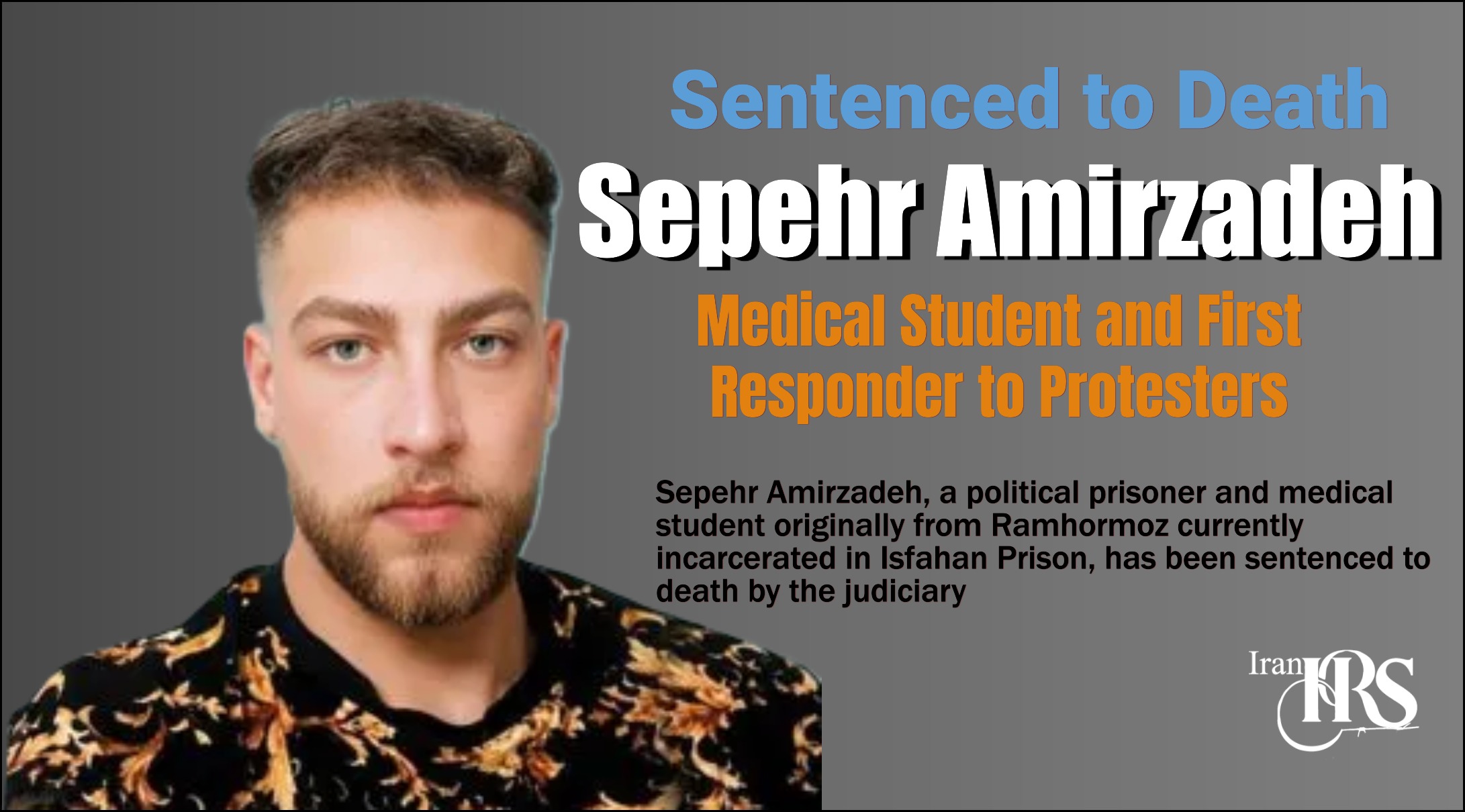
Sepehr Amirzadeh, a 23-year-old medical student and detainee from the 2025 nationwide protests, has been sentenced to death amid reports highlighting his role in providing medical assistance to injured protesters.

Iran Human Rights Society, Thursday, August 13, 2026 – According to received reports, Sepehr Amirzadeh, a political prisoner and medical student originally from Ramhormoz currently incarcerated in Isfahan Prison, has been sentenced to death by the judiciary. Born in 2003/2004, this student provided medical assistance to the wounded during the 2025 nationwide protests. Reports indicate that these exact humanitarian activities were targeted by security and judicial agencies during the compilation of his case file. Simultaneously, specific details regarding the charges, court evidence, and the full text of the verdict have not been made independently available.
Arrest of Sepehr Amirzadeh Following 2025 Nationwide Protests
Sepehr Amirzadeh, a native of Ramhormoz in Khuzestan province and a medical student, was arrested by security forces on January 13, 2026 at his personal residence in Isfahan.
His arrest occurred just days after the widespread protests of January 8 and 9, 2026 —protests that were accompanied by mass arrests of citizens across various regions.
According to published information, Sepehr Amirzadeh utilized his training as a medical student during the protests to assist several wounded and injured protesters, providing them with first aid and medical care.
Reports indicate that these medical relief activities were drawn into focus during security investigations and judicial proceedings against him. However, it remains unclear what specific behavior or act the court formally relied upon as the legal ground for issuing a death sentence.
Transfer from Security Detention to Isfahan Prison
Following his arrest, Sepehr Amirzadeh was held for a period in security detention facilities and was subsequently transferred to Isfahan Prison after undergoing interrogations.
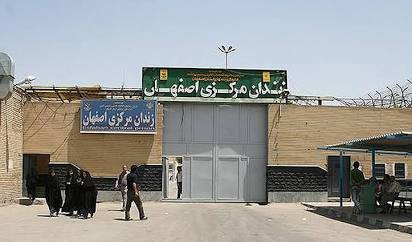
Reports now indicate the issuance of a death sentence against this medical student—a ruling that raises grave concerns given the complete absence of transparent information regarding the precise charges, the cited evidence, and the nature of the judicial proceedings.
As of the publication of this report, the complete text of the court verdict and the specific evidentiary details used to justify capital punishment are not independently available. Furthermore, insufficient information has been released regarding the quality of Sepehr Amirzadeh’s access to chosen legal counsel and his opportunity to prepare an effective defense.
For these reasons, clarifying the exact formal charge, the issuing court branch, case documents, and the current status of his appeal carries critical importance.
Medical Assistance: A Deeply Concerning Element of the Case
One of the most alarming aspects of Sepehr Amirzadeh’s case is the report that his provision of medical aid to injured protesters served as a basis for prosecution.
Delivering medical treatment to an injured individual—regardless of their identity or political alignment—is directly bound to fundamental principles of medical ethics and humanitarian considerations. Converting such activities into evidentiary grounds for a death sentence, if confirmed, establishes a chilling precedent regarding the safety of physicians, medical students, and first responders who render aid to the wounded during critical situations.
This issue also sends a deterrent signal to healthcare workers; any doctor or emergency responder who fears that assisting a wounded protester could later be weaponized against them in court faces a severe security threat while attempting to fulfill their professional and human duties.
Reports of Pressure on Sepehr Amirzadeh’s Family
Concurrently with the issuance of the death sentence, reports have surfaced regarding security pressure exerted on Sepehr Amirzadeh’s family.
According to this information, security agencies have demanded that his family refrain from sharing information or publicizing details regarding their son’s condition and the progression of his case.
Restricting a family’s ability to publicize details severely hinders access to legal support, retention of independent counsel, public awareness of judicial proceedings, and oversight by human rights organizations—particularly in a capital case where every procedural stage directly impacts the defendant’s right to life.
The issuance of a death sentence for this medical student while key dimensions of his case remain shrouded in opacity underscores the urgent need for the immediate disclosure of accurate information regarding charges, court evidence, and the absolute guarantee of his right to an effective defense.
Legal Review of Sepehr Amirzadeh’s Case Based on Domestic Laws
The dictatorial laws governing Iran in recent years have repeatedly been criticized for failing to align with fair trial standards, opacity in security-related prosecutions, and the restriction of fundamental freedoms. Reviewing Sepehr Amirzadeh’s case under domestic legal statutes does not constitute an endorsement of these laws; the objective is to highlight instances where even these existing statutes have been disregarded by the judiciary.
Legal Ambiguities of the Case
The primary legal ambiguity is the lack of clarity surrounding the exact formal charge under which the death sentence was issued. The full text of the verdict, the court’s cited evidence, and the details of the judicial proceeding remain unavailable to the public.
Furthermore, reports that medical assistance provided to injured protesters was cited in judicial proceedings raise fundamental questions regarding the legal validity of the prosecution.
The reported pressure on the family to prevent public reporting further aggravates concerns regarding transparency in the judicial process.
Relevant Legal Articles
- Article 32 of the Constitution: Mandates that arrests must follow legal procedures, and charges must be formally communicated to the accused.
- Article 35 of the Constitution: Recognizes the right of the accused to retain legal representation.
- Article 36 of the Constitution: Establishes that the sentencing and execution of punishments can only be carried out by a competent court and pursuant to law.
- Article 37 of the Constitution: Asserts the presumption of innocence, stating that no individual shall be deemed guilty unless proven in a competent court.
- Article 38 of the Constitution: Explicitly prohibits all forms of coercion to extract confessions or gather information.
Violations and Legal Concerns
- Opacity regarding the exact formal charge and acts leading to the death sentence;
- Non-publication of court evidence and supporting documentation;
- Ambiguity regarding effective access to legal representation of choice;
- Reports of medical first-responder assistance being weaponized within judicial proceedings;
- Reported pressure on the family to enforce silence and prevent public reporting;
- Issuance of capital punishment in a case marked by severe procedural ambiguities.
Reviewing the Case from the Perspective of Human Rights and Potential Violations of International Standards
From a human rights standpoint, protection of the right to life, fair trial guarantees, access to counsel, immunity from arbitrary punishment, and respect for human dignity represent foundational principles of international law. The published reports concerning Sepehr Amirzadeh and the issuance of a death sentence against him—under conditions where details of the charges, court documentation, and the quality of his defense access remain unclarified—raise grave concerns regarding compliance with these rights.
Relevant International Documents
- Article 3 of the Universal Declaration of Human Rights: The right to life, liberty, and security of person.
- Article 5 of the Universal Declaration of Human Rights: Prohibition of torture or cruel, inhuman, or degrading treatment or punishment.
- Article 10 of the Universal Declaration of Human Rights: The right to a fair and public hearing by an independent and impartial tribunal.
- Article 11 of the Universal Declaration of Human Rights: The presumption of innocence and full guarantees necessary for a proper defense.
- Article 6 of the International Covenant on Civil and Political Rights (ICCPR): Protection of the right to life and strict limitation of the death penalty to extremely narrow circumstances.
- Article 14 of the ICCPR: Right to a fair trial, right to defense, and access to necessary facilities to prepare a defense.
- Article 10 of the ICCPR: Obligation to treat all persons deprived of liberty with humanity and respect.
- Nelson Mandela Rules: Requirement to respect the inherent dignity of prisoners, ensure access to necessary care, and uphold fundamental rights.
- Medical Ethics and Medical Neutrality Principles: Mandate that medical and emergency aid must be provided impartially, without discrimination, and free from regard to the political status or views of the injured person.
See also the below articles:
- Mehdi Roshani Faces Moharebeh Charges and Death Penalty Risk
- Greater Tehran Prison Brigade 5: Severe Overcrowding & Corruption
Follow Iran Human Rights Society on social networks:
Telegram /Twitter /Instagram / YouTube / Facebook
Join Iran Human Rights Society on Twitter