
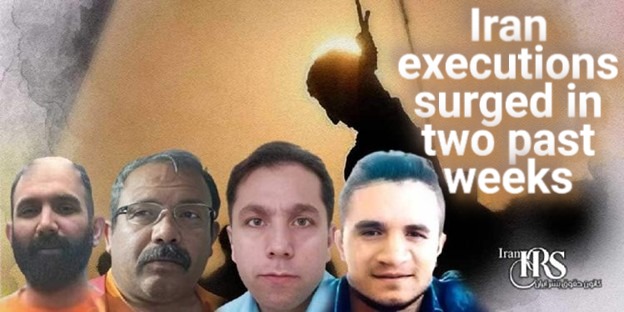
Iran executions surged in two past weeks, with 55 prisoners killed across Qezel Hesar, Bushehr, Gachsaran, Ahvaz, Aligudarz, and Jiroft prisons, violating human rights.

Iran Human Rights Society, Wednesday, September 3, 2025 – Iran executions have escalated alarmingly in 2025, with 55 prisoners executed in Shahrivar, the ongoing Persian calendar month alone. This follows 176 executions in Mordad, averaging over four daily. These killings occurred in Qezel Hesar, Bushehr, Gachsaran, Ahvaz, Aligudarz, and Jiroft prisons. Such actions raise serious concerns about human rights violations, as they often defy international standards. This article explores the recent wave of executions and their conflict with global human rights obligations.
Executions in Qezel Hesar Prison, Karaj
On September 3, 2025, authorities executed two prisoners in Qezel Hesar Prison, Karaj. One was Majid Safari, a 35-year-old from Hamedan, arrested four years ago on drug-related charges. The second prisoner, identified only as Naser, remains under investigation. These executions reflect Iran’s ongoing use of the death penalty for non-violent offenses, raising questions about judicial fairness.
Execution in Tehran Province
On the same day, authorities executed a prisoner identified as “A.F.” in Tehran Province for a 2023 murder charge. The prison’s location remains unspecified, highlighting a lack of transparency in Iran’s judicial system. This opacity often prevents proper oversight, increasing the risk of unjust punishments.
Execution in Gachsaran Prison
In Gachsaran Prison, Valiollah Avazpour, a married father from Gachsaran, faced execution on September 3, 2025. Arrested 13 years ago for murder, his case underscores the prolonged detention periods before executions in Iran. Such delays often exacerbate the suffering of prisoners and their families.
Execution of an Afghan National in Bushehr Prison
On September 2, 2025, Bushehr Prison authorities executed an Afghan national for murder. The prisoner’s identity remains undisclosed, further illustrating Iran’s lack of transparency. Executions of foreign nationals, particularly from marginalized groups, often draw international criticism for their disproportionate impact.
Execution in Sepidar Prison, Ahvaz
On August 31, 2025, Ammar Hosseini, a 27-year-old from Khuzestan, was executed in Sepidar Prison, Ahvaz. Arrested three years ago for murder, his execution adds to the growing tally of capital punishments in the region. Ahvaz prisons have faced scrutiny for targeting ethnic minorities disproportionately.
Executions in Aligudarz Prison
On August 26, 2025, Aligudarz Prison saw the executions of Mahan Rashidi, 28, and Yaghoub Derikvand, both for murder charges. Additionally, Mohammadreza Moridan was executed on the same day, as reported by Iran Human Rights. These cases highlight the rapid pace of executions in smaller regional facilities.
Execution in Jiroft Prison
On August 11, 2025, Ahmad Navaei was executed in Jiroft Prison for murder. This execution, part of a broader pattern, reflects Iran’s reliance on capital punishment to address criminal charges, often without adequate legal protections.
Iran Executions and Human Rights Violations
The Universal Declaration of Human Rights, specifically Article 3, declares, “Everyone has the right to life.” Iran executions directly challenge this principle. The death penalty’s irreversibility risks permanent injustice in cases of judicial error. Furthermore, certain execution methods may constitute torture, violating international standards against inhumane treatment.
Under Article 6 of the International Covenant on Civil and Political Rights, Iran must ensure fair trials and reserve the death penalty for the most serious crimes. However, reports indicate frequent violations, including restricted legal access, lack of transparency, and biased courts.
See also the below articles:
- Prisoners in 51 Iranian Prisons Demand an End to Executions in the 84th Week of No to Execution Tuesdays
- 3D Video of Ward 5, Vakilabad Prison, Mashhad: A Tale of Repression, Isolation, and Silent Death
Follow Iran Human Rights Society on social networks:
Telegram /Twitter /Instagram / YouTube / Facebook
Join Iran Human Rights Society on Twitter






Discussion about this post