From documenting the killings and torture during the 2022 nationwide protests to the European Parliament President’s call for the release of Taraneh and Romina Rahimi and all political prisoners.

Iran Human Rights Society – Thursday, September 17, 2026– The release of a new Amnesty International report on the crackdown against the 2022 nationwide protests, alongside statements by Roberta Metsola, President of the European Parliament, regarding the plight of political prisoners, has once again brought the vast scale of organized violence, torture, arbitrary detentions, and death sentences against protesters in Iran into the spotlight. Together, these developments highlight the persistence of state repression and the urgent need for international accountability.
A 1,000‑Page Report on the Structure of the Crackdown
On Wednesday, September 16, 2026—marking the fourth anniversary of the start of the nationwide protests—Amnesty International published an investigative report exceeding one thousand pages. In this extensive document, the organization identified 87 officials who should face criminal investigation for their roles in crimes against humanity.
Amnesty International’s report, titled “Architects of the Crime,” is the result of years of collecting and analyzing documents, images, testimonies, and information regarding victims and the command structure of the forces responsible for suppressing nationwide protests. The organization concluded that the violence perpetrated against protesters was neither sporadic nor the result of individual officers’ misconduct; rather, it constituted part of a widespread and organized attack against the civilian population.
According to the report’s findings, the use of lethal force to disperse protesters and silence dissent was a deliberate policy of the authorities. Security and military forces confronted protesters in various cities using military‑grade weaponry, metal pellets and birdshot, tear gas, beatings, and mass arrests. Amnesty International stated that killings, torture, rape, other forms of sexual violence, enforced disappearances, imprisonment, and the targeted persecution of citizens based on political views, gender, ethnicity, and religion constituted crimes against humanity during the crackdown.
Identification of 87 Officials in the Chain of Command
One of the most significant sections of the new Amnesty International report examines the decision‑making structure and chain of command of the forces responsible for the crackdown. The report identifies 87 officials whose roles in planning, ordering, coordinating, or executing the crackdown operations warrant criminal investigation.
These individuals held positions across various sectors of the political, security, military, and judicial apparatus. Amnesty International emphasized that responsibility for the crimes committed lies not only with the officers who directly fired at the public or tortured detainees; officials who ordered the use of lethal force, were aware of its implementation, or obstructed investigations and accountability must also be held to account.
The organization’s findings point to a “structure of impunity”—a system in which those responsible for the crackdown have not only escaped prosecution but, in some cases, continue to hold key decision‑making and command positions. This entrenched impunity enables the continuation of abuses and increases the likelihood of future violations.
Documenting the Deaths of 377 People, Including 56 Children
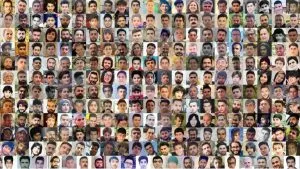
In a separate document released alongside the main report, Amnesty International recorded details regarding the deaths of 377 protesters and bystanders present at protest sites. At least 56 children are among the deceased.
This document includes the victims’ identities and, in some instances, photographs and burial locations. However, Amnesty International stressed that determining the true death toll remains difficult, and the final figure could exceed the number of documented cases. Pressure on victims’ families, the prevention of free observance of memorial ceremonies, the arrest of family members, the destruction or desecration of graves, and the coercion of families into silence are among the actions documented following the killing of protesters.
Intensified Crackdown on Kurdish and Baluch Citizens
Amnesty International’s report indicates that Kurdish and Baluch citizens have been disproportionately targeted by lethal force and violent crackdowns. In Kurdish‑populated areas and cities across Sistan and Baluchestan province, armed forces opened fire on demonstrators in numerous instances. The organization examined the treatment of Kurdish and Baluch citizens as persecution based on ethnic and religious grounds, classifying it as a crime against humanity.
Widespread use of lethal weapons, the detention of wounded citizens in hospitals, the obstruction of medical treatment, pressure exerted on doctors and families, and restrictions on access to information are among the patterns documented across various regions of the country. These findings reveal a systematic effort to suppress dissent in marginalized communities through violence, intimidation, and denial of essential services.
Torture and Forced Confessions Following Arrest
Thousands of people were arrested during the nationwide protests. Many detainees were subjected to torture and inhumane treatment in security detention centers, prisons, and undisclosed locations. Beatings, electric shocks, suspension, prolonged solitary confinement, denial of medical treatment, threats against family members, and sexual violence are among the abuses documented in the Amnesty International report.
Some of the torture was inflicted with the aim of extracting forced confessions. These confessions were subsequently used in judicial proceedings or broadcast on television programs. Based on such confessions—and in trials that failed to meet fair‑trial standards—a number of detainees were sentenced to long prison terms or execution. Amnesty International emphasized that these judicial processes lacked transparency, independence, and adherence to international human rights standards.
Call for an International Criminal Justice Mechanism
Amnesty International has called on the UN General Assembly to establish an independent mechanism to investigate and prosecute those responsible for crimes against humanity in Iran. According to the organization, the existing judicial structure lacks the will to conduct independent investigations into the killing of protesters and instead shields the officials and forces responsible for the crackdown.
Therefore, pursuing these cases through international mechanisms and the principle of universal jurisdiction is essential. Amnesty International warned that the continued impunity of responsible officials paves the way for a recurrence of killings and torture during future protests. The cycle of repression will only end if those who ordered and carried out the abuses are brought to justice, regardless of their rank or position.
From the 2022 Protests to the Case of Taraneh and Romina Rahimi
Coinciding with the release of Amnesty International’s findings, the case of Taraneh and Romina Rahimi demonstrates that the use of detention, torture, forced confessions, and harsh sentences against protesters persists. The two young sisters were arrested in Isfahan after participating in protests in December 2022. For four months, their family had no information regarding their whereabouts or condition.
When their mother was finally granted a visit, severe signs of beatings were visible on their bodies. Documented details regarding their physical condition include extensive bruising, bone injuries, difficulty walking, and hair loss. Published information also points to torture, threats of rape, and sexual violence used to coerce them into signing pre‑drafted confessions.
Taraneh Rahimi has been sentenced to death, and Romina Rahimi to 25 years in prison. Since the verdicts were issued, the sisters’ family has been unable to visit them again. Their case illustrates the ongoing use of secret detention, isolation, and coercive interrogation practices against protesters.
Message from the President of the European Parliament
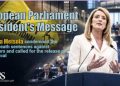
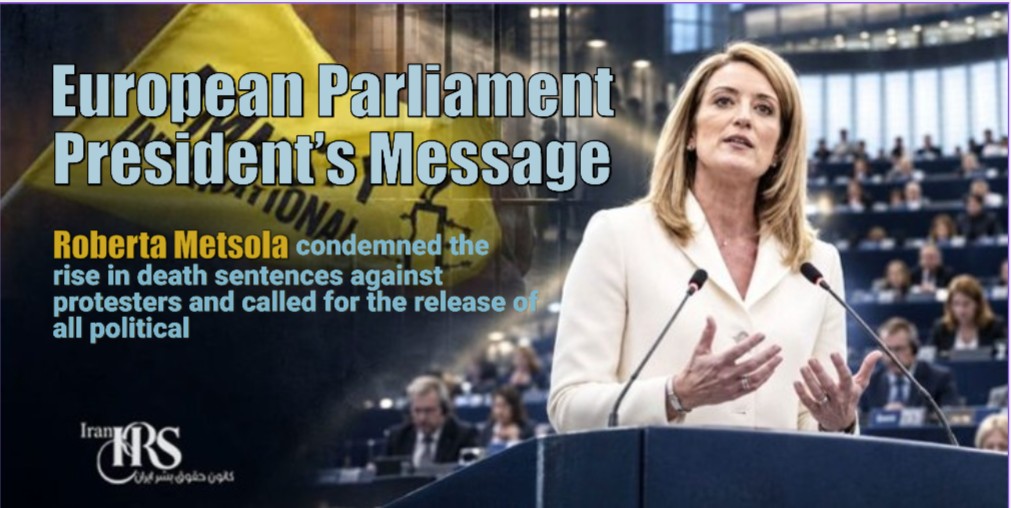
On Monday, September 14, 2026, Roberta Metsola, President of the European Parliament, cited the case of Taraneh and Romina Rahimi during a plenary session as an example of the ongoing repression in Iran. Noting the rise in death sentences handed down to protesters, she stated that the aim of these punishments is to instill fear in society and silence those who seek freedom.
Addressing the people of Iran, Metsola said, “You are not alone.” She emphasized that the European Parliament would continue to call for the immediate release of Taraneh, Romina, and all individuals unjustly imprisoned. Her remarks, alongside Amnesty International’s report, draw a direct link between the crackdown on the nationwide protests of 2022 and the current cases of political prisoners.
The methods employed remain the same: secret detention, isolation from family, torture, forced confessions, opaque trials, and the imposition of death sentences or long prison terms. These patterns demonstrate that the machinery of repression continues to operate, targeting a new generation of protesters and activists.
See also the below articles:
- Escalating Pressure in Ahvaz; Concerns Over Majid Sharifi’s Condition in Intelligence Detention Center
- Amnesty International Calls for Criminal Investigation into 2022 Crackdown
Follow Iran Human Rights Society on social networks:
Telegram /Twitter /Instagram / YouTube / Facebook
Join Iran Human Rights Society on Twitter