
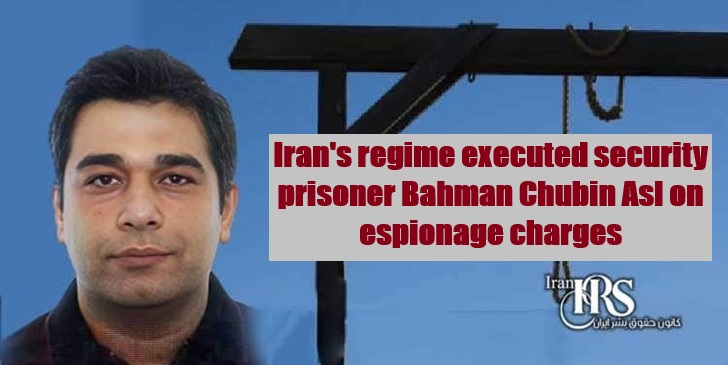
The execution of Bahman Choubi-Asl, regardless of the details of his case, reflects the government’s overall policy of using the death penalty for political survival. But observers believe that this policy cannot permanently contain protests and public anger.
Iran Human Rights Society, Monday, September 29, 2025 – Iran’s regime executed security prisoner Bahman Chubin Asl on espionage charges. This Iran execution underscores a chilling policy. Authorities use the death penalty to cling to power. However, experts warn it fails to silence growing public fury. On September 29, 2025, Mizan News Agency announced the hanging in Qezel Hesar Prison. Chubin Asl, a telecom worker from a knowledge-based firm, faced arrest in 2023. Reports show he transferred from Evin Prison the day before. This case spotlights broader trends in Iran’s prisons.
Escalation of Iran Executions After Ceasefire

Iran’s prisons see a sharp rise in executions post-ceasefire. Independent sources describe it as “power displays via gallows.” Dozens faced death recently in sites like Qezel Hesar, Shiraz’s Adelabad, and Isfahan’s Dastgerd. Human rights activists point out the motive: fear-mongering to curb protests. For instance, past crises triggered execution spikes to enforce control. Therefore, this wave aligns with regime tactics during unrest. Furthermore, it coincides with heightened Iran-Israel tensions after June’s war.
Execution as a Political Tool in Iran
Chubin Asl’s case exemplifies executions as tools for suppression. Experts highlight vague charges like espionage, moharebeh, or corruption on earth. These instill terror without due process. Families often learn of hangings at the last minute. Consequently, this erodes trust in Iran’s justice system. Executions now serve security goals over fairness. In fact, transparency lacks in most trials. This pattern transforms gallows into weapons against society.
Human Rights Reactions to Iran Executions
Activists decried Chubin Asl’s hanging with urgent calls. They note Iran’s top global execution rate. International bodies stress violations of treaties. Moreover, the regime shows no reform intent on laws. Therefore, groups urge global pressure. This trend signals deepening crises in human rights.
Future Outlook on Iran’s Death Penalty Policy
Chubin Asl’s Iran execution reveals survival tactics via death penalty. Yet, observers doubt its long-term hold on protests. Economic strains, inequalities, and abuses erode patience. As a result, fresh unrest looms. Ultimately, his story symbolizes Iran’s rights failures. The gallows silences voices, not solves issues. Society’s anger builds steadily.
See also the below articles:
- Execution of 12 Prisoners Across Iran’s Prisons
- Mohammad Ali Akbari Monfared: Victim of Deliberate Neglect in Fashafuyeh Prison
Follow Iran Human Rights Society on social networks:
Telegram /Twitter /Instagram / YouTube / Facebook
Join Iran Human Rights Society on Twitter







Discussion about this post