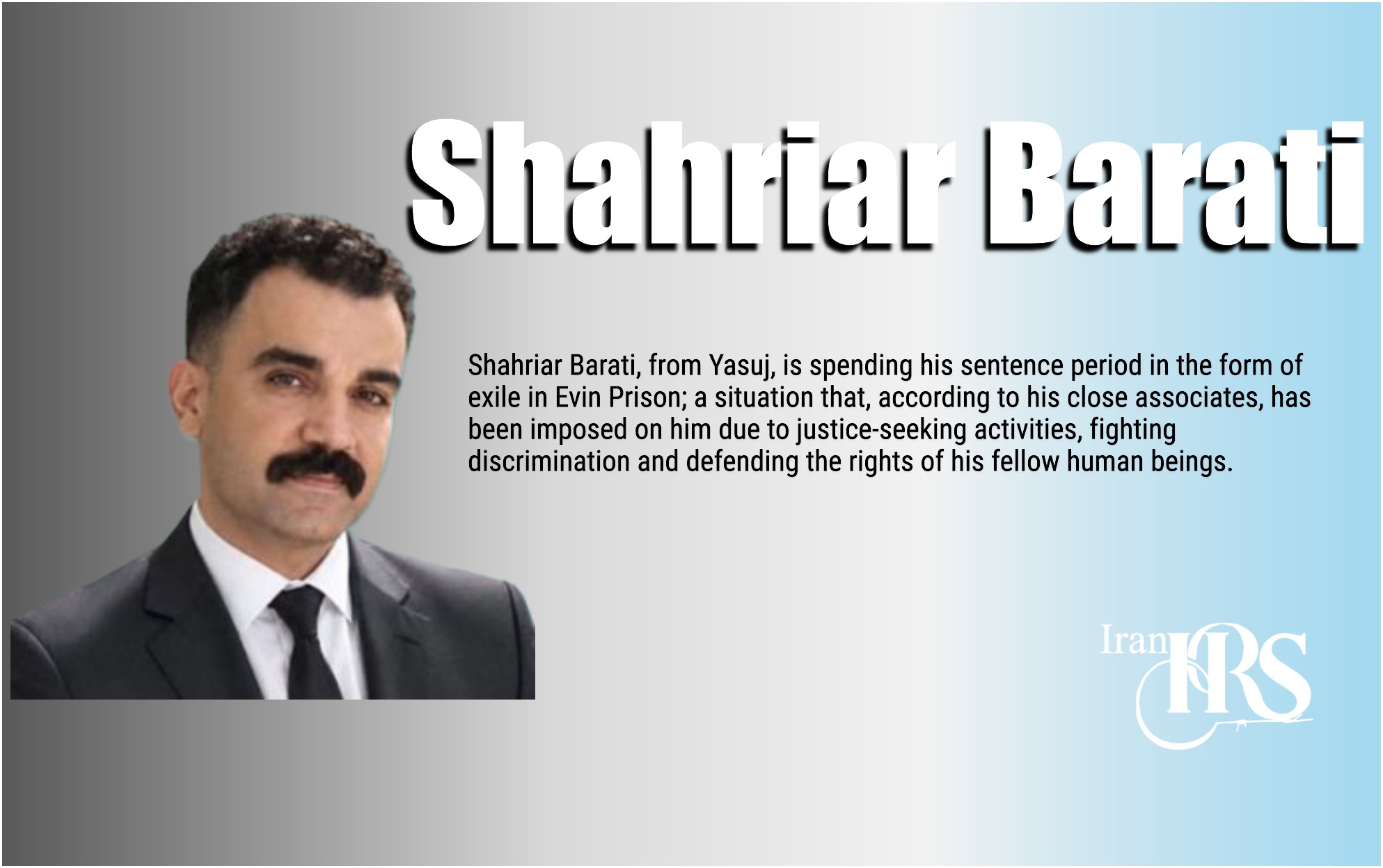
Shahriar Barati, writer, poet and political prisoner from Yasuj, is spending the one thousand one hundredth day of his imprisonment in exile and in Ward 7 of Evin Prison. He is still deprived of furlough, conditional release and transfer to the prison of his place of residence while his family also has to travel a long distance for every visit.
Iran Human Rights Society, Friday 3 July 2026 – Shahriar Barati, political prisoner and researcher in the field of social sciences, is now passing the one thousand one hundredth day of his sentence in Ward 7 of Evin Prison. He who was arrested and sentenced due to media activities and justice-seeking in virtual space, in addition to enduring years of imprisonment, has experienced long periods of solitary confinement several times and is still deprived of rights such as furlough, conditional release and transfer to the prison of his place of residence.

Why is Shahriar Barati spending his imprisonment period in Evin Prison in exile?
Shahriar Barati, from Yasuj, is spending his sentence period in the form of exile in Evin Prison; a situation that, according to his close associates, has been imposed on him due to justice-seeking activities, fighting discrimination and defending the rights of his fellow human beings.
He was first arrested in 2019 due to activities in virtual space and spent 119 days in solitary confinement. This arrest was carried out by the intelligence of the Revolutionary Guards after his return from Sweden, a country where he had resided for some time.
In that case, Barati faced charges including “propaganda against the regime”, “membership in groups with the aim of disrupting the country’s security”, “forming an administration, group or population with the intention of disrupting security in real and virtual space”, “inciting people to war and killing with the aim of disrupting security” and “inciting and encouraging individuals to commit violent acts through virtual space” and was sentenced in total to 17 months of imprisonment.
How was the process of Shahriar Barati’s re-arrest?
Shahriar Barati in August 2023, after deportation from Turkey to Iran, was arrested by security forces at Bazargan border and transferred to Evin Prison.
In this stage also he spent 84 days in solitary confinement; conditions that many prisoners and human rights institutions refer to as “white torture”. His family was also unaware of his place of detention and his condition for more than two weeks.
According to sources close to this political prisoner, the solitary confinement period was accompanied by long interrogations and severe psychological pressures. Many political prisoners believe that long-term detention in solitary confinement is carried out with the aim of psychological erosion, breaking the individual’s resistance and creating lasting psychological damages.
Finally, Shahriar Barati was sentenced to five years and eight months of imprisonment on charges including “assembly and collusion to commit a crime against national security” and “propaganda against the regime”.
What have been Shahriar Barati’s social and research activities?
Shahriar Barati before his arrest was a writer, poet and researcher in the field of social sciences and had dedicated the major part of his activities to social and livelihood issues.
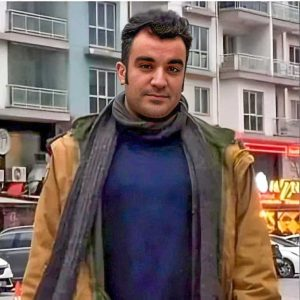
In his notes and articles, he addressed topics such as social damages, inequality, self-immolation of women in Lorish regions, unemployment, the phenomenon of shotis, water crisis, environment and unregulated dam constructions in Lorish provinces and tried to reflect the existing problems and discriminations against the people of these regions.
According to his close associates, these very activities and following up on social demands provided the ground for security confrontations with him.
Why is Shahriar Barati still deprived of furlough and transfer?
Shahriar Barati is now spending his sentence period in Evin Prison for more than one thousand one hundred days; without benefiting from furlough, conditional release or any reduction in punishment.
His family has to travel the long path from Yasuj to Tehran for visits; visits that, according to his close associates, are sometimes canceled without prior notice and with the announcement of his prohibition of visit.
Barati also, after serving more than one-third of his sentence period, in accordance with the regulations of the Prisons Organization and related bylaws, has submitted requests for transfer to the prison of his place of residence several times; but these requests have not been approved by security and judicial institutions so far.
He has also experienced two wars during his imprisonment period, one of which was simultaneous with the bombing of Evin Prison. According to his close associates, the publication of his account of that day was accompanied by restrictions including opposition to conditional release, deprivation of furlough and prohibition of visit.
Legal Examination of the Case Based on Domestic Laws
Introduction
Before examining the legal aspects of this case, it should be noted that many criminal laws in the ruling dictatorship, especially in political, security cases and execution punishments, have been criticized by international human rights institutions due to incompatibility with the principles of fair trial, the right to life and fundamental freedoms. However, even based on these same domestic laws, security and judicial authorities in many cases do not adhere to legal requirements, the defensive rights of the accused and trial formalities and numerous reports of violation of the same laws have also been published.
Legal Ambiguities of the Case
In Shahriar Barati’s case, the continuation of long-term detention in solitary confinement, deprivation of contact and informing the family, non-approval of transfer to the prison of place of residence despite the passage of more than one-third of the sentence period and continuous deprivation of furlough and conditional release, are among the most important legal ambiguities of this case.
Related Legal Provisions
Principle 32 of the Constitution: No one can be arrested or kept in detention without observing legal formalities.
Principle 35 of the Constitution: All individuals in courts have the right to choose a lawyer.
Principle 39 of the Constitution: Violation of the honor and dignity of arrested or imprisoned individuals is prohibited.
Executive Bylaw of the Prisons Organization: Eligible prisoners can benefit from privileges such as transfer, furlough and conditional release in accordance with the regulations.
Instances of Law Violation
Long-term detention in solitary confinement and applying psychological pressures.
Keeping the family uninformed about the prisoner’s place of detention.
Lack of effective handling of the request for transfer to the prison of place of residence.
Continuous deprivation of furlough and conditional release despite legal conditions.
Applying additional restrictions after the publication of prison accounts.
Why Does Shahriar Barati’s Case Matter from a Human Rights Perspective?
Shahriar Barati’s case from a human rights perspective is an example of the concerns raised about the use of long-term solitary confinement, restriction of communication with family, deprivation of prisoners’ legal rights and applying continuous restrictions against political prisoners. Human rights institutions have repeatedly emphasized that long-term solitary confinement can be an example of inhuman or degrading treatment and depriving a prisoner of legal rights is incompatible with international standards for keeping prisoners.
Violated Provisions
Article 5 of the Universal Declaration of Human Rights: Prohibition of cruel, inhuman or degrading treatments; long-term detention in solitary can be incompatible with this principle.
Article 9 of the International Covenant on Civil and Political Rights: Protection of individuals against arbitrary arrest and detention and the necessity of observing legal formalities.
Nelson Mandela Rules (Rules 43 and 44): Long-term use of solitary confinement and applying unnecessary restrictions against prisoners is prohibited or severely restricted.
The one thousand one hundredth day of Shahriar Barati’s imprisonment in Evin Prison is an image of the continuation of restrictions against a political prisoner who, in addition to enduring years of imprisonment, has experienced solitary confinement several times, psychological pressures, exile, deprivation of furlough and opposition to transfer to the prison of his place of residence. The continuation of this situation, along with the difficulties of the family for visits and his legal requests remaining unanswered, has still aroused the concern of human rights activists and defenders of prisoners’ rights.
See also the below articles:
- Hunger Strike Rocks Vakilabad Prison in Mashhad
- Evin Prison Ward 7 Faces Severe Health Crisis from Bedbugs and Broken Bathrooms
Follow Iran Human Rights Society on social networks:
Telegram /Twitter /Instagram / YouTube / Facebook
Join Iran Human Rights Society on Twitter