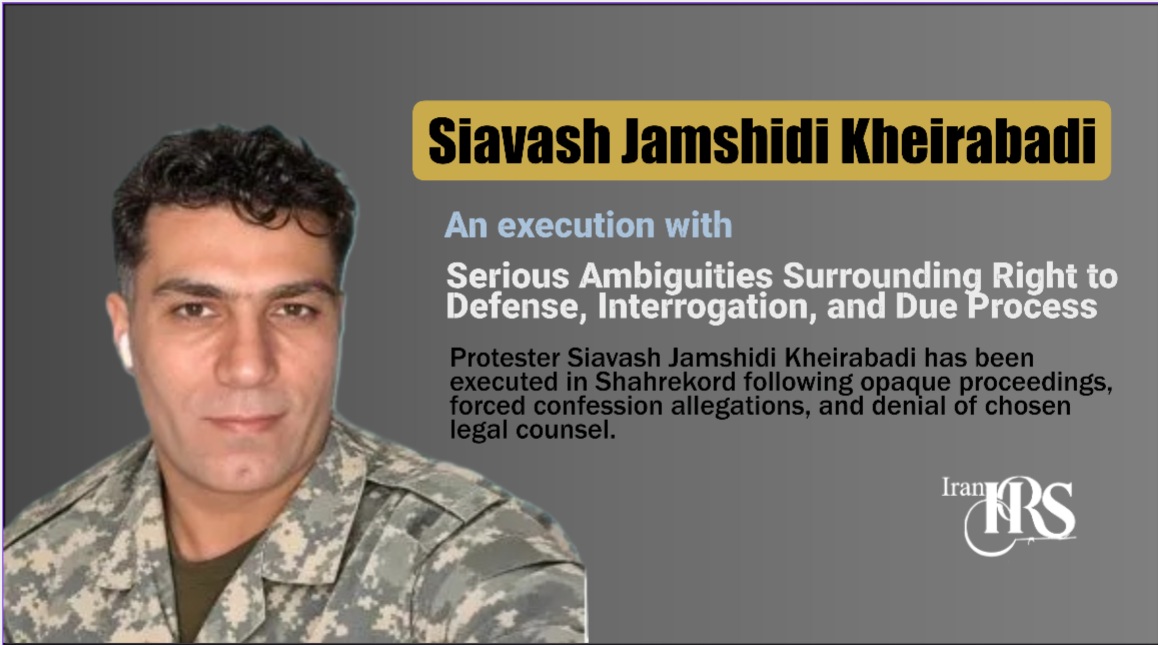
Siavash Jamshidi Kheirabadi, a young protester arrested during the 2025 nationwide protests, has been executed; serious ambiguities remain regarding chosen legal counsel, interrogation conditions, and the identity of the individual alleged to have been killed in the case
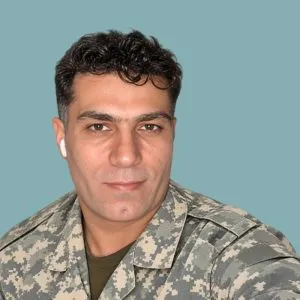
Iran Human Rights Society, Saturday, October 3, 2026– Siavash Jamshidi Kheirabadi, a young protester detained during the 2025 nationwide protests, has been executed. The official narrative provided by the judicial system relies on heavy national security charges and self-incriminating statements attributed to him during preliminary investigations. However, critical details regarding his interrogation conditions,
access to chosen defense counsel, and ability to present an effective legal defense at various stages of the proceedings remain undisclosed. Furthermore, official reports fail to provide the name, identity, or alleged offense of the individual claimed to have been killed during the incident.
Siavash Jamshidi Kheirabadi: From Arrest to Execution
Following his arrest during the 2025 nationwide protests in Shahrekord, Siavash Jamshidi Kheirabadi faced heavy security charges that ultimately culminated in a capital sentence.
According to the official narrative, his case was processed through the court system following an indictment, leading to primary charges including “Moharebeh” (enmity against God) through the carrying and use of firearms, as well as assembly and collusion against national security. The issued death sentence was subsequently affirmed on appeal by the Supreme Court and executed.
Despite these formal announcements, the critical focus of human rights observers rests not merely on the charges listed, but on the systematic process through which his case progressed from arrest and interrogation to final execution.
Ambiguities Regarding Chosen Legal Counsel
Official state reports mention only that the case was reviewed in court in the presence of “his lawyer” following the indictment. However, reports fail to clarify whether this attorney was chosen by Siavash Jamshidi Kheirabadi or appointed by the judiciary under court-imposed regulations.
Furthermore, no clear information has been disclosed regarding the presence or absence of legal counsel during preliminary investigations and interrogation phases.
In a capital case resulting in an irrevocable death sentence, this distinction is fundamental. The mere formal presence of a court-appointed lawyer at a trial session does not fulfill defense guarantees; a defendant must have effective access to chosen legal counsel and independent advice from the initial moment of detention.
Interrogations and Confessions: The Core of the Official Case
A central component of the official state narrative regarding Siavash Jamshidi Kheirabadi’s case rests on statements attributed to him during preliminary investigations before judicial officers.
In these published excerpts, Jamshidi Kheirabadi is cited as having confessed to carrying firearms and firing shots. Additionally, mobile phone text messages and security force reports were listed as primary evidentiary grounds.
However, adequate information has not been provided regarding the exact interrogation conditions, the duration and environment of his detention prior to providing statements, the presence of defense counsel during inquiries, or how these confessions were logged and verified. Independent examination of these conditions is crucial, as the circumstances under which statements are obtained directly dictate their legal validity.
Identity of the Alleged Deceased Individual
One of the most significant ambiguities in the published case records is the identity of the person alleged to have been killed during the event.
Official published texts provide no clear name or personal details regarding any victim. It remains completely undisclosed who this individual was, what role they played in the events, or what offense was attributed to them.
The absence of this fundamental information makes an independent evaluation of the direct link between the charges brought against Siavash Jamshidi Kheirabadi and the final capital verdict impossible. In capital proceedings, establishing the precise identity of an alleged victim, an accurate factual summary, verified evidence, and a direct causal link between the charge and punishment are basic prerequisites of judicial transparency.
Execution Within a Security Environment and Fear of Protests
The execution of Siavash Jamshidi Kheirabadi took place against a backdrop where authorities continue to face political and social unrest alongside the potential for renewed waves of public protest.
From this perspective, executing individuals detained in protest-related cases functions within a broader policy of social deterrence and intimidation. Executions carried out in such climates convey a direct message that authorities intend to raise the cost of public dissent through severe capital punishment.
While state motivations cannot be proven solely from case files, the direct concurrence of executions with heightened security measures and ongoing crackdowns on protesters remains a significant factor that observers cannot overlook.
Information Box | Case Information at a Glance
| Subject | Details |
| Name | Siavash Jamshidi Kheirabadi |
| Arrest Context & Location | 2025 nationwide protests in Shahrekord |
| Primary Charges | “Moharebeh” (enmity against God) via firearm possession/use, assembly and collusion against national security |
| Judicial Status | Sentenced to death; sentence confirmed by Supreme Court; executed |
| Unidentified Victim | No name, identity, or verified details provided regarding the individual alleged to have been killed |
| Defense Representation | Unclear whether legal counsel was independently chosen; no access to counsel during preliminary interrogations |
| Primary Evidentiary Basis | Coerced confessions extracted during pre-trial detention, mobile phone records, security reports |
Legal Review of the Case Based on Domestic Laws
Reviewing these judicial proceedings under domestic statutes does not signify an endorsement of the governing legal system, but serves to demonstrate that even existing internal statutory mandates are being systematically bypassed.
Relevant Statutory Provisions
- Article 32 of the Constitution: Mandates strictly lawful arrest procedures and written notification of charges.
- Article 35 of the Constitution: Upholds the fundamental right of all citizens to select qualified legal counsel across all judicial stages.
- Article 37 of the Constitution: Establishes the presumption of innocence until proven guilty in a competent court.
- Article 38 of the Constitution: Expressly forbids all forms of physical and psychological torture to extract confessions, declaring coerced statements legally void.
Procedural Violations
The reliance on pre-trial confessions extracted without legal counsel, failure to clarify if defense counsel was independently chosen, and lack of evidentiary transparency regarding the alleged victim directly violate statutory protections codified under domestic law.
Human Rights Violations in the Execution
The execution of Siavash Jamshidi Kheirabadi following opaque legal proceedings conflicts directly with international human rights standards:
- Article 3 of the Universal Declaration of Human Rights (UDHR): Guarantees everyone the right to life, liberty, and security of person.
- Article 5 of the Universal Declaration of Human Rights (UDHR): Strictly bans torture or cruel, inhuman, or degrading treatment.
- Article 10 of the Universal Declaration of Human Rights (UDHR): Entitles everyone to a fair and public hearing by an independent and impartial tribunal.
- Article 14 of the International Covenant on Civil and Political Rights (ICCPR): Mandates comprehensive fair trial standards, effective legal representation, and freedom from self-incrimination.
Carrying out an irrevocable death sentence under ambiguous procedural conditions deprives the individual of the fundamental right to life, underscoring the vital need for judicial transparency and independent international oversight.
See also the below articles:
- UN Special Rapporteur Mai Sato Welcomes 46-Nation Joint Statement Condemning Executions in Iran
- Tehran Court Hands Down Death Sentences to four Protesters Amid Severe Due Process Violations
Follow Iran Human Rights Society on social networks:
Telegram /Twitter /Instagram / YouTube / Facebook
Join Iran Human Rights Society on Twitter