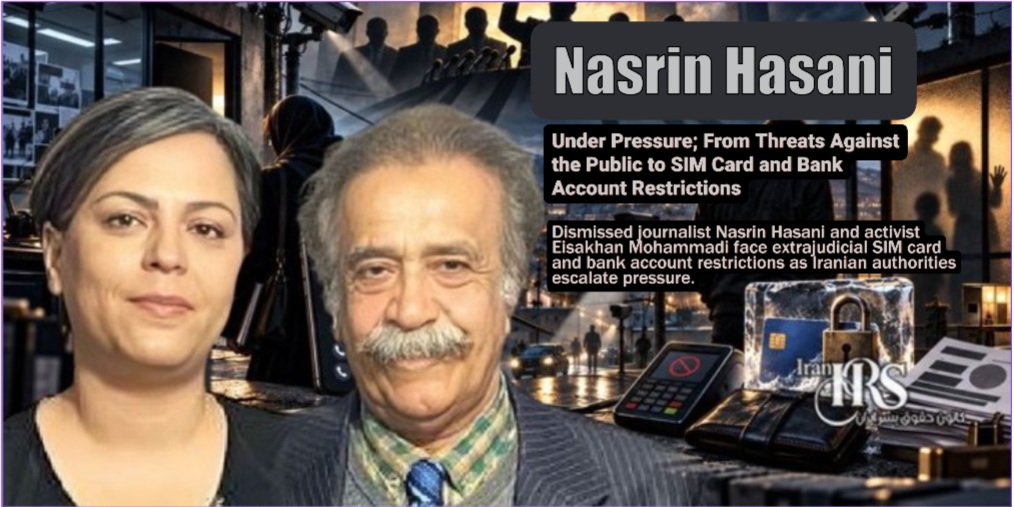
Reports have emerged detailing communication and banking restrictions imposed against Nasrin Hasani and Eisa khan Mohammadi; measures that, coupled with judicial pressures and threatening rhetoric from state leadership against citizens and protesters, highlight new dimensions of dissent suppression in Khorasan

Iran Human Rights Society, Tuesday, September 29, 2026– Nasrin Hasani, a dismissed journalist residing in Bojnurd, is among activists facing new punitive restrictions, according to published reports. These measures are not confined to summonses, arrests, or judicial indictments; reports indicate the blocking or restriction of SIM cards and bank cards belonging to civil and political activists across Khorasan provinces.
If confirmed, these actions demonstrate that security and judicial bodies are employing communication and economic deprivation alongside standard oppressive tactics to pressure critics—deprivations directly targeting the daily lives of individuals and their families.
New Restrictions Against Nasrin Hasani
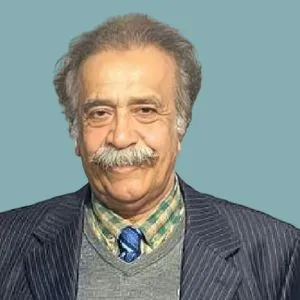
The name of Nasrin Hasani, a journalist from North Khorasan, has been raised in connection with this fresh wave of pressure. Residing in Bojnurd, she was previously fired from her job due to her media activities.
Precise details regarding the exact nature of the restrictions imposed on Nasrin Hasani, their commencement date, and the issuing agency have not been publicly disclosed. Furthermore, it remains unconfirmed whether these measures stem from formal judicial rulings or if security agencies restricted her access to communication and banking services without official orders.
The absence of transparent legal grounds for these actions reinforces concerns that livelihood and communication restrictions are being utilized as coercive tools to force Nasrin Hasani into silence.
Reported Pressures Against Eisa khan Mohammadi
Eisa khan Mohammadi, a political activist residing in Esfarayen, has also been named in connection with these punitive pressures. Reports indicate that the restrictions targeting Khorasan activists encompass their communications and access to banking services. However, exact details regarding potential restrictions against Eisa khan Mohammadi and the authority responsible have not been formally announced.
Blocking his SIM card or bank cards without a clear judicial ruling and a mechanism for appeal constitutes an extrajudicial measure that directly impacts the activist, his family, and their daily subsistence.
Disrupting or severing SIM card services impairs an individual’s ability to communicate with family, legal counsel, media outlets, and support networks. Similarly, blocking bank cards eliminates the ability to purchase daily necessities, cover medical expenses, pay rent, and secure basic livelihoods.
Under these conditions, pressure extends beyond Nasrin Hasani and Eisa khan Mohammadi, subjecting their families to direct economic and psychological hardship. Utilizing basic life necessities as punitive tools represents a systematic effort to force activists into silence or halt their civil, political, and media work.
If implemented without formal judicial notification or appeal options, these restrictions constitute arbitrary deprivations and pre-trial punishments.
From State Threats to Extrajudicial Punishments
The pressure on Nasrin Hasani, Eisa khan Mohammadi, and other Khorasan activists occurs within a climate marked by hostile state rhetoric targeting protesters, critics, and dissidents. The implicit signal sent to subordinate agencies is to intensify crackdowns and raise the cost of civic engagement and peaceful protest.
Threatening citizens from official platforms paves the way for security officers, prosecutors, and executive bodies to treat all independent civic activities as security threats. Restricting banking and communication services serves as an operational tool of this intimidation policy, aimed at isolating activists and instilling societal fear.
From this perspective, Nasrin Hasani’s case is not merely about an individual journalist, but signifies a broader shift in state suppression from detention facilities and courtrooms into the daily lives of citizens.
Information Box | Case Information at a Glance
| Subject | Details |
| Targeted Individuals | Nasrin Hasani (Dismissed journalist, Bojnurd) & Eisa khan Mohammadi (Political activist, Esfarayen) |
| Geographic Scope | Khorasan Provinces (North Khorasan) |
| Punitive Measures | Blocking/restricting SIM cards, freeze on personal bank accounts and payment cards |
| Legal Status of Actions | Extrajudicial measures implemented without formal court orders, official notification, or appeal mechanisms |
| Primary Direct Impacts | Inability to purchase daily necessities, medical care disruption, severance of legal and family contact |
| Rights Violations | Arbitrary pre-trial punishment, violation of property rights, employment interference, extrajudicial intimidation |
Legal Review of Nasrin Hasani’s Case Based on Domestic Laws
Reviewing these actions under domestic statutes does not signify an endorsement of the governing legal framework, but demonstrates that even existing internal regulations are being directly violated.
Legal Ambiguities of the Case
Imposing economic and communication sanctions on citizens without formal indictments or judicial verdicts constitutes an arbitrary extrajudicial punishment violating basic legal guarantees.
Relevant Statutory Provisions
- Article 22 of the Constitution: Mandates that the dignity, life, property, rights, residence, and occupation of individuals are inviolable except as sanctioned by law.
- Article 36 of the Constitution: Explicitly dictates that the passing and execution of a sentence must be performed solely by a competent court and in accordance with the law.
Procedural Violations
Blocking SIM cards or bank accounts without a clear court order, formal notification, and the right to appeal represents an extrajudicial penalty that directly violates the rights to property, employment, communication, and effective legal defense for Nasrin Hasani and Eisa khan Mohammadi.
Human Rights Violations Regarding Khorasan Activists
The extrajudicial measures against Nasrin Hasani and Eisa khan Mohammadi directly violate fundamental international human rights treaties:
- Article 12 of the Universal Declaration of Human Rights (UDHR): Prohibits arbitrary interference with privacy, family, home, or correspondence.
- Article 17 of the Universal Declaration of Human Rights (UDHR): Guarantees the right to own property and protects against arbitrary deprivation of property.
- Articles 19 & 20 of the Universal Declaration of Human Rights (UDHR): Protect freedom of opinion, expression, and peaceful assembly.
- Article 23 of the Universal Declaration of Human Rights (UDHR): Upholds the right to work and free choice of employment.
Restricting access to basic financial and communication services to punish civil figures, accompanied by state threats against critics, violates core international standards. Responsible authorities must state the legal basis for any restrictions against Nasrin Hasani and Eisa khan Mohammadi and immediately rescind all arbitrary deprivations.
See also the below articles:
- Maryam Goudini Subjected to Torture in Karaj
- Ali Younesi 5-Year Sentence Upheld | Sharif University Student Report
Follow Iran Human Rights Society on social networks:
Telegram /Twitter /Instagram / YouTube / Facebook
Join Iran Human Rights Society on Twitter