The Judiciary announced that Majid Nikandish and Ali Hemmati were sentenced to death and executed following Supreme Court confirmation in connection with the January 2026 protests in Mashhad; independent details regarding due process and allegations remain limited
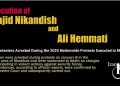
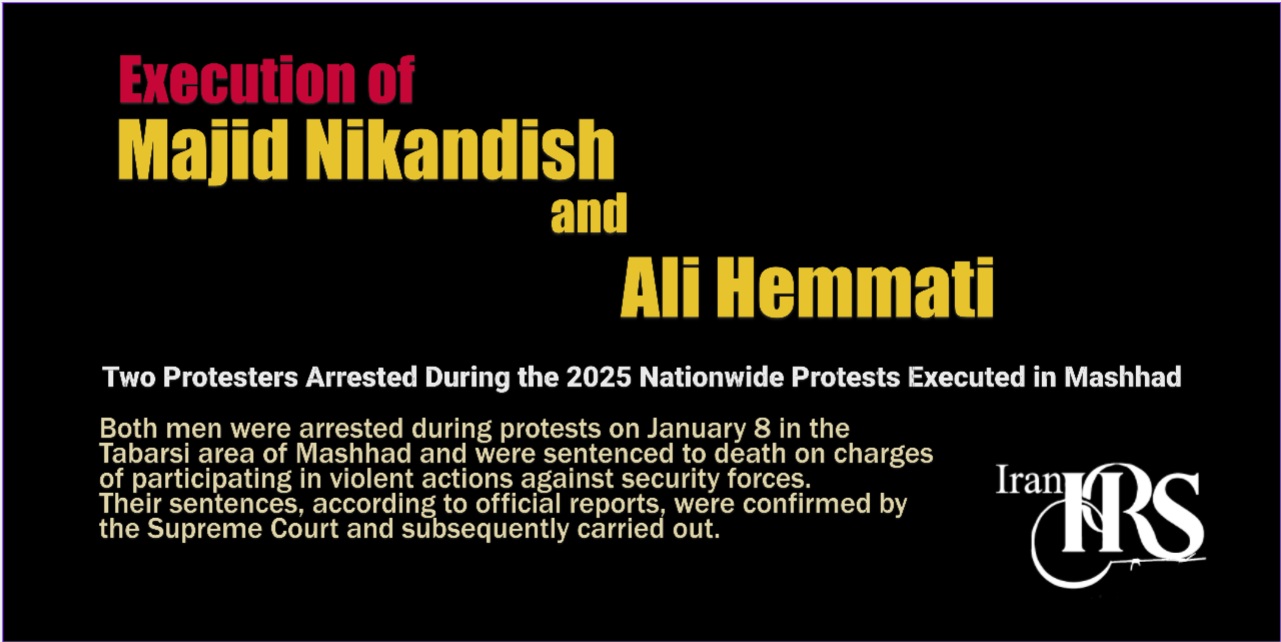
Iran Human Rights Society, Wednesday, September 30, 2026– Majid Nikandish and Ali Hemmati, two individuals arrested during the 2025 nationwide protests in Mashhad, were executed on the morning of Wednesday, September 30, 2026. Mizan News Agency, affiliated with the Judiciary, reported that both men were arrested during protests on January 8 in the Tabarsi area of Mashhad and were sentenced to death on charges of participating in violent actions against security forces. Their sentences, according to official reports, were confirmed by the Supreme Court and subsequently carried out.
Execution of Majid Nikandish and Ali Hemmati

According to the report published by Mizan News Agency, Ali Hemmati and Majid Nikandish were identified as individuals present during the nationwide protests in the Tabarsi area of Mashhad. Judicial authorities identified them as “field agents” and
“ringleaders” of the protests, claiming that their attributed actions resulted in the deaths of four security personnel. These assertions were put forward in the official Judiciary report and cannot be independently verified.
Mizan also claimed that during interrogation and judicial proceedings, Ali Hemmati admitted to actions including attacking a store, setting it on fire, attacking Basij forces with a knife, and blocking vehicular traffic. Regarding Majid Nikandish, judicial authorities claimed he was present during protests on January 8 and 9, participated in damaging public property and setting fire to a bank, and attacked a store alongside Ali Hemmati.
Majid Nikandish; One of the Detainees of the 2025 Protests

Majid Nikandish’s name had previously appeared on published lists of protesters arrested during the 2025 nationwide protests who were facing the risk of the death penalty. According to human rights reports, he was arrested on January 10, 2026, in connection with the Mashhad protests, transferred to Vakilabad Prison, and sentenced to death on charges of “Moharebeh” (enmity against God) in May 2026.
Executions amid Escalating Crackdowns on Protesters
The executions of Majid Nikandish and Ali Hemmati took place under conditions where human rights reports highlight a significant surge in death sentences issued for individuals detained during the 2025 nationwide protests. Iran Human Rights (IHR NGO) reported in September that at least 100 detained protesters were at risk of facing execution and had recorded the executions of 31 protesters up to that point, including 29 individuals arrested during the January protests.
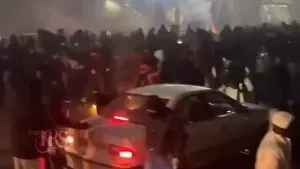
Observers and critics interpret the acceleration of death penalty convictions and executions for protesters as part of a deterrence strategy aimed at preventing future public demonstrations. This assessment represents a political analysis of state motivations, though no official independent documentation has been released regarding these objectives.
Information Box | Case Information at a Glance
| Subject | Details |
| Names | Majid Nikandish & Ali Hemmati |
| Arrest Location & Date | Tabarsi District, Mashhad — January 8 & 10, 2026 |
| Primary Charges | “Moharebeh” (Enmity against God), destruction of public property, acts against security forces |
| Detention Facility | Vakilabad Prison, Mashhad |
| Judicial Status | Sentenced to death in May 2026; confirmed by the Supreme Court; executed on September 30, 2026 |
| Key Concerns | Coerced confessions under interrogation, denial of due process and independent defense counsel |
Legal Review of the Cases Based on Domestic Laws
Reviewing these proceedings under domestic statutes does not signify an endorsement of the governing legal system, but serves to demonstrate that even existing internal legal protections are frequently bypassed.
Relevant Statutory Provisions
- Article 32 of the Constitution: Mandates that no individual may be arrested except by law and requires prompt notification of charges in writing.
- Article 35 of the Constitution: Guarantees the right of all individuals to select defense counsel in all courts.
- Article 37 of the Constitution: Establishes the presumption of innocence until proven guilty in a competent court.
- Article 38 of the Constitution: Strictly prohibits all forms of torture to extract confessions and voids forced statements.
Procedural Violations
Concerns surrounding forced confessions, lack of access to independent legal counsel during pre-trial investigations, and swift Supreme Court confirmations directly challenge the procedural integrity mandated by domestic statutory protections.
Human Rights Violations in the Executions
The death penalty and judicial proceedings against Majid Nikandish and Ali Hemmati conflict directly with international human rights benchmarks:
- Article 3 of the Universal Declaration of Human Rights (UDHR): Guarantees everyone the right to life, liberty, and security of person.
- Article 5 of the Universal Declaration of Human Rights (UDHR): Prohibits torture or cruel, inhuman, or degrading treatment.
- Article 14 of the International Covenant on Civil and Political Rights (ICCPR): Mandates fair hearing standards, full defense guarantees, and access to chosen legal counsel.
The application of the death penalty following flawed judicial procedures and unverified confessions highlights ongoing human rights violations, underscoring the vital need for independent international scrutiny and legal transparency.
See also the below articles:
- Iran Imposes Extrajudicial Bank and SIM Card Freezes on Journalist Nasrin Hasani
- Maryam Goudini Subjected to Torture in Karaj
Follow Iran Human Rights Society on social networks:
Telegram /Twitter /Instagram / YouTube / Facebook
Join Iran Human Rights Society on Twitter