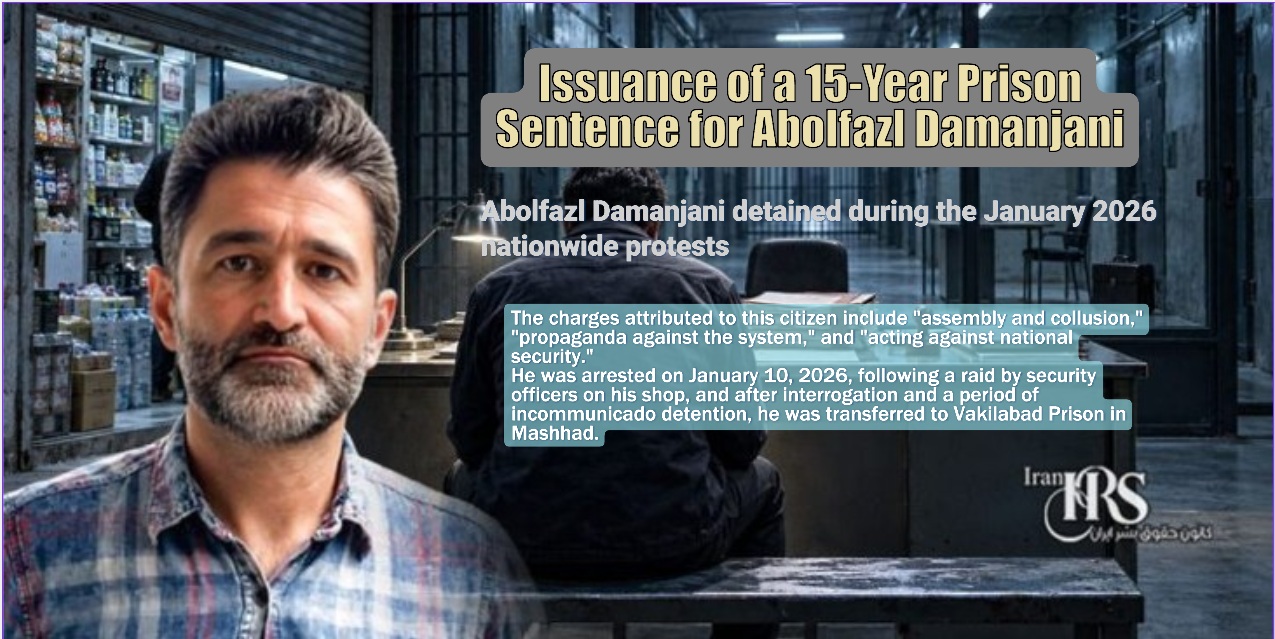
Abolfazl Damanjani, detained during the January 2026 nationwide protests, has been sentenced to 15 years in prison by Branch 5 of the Mashhad Revolutionary Court, presided over by Judge Yazdankhah. This sentence was issued on security-related charges, heightening concerns regarding judicial handling of protester cases and compliance with fair trial standards
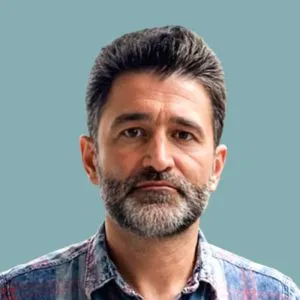
Iran Human Rights Society, Thursday, October 15, 2026– Abolfazl Damanjani, one of those detained during the January 2026 protests, has been sentenced to serve 15 years in prison by Branch 5 of the Mashhad Revolutionary Court, presided over by Judge Yazdankhah. The charges attributed to this citizen include “assembly and collusion,” “propaganda against the system,” and “acting against national security.” He was arrested on January 10, 2026, following a raid by security officers on his shop, and after interrogation and a period of incommunicado detention, he was transferred to Vakilabad Prison in Mashhad.
Issuance of a 15-Year Prison Sentence for Abolfazl Damanjani
According to received information, Branch 5 of the Mashhad Revolutionary Court, presided over by Judge Yazdankhah, sentenced Abolfazl Damanjani to 15 years in prison.
This sentence was issued in connection with a case file formed following his arrest during the January 2026 nationwide protests.
The charges raised against Damanjani include “assembly and collusion,” “propaganda against the system,” and “acting against national security.” However, details regarding the evidence presented to prove these charges, specifics of the court hearings, and the breakdown of sentences for each charge count are not provided in the report text.
Security Officers’ Raid on Shop and Arrest of Abolfazl Damanjani
On January 10, 2026, amid the nationwide protests, Abolfazl Damanjani was arrested following a raid by security officers on his business premises.
Following his arrest, information regarding his condition and location remained unavailable for a period. This period of incommunicado detention represents one of the concerning issues in his arrest process.
After completing his interrogation phase, he was transferred to Vakilabad Prison in Mashhad, a facility holding several individuals detained under political and security case files.
Concerns Regarding Fair Trial and Right to Counsel
The issuance of a 15-year prison sentence against Abolfazl Damanjani raises questions regarding compliance with defense rights during preliminary investigations and judicial proceedings.
Among the most critical issues in such cases are access to chosen legal counsel, awareness of prosecution evidence, and the ability to present an effective defense in court. In the provided details, specifics regarding Damanjani’s access to chosen legal counsel and his defense conditions are unlisted.
Furthermore, it remains unclarified whether the issued sentence is final or remains subject to appeal and review.
These ambiguities highlight the necessity for transparency regarding trial proceedings and the preservation of Abolfazl Damanjani’s defense rights.
Legal Review of Abolfazl Damanjani’s Case Based on Domestic Laws
This review does not signify an endorsement of the dictatorship’s laws governing Iran, but serves to demonstrate the failure to observe even these regulations. Articles 32, 35, and 37 of the Constitution emphasize the legality of arrest, the right to legal representation, and the presumption of innocence. Articles 48 and 190 of the Code of Criminal Procedure also provide for the defense rights of the accused. The period of incommunicado detention following Damanjani’s arrest and ambiguities regarding his access to counsel raise the necessity of examining compliance with these guarantees.
Human Rights Review of the Case and Violation Standards
Abolfazl Damanjani’s arrest, the period of incommunicado detention, and his 15-year prison sentence on security charges raise concerns regarding the protection of fundamental rights. Article 9 of the Universal Declaration of Human Rights prohibits arbitrary arrest. Article 10 emphasizes the right to a fair trial, and Article 11 stresses the presumption of innocence. Additionally, Articles 19 and 20 protect freedom of expression and the right to peaceful assembly. Restricting these rights solely due to participation in peaceful protests conflicts with international human rights standards.
See also the below articles:
- Varisheh Moradi Sentenced to Death a Second Time in Tehran
- Dr. Ahmad Rahimi Facing Risk of Capital Indictment in Iran
Follow Iran Human Rights Society on social networks:
Telegram /Twitter /Instagram / YouTube / Facebook
Join Iran Human Rights Society on Twitter