

Shab-e Yalda is one of the ancient and important celebrations of Iranians, with a history spanning over two thousand years.
Shab-e Yalda is one of the ancient and important celebrations of Iranians, with a history spanning over two thousand years. Since ancient times, many ceremonies and festivals have been held on this night because, in the culture of ancient Iranians, this night— the longest night of the year in the Northern Hemisphere— seen as a harbinger of the end of darkness and the birth of light and the sun.
However, under the rule of the Velayat-e Faqih system in Iran and the widespread poverty and inflation in society, which has pushed more than 80% of the population below the poverty line, where many are struggling to afford even their daily bread, there is no room left for celebrating this festival or holding traditional ceremonies. For many, affording meat, fruit, and nuts has become a distant dream.
In such circumstances, talking about the Yalda feast, decorated with the relevant fruits and nuts, seems more like a fairy tale than reality. Of course, the corrupt officials of this regime are an exception to this rule, as their luxurious meals can sometimes cost as much as a worker’s annual income, if not more!
Nevertheless, as we approach Shab-e Yalda, let’s take a moment to reflect on its history and traditions.
Yalda means birth, and in his book Al-Athar al-Baqiyah, Abu Rayhan al-Biruni referred to it as “Milad Akbar,” meaning the birth of the sun.
This celebration registered as a UNESCO World Heritage site on December 9, 2022, as the birth of the sun.
The origins of this tradition and the naming of Shab-e Yalda, along with the beginning of festivities for this occasion, date back 7,000 years according to archaeological findings and pottery. However, historians claim that these celebrations officially recorded and formalized during the reign of Darius I.
It was during this period that the state, government offices, and organizations established in a classical manner, and a very high level of order and legal structure emerged, with the formal recording of events and laws beginning.
At that time, the people believed that Shab-e Yalda marked the end of bad luck and darkness, and the beginning of blessings and prosperity with the birth of the sun and light. In the context of agriculture and crop production, it seen as a sign of new beginnings and hope.
Traditions of Shab-e Yalda
Shab-e Yalda is filled with meaningful, popular traditions, some of which have been present from the beginning, while others have gradually been added over time.
The most important of these can be summarized as follows:
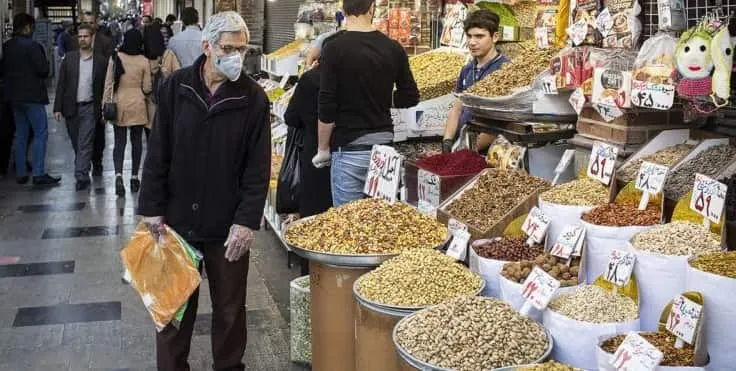
Iranian families usually gather on this night, preparing various fruits (with watermelon, pomegranate, and persimmons being the most common) and a variety of nuts. These arranged on a special table, and the family sits together, reading Shahnameh (the Book of Kings) and telling stories well into the night. They also engage in fortune-telling using the Divan of Hafez.
Additionally, the red color has long been a symbol of the sun for the Iranian people. The red color of pomegranates, watermelon, and the selection of red apples for the Yalda table likely refers to this symbolism.
Lighting a fire on Shab-e Yalda is another common tradition. People would light a fire to ward off darkness and evil forces, creating a warm gathering space together.
**Poverty Silences the Yalda of Iranians
However, poverty has begun to extinguish the Yalda celebrations for many Iranians, making it increasingly difficult for them to partake in these long-held traditions.
Yalda, a symbol of light and hope on the longest night of the year, has this year turned into another nightmare of poverty and misery for many Iranians. Due to economic inflation, people are now unable to even hold the simplest of celebrations. The cause of this situation is the freefall of the economy and the destructive policies of the government, which have spread poverty among the people instead of prosperity.
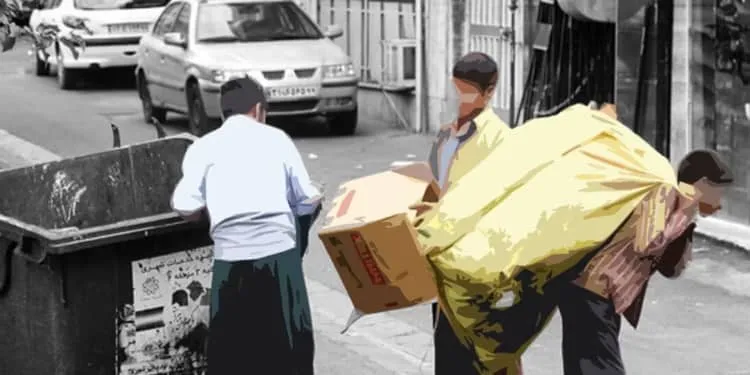
Iran, with its vast natural resources and unparalleled national wealth, including the South Pars gas field, which holds 8% of the world’s gas reserves, should be among the richest countries in the world. However, official statistics show that over 80% of the population lives below the poverty line, with 33% struggling in absolute poverty. Millions of child laborers fill the streets of cities, and millions of families cannot even provide basic food.
The absolute poverty line in Iran, according to some experts, is 26 million tomans, but a large portion of workers live on much lower wages. The deep divide between people’s income and the cost of living reflects the widespread corruption and mismanagement of the ruling government, which has sacrificed national interests for its political survival.
The Relationship Between Poverty and the Anti-Iranian Policies of the Regime
In its four decades of rule, the Islamic Republic of Iran has made poverty and misery an inseparable part of the lives of many Iranians. Today, there is an unprecedented class divide in society, perhaps unparalleled in the world. On one side, there is the luxurious life of the regime’s officials with opulent villas, golden cars, and a fairy-tale lifestyle; on the other, a legion of the hungry who are desperate for their daily bread and seek refuge in graves, rooftops, or by living on the streets.
This divide does not stem from a lack of resources but from plundering and anti-national policies. Iran’s wealth, instead of invested in improving the lives of its people, spent on expansionist and war-mongering policies.
A prime example is the regime’s interventions in Syria. According to the regime’s own officials, more than $30 billion has been spent in recent years to support Bashar al-Assad. This amount equivalent to 13 years of subsidies for the Iranian people, while Syria’s $11.5 billion debt to Iran remains unpaid, and billions of dollars more are being allocated to military expenses and supporting proxy forces in Syria. The Fatemiyoun Brigade, Quds Force, and other affiliated groups are all financed from the pockets of the Iranian people.
These policies not limited to Syria. Financial aid to Hezbollah in Lebanon, including promises of $13,000 for each Lebanese family, reflects the regime’s audacity in prioritizing proxy forces over the people of Iran. This amount is equivalent to several years’ wages for an Iranian worker or teacher, yet the regime, indifferent to the empty tables of its people, easily transfers these resources abroad.
The main source of the misery of the Iranian people
In a word, the main source of the misery of the Iranian people is two things: the relentless plundering of national resources and the regime’s warmongering and ideological policies. A government that should be using national wealth to improve the lives of its people has instead spent it on its own destructive ambitions. Iran, with all its natural and human potential, is on the path to ruin, and only by changing this regime can there be hope for improvement.
The end of the dark night is white.
Today, Iranian society immersed in a deep and multifaceted crisis that stems from the corrupt and inefficient structure of the Islamic Republic. The people, trapped in an unstable livelihood, violated rights, and an uncertain future, have lost the ability to find joy or engage in national traditions. Amid this, the suppression of freedoms and disregard for basic human rights, including the freedom of political and civil prisoners, has added fresh wounds to the body of the nation.
“How is it possible to change the situation of the people of Iran?”
These political, economic, and social crises cannot be solved with temporary and superficial measures. The solution lies in an uprising for freedom and the reclamation of human and social rights. As long as this repressive regime remains in power, the people of Iran will not see better days—neither in their livelihoods, nor in human rights, nor in the freedoms that are their inalienable right.
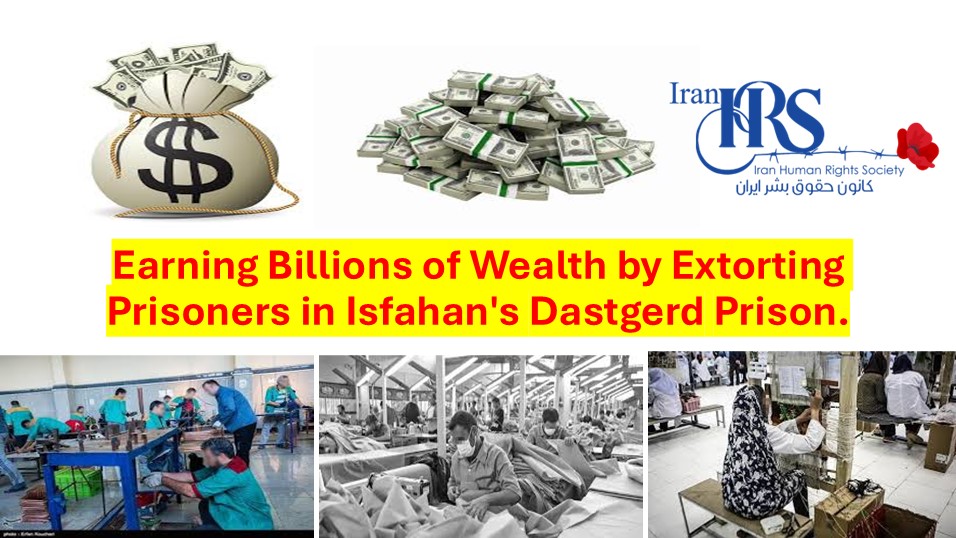
The freedom of prisoners, the end of repression, and the realization of human rights will only be possible through a fundamental change. The people of Iran deserve a government that upholds human dignity and justice, not a government that uses prisons and violence to maintain its power. The end of this dark night is near. The day when this regime falls, freedom and justice will shine throughout this land. The end of the dark night is white, and that dawn awaits us.
Follow Iran Human Rights society on social networks:
Telegram /Twitter /Instagram / YouTube / Facebook
Join Iran Human Rights Society on Twitter







Discussion about this post