
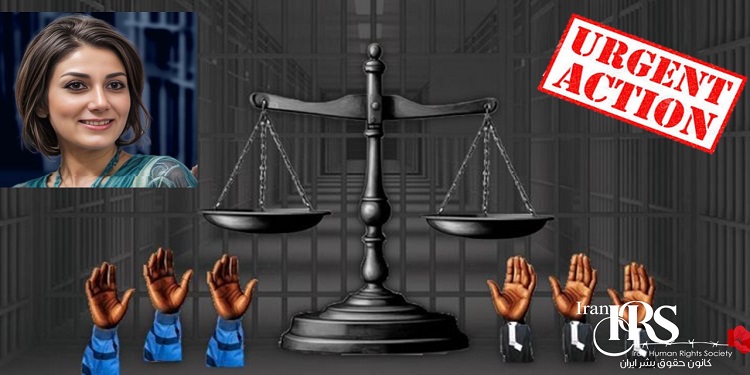
Pakhshan Azizi’s case; an example of injustice, violation of law, and oppression of the lawyer and client
Lawyer and Client; Rightsless, Defenseless –Political Prisoner Pakhshan Azizi at Risk of Execution
The alarming news of the rejection of Pakhshan Azizi’s request for a retrial, a Kurdish political prisoner sentenced to death, by the Supreme Court for the second time has once again sounded the alarm for the rightslessness and defenselessness of clients in Iran.
In this case, we will witness that the lawyer also deprived of his legal rights to defend his client, and, in fact, the lawyer is also defenseless and waiting for the dire consequences of accepting this case.
Generally, legal experts and scholars of fundamental rights and civil rights acknowledge that defense lawyers in Iran do not have professional immunity. And if the government decides, they subjected to multiple pressures.
Illegal and Unjust Actions Against Lawyers
Equality before the law, the right to seek justice, the right to defense, fair trial, independence of courts, the legality of crimes. And punishments, the presumption of innocence are among the rights enshrined in Articles 7 to 11 of Universal Declaration of Human Rights. And Articles 20, 32, 34, 35, 36, and 37 of the current Iranian Constitution, in line with the goals and duties of defense lawyers and bar associations. However, in practice, these rights frequently violated, ignored, and abused by the ruling system., And especially by the judiciary and security and military institutions.
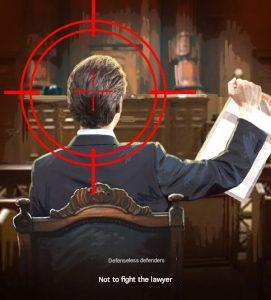
After the 1979 Revolution, pressure on the legal profession and defense lawyers severely imposed. The honorable lawyers of the country have, with all their strength, criticized those in power and have borne significant costs in the pursuit of the rule of law and the establishment of justice. Some of them arrested, tried, and punished multiple times for fulfilling their legal and professional duties.
Today, with the escalation of public protests and criticisms regarding the political, economic, and social situation in the country, and consequently the increasing security of society, the crackdown on defense lawyers has also intensified.
Unfounded Defenses by the Lawyer; Ridiculous Justifications of the Judiciary Against Lawyers
One of the tools and justifications used by government-affiliated judges to suppress and intimidate lawyers defending their clients’ rights is the term “unfounded defenses of the lawyer of the accused” mentioned in court rulings.
If, for any reason, the defenses of the accused’s lawyer are not to the liking of the judicial authority, it is necessary for the ruling to explicitly refer to the lawyer’s defenses and for the judicial authority to state the reasoning for their disagreement, substantiating the ruling while refuting the lawyer’s defenses.
Pakhshan Azizi’s case; an example of injustice, violation of law, and oppression of the lawyer and client
Maziyar Tataei, one of Pakhshan Azizi’s defense lawyers, states: “The adjudicating branch of the Supreme Court rejected the second request for retrial by Pakhshan Azizi’s lawyers without studying the trial documents and declared the defenses of the lawyers groundless. Such reasoning by the adjudicating branch connected to the trial documents that, unfortunately, not reviewed.”

Therefore, when the file not properly studied, how can claim that the defenses are groundless. Especially in a case where the maximum penalty issued? Everyone knows that the Supreme Court previously rejected the retrial request of Pakhshan Azizi’s lawyers last February based on what was termed “entering substantive objections.”
The Supreme Court’s reasoning regarding the lack of involvement in substantive objections in contrast to paragraph “ch” of Article 474 of the Code of Criminal Procedure, which states that one of the objections subject to reopening the case is “the act committed not being a crime or the punishment issued by the court being greater than the legal punishment.” There is no doubt that determining the criminality or otherwise of the act is among the substantive issues of the case.
According to reports, the evidence and documents in the case clearly indicate that the death sentence issued against Pakhshan Azizi, based on the accusation of “baghi,” issued based on fabricated evidence and unfounded documents. The evidence distinctly shows that the issued ruling lacks credible documentation.
This is because, based on this evidence, Pakhshan Azizi has never been a member of any armed group. And also never fighting against the foundations of the Islamic Republic, and therefore, the attribution of the charge of “baghi” and the issuance of the death sentence against him on that basis is entirely illegal.
Political prisoner Pakhshan Azizi, death sentence approved by the Supreme Court
Pakhshan Aziz, a social worker, arrested on August 4, 2023, and on July 24, 2024, sentenced to death and four years in prison by Branch 26 of the Tehran Revolutionary Court, presided over by Judge Iman Afshari, on charges of “waging war through membership in opposing groups.” This sentence confirmed on January 9, 2024, by Branch 39 of the Supreme Court, and the first request for retrial rejected on January 25 of the same year.
This political prisoner, held in detention since August 2023, deprived of access to a lawyer and family visits during the first eight months of interrogation.
Concurrently, three of his family members, including his father (Aziz Azizi), sister (Parshang Azizi), and son-in-law (Hossein Abbasi), each sentenced to one year in prison on the charge of “assisting the criminal,” with these sentences confirmed in October 2024.
In an open letter from Evin Prison on July 22, 2024, Pakhshan spoke of the tortures endured during detention and the inhuman conditions of solitary confinement, highlighting the additional suffering of being a “woman” and “Kurd” in the Islamic Republic system.
In this context and following a call from Kurdish parties, on January 23, 2024, a group of Kurdish merchants closed their shops in protest against the death sentences issued for “Pakhshan Aziz,” “Voriše Moradi,” and other political prisoners.
On the same day, “Maziar Tataei,” one of Pakhshan Aziz’s lawyers, announced that the Supreme Court had agreed to suspend the execution of this political prisoner. Nevertheless, a general strike continued in at least 13 Kurdish cities. Some shops marked, and shopkeepers received warnings of potential closure. Several individuals also arrested.
Immediate action to prevent the illegal execution of Pakhshan Azizi
The general public and free compatriots of the country have rallied alongside the families of political and ideological prisoners sentenced to death, conducting protests in accordance with their capabilities and resources. Moreover, human rights organizations and advocacy groups have utilized their capacities to prevent excessive and widespread executions under the Velayat-e Faqih regime, in hopes of averting the enforcement of these unjust and illegal sentences.
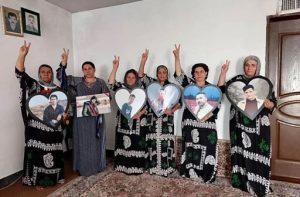
Families of political prisoners
Maziar Taqtaei and Amir Reisiann, lawyers for Pakhshan Azizi, expressed their concerns over the hurried and superficial handling of the Supreme Court’s case and the disregard for their legal requests aimed at realizing the rights of the accused, stating, “A human life is at stake.”
To overturn the unjust death sentence and save the lives of all political prisoners facing execution. Immediate action must be taken, utilizing all available means, as tomorrow may be too late.
Please assist us by sending any information regarding this matter so that we can be the voice of the prisoners.
Follow Iran Human Rights society on social networks:
Telegram /Twitter /Instagram / YouTube / Facebook
Join Iran Human Rights Society on Twitter


Discussion about this post