
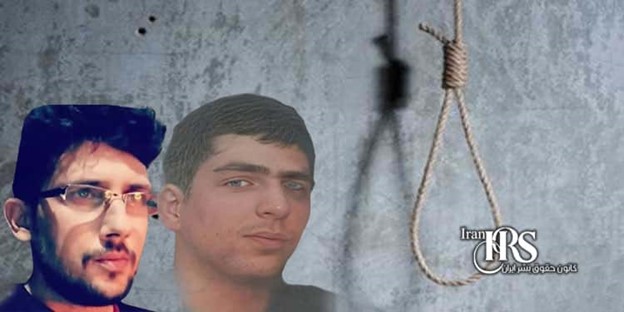
Since the beginning of Ordibehesht (April 21, 2025), the regime has executed at least 153 prisoners. This equates to an average of more than 4 executions per day, or one prisoner executed every 6 hours.

Iran Human Rights Society, Thursday, May 22, 2025 – Two prisoners were executed in the prisons of Damghan and Zahedan. This brings the total number of prisoners executed in the month of Ordibehesht (April 21–May 21, 2025) to 153. Since the beginning of Ordibehesht, the regime has executed at least 153 prisoners, averaging more than four executions per day, or one every six hours.
Execution of Abdulrahim Nazari in Central Zahedan Prison
On the morning of Wednesday, May 21, 2025, Abdulrahim Nazari, aged 34, son of Eshan, married with three children, and a resident of Qareh-Balagh, Aliabad Katul, was executed in Central Zahedan Prison. He was arrested in 2022 in Zahedan on drug-related charges and sentenced to death. His execution was carried out without informing his family or lawyer and without allowing a final visit, classifying it as a “secret execution.”
Execution of Ali Asghar Alemi in Damghan Prison
At dawn on Monday, May 19, 2025, Ali Asghar Alemi, son of Ahmad, single, and a native of Damghan, was executed in Damghan Prison. He had previously been arrested and sentenced to death on murder charges.

Right to Life: The right to life is recognized as a fundamental and inalienable right. The death penalty directly violates this right by taking it away.
Irreversibility: Once a death penalty is carried out, judicial errors cannot be rectified, as the execution is irreversible.
Torture and Inhuman Treatment: Certain methods of executing the death penalty are considered forms of torture or cruel, inhuman, or degrading treatment, which contravene the provisions of the Universal Declaration of Human Rights.
Violation of Human Rights Commitments Regarding the Death Penalty:
According to Article 6 of the International Covenant on Civil and Political Rights (ICCPR), to which Iran is a signatory, the issuance and execution of the death penalty are permissible only for the most serious crimes and with full guarantees of a fair trial. In many similar cases, the lack of transparency, restrictions on the legal rights of the accused, and the issuance of sentences by courts lacking necessary independence are considered violations of this fundamental human rights principle.
Follow Iran Human Rights society on social networks:
Telegram /Twitter /Instagram / YouTube / Facebook
Join Iran Human Rights Society on Twitter







Discussion about this post