
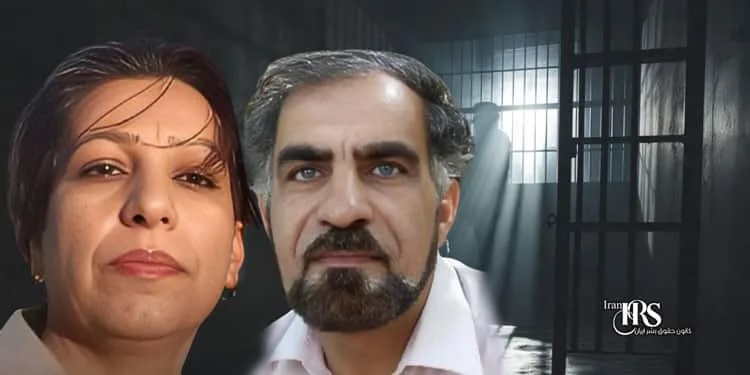
Fereshteh Suri, a poet and civil activist suffering from physical and mental health issues, was arrested along with her husband, Ali Jahaniyan, following a summons to the Nahavand Intelligence Office. The couple had previously faced prison sentences.
Iran Human Rights Society, Friday, May 30, 2025 – On Monday, May 26, 2025, Fereshteh Suri and Ali Jahaniyan, two poets and civil activists from Nahavand, were arrested after being summoned by phone to the Nahavand Intelligence Office and were transferred to Nahavand Central Prison. Sources close to the couple report that concurrently, Branch 1 of the Nahavand Revolutionary Court opened a new case against them.
Fereshteh Suri had previously been sentenced to one year of imprisonment, a verdict upheld on May 5, 2025, by Branch 11 of the Hamedan Province Appeals Court. Her appeal against the initial ruling was rejected without any in-person hearing, and the original sentence was confirmed.
Charge: Supporting Families of Protest Victims and Sharing Protest Poetry
Fereshteh Suri was acquitted of “forming a group to disrupt national security” in the case leading to her sentence. However, she was charged and convicted of “propaganda against the system” for posting content on social media, including stories supporting families of protest victims and reposting protest poetry.
The content, primarily consisting of reciting poems by her husband, Ali Jahaniyan, and other contemporary poets, was deemed criminal by security authorities. Human rights observers view this as another indication of the restriction of free expression and cultural suppression in Iran.
Repeated Arrests, Assaults, and Dire Health Conditions
This is not the first instance of security crackdowns on the couple. On September 10, 2024, Fereshteh Suri and Ali Jahaniyan were arrested at their home by security forces. Suri was released on bail after some time but was re-arrested just two days later and transferred to Malayer Prison. The couple was finally released on bail on November 12, 2024, after two months of temporary detention.
Sources close to the family report that Fereshteh Suri faced physical violence, including beatings, during interrogations and suffers from multiple physical and mental health conditions, including severe depression. Despite this, judicial and security authorities have upheld her one-year sentence and initiated a new case against her, disregarding her health.
Fereshteh Suri has no prior criminal record, and her activities have largely been limited to poetry, literature, and expressing solidarity with families of victims of political repression. Yet, Iran’s judicial and security institutions have once again demonstrated that even peaceful cultural and literary activities are not immune to suppression.
The issuance of prison sentences for Fereshteh Suri and Ali Jahaniyan, coupled with escalating security pressures, repeated arrests, and successive legal cases, is part of a broader policy of cultural suppression in Iran, particularly intensified in smaller cities.
Human Rights Violations: Suppression of Free Expression, Lack of Fair Trial, and Inhuman Treatment
The arrest of Fereshteh Suri and Ali Jahaniyan, the upholding of a prison sentence without an in-person hearing, and the disregard for Suri’s dire physical and mental health constitute clear violations of several articles of the International Covenant on Civil and Political Rights:
Article 19 (Freedom of Expression): This includes the right to seek, receive, and impart information through any medium. Suri’s conviction for posting stories and poetry clearly violates this right.
Article 7 (Prohibition of Torture and Cruel, Inhuman, or Degrading Treatment): Reports of Suri’s beatings during interrogation directly violate this article.
Article 9 (Right to Liberty and Security of Person): Repeated arrests without judicial transparency or justifiable reasons contravene this fundamental human rights principle.
Article 14 (Right to a Fair Trial): Upholding a sentence without an in-person hearing and dismissing Suri’s appeal is a clear violation of fair trial rights.
As cultural suppression and censorship in Iran continue to escalate, the arrests of Fereshteh Suri and Ali Jahaniyan demonstrate that even the mildest forms of expression and human empathy can lead to imprisonment and judicial pressure—a practice that contradicts all fundamental principles of human rights.
Follow Iran Human Rights Society on social networks:
Telegram /Twitter /Instagram / YouTube / Facebook
Join Iran Human Rights Society on Twitter





Discussion about this post