
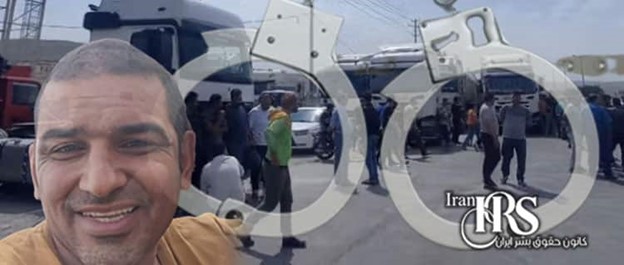
More than a week after the start of truck drivers’ protests, a wave of repression, widespread arrests, and forced confessions has exposed the true face of the organized suppression by the ruling dictatorship.
Iran Human Rights Society, May 31, 2025 – The nationwide protests by Iranian truck drivers, which began on May 22, 2025, in response to economic hardship, heavy taxes, unfair freight rates, and the regime’s negligence, have so far led to the arrest of at least 20 drivers and citizens supporting this labor movement. These arrests, carried out in cities such as Sanandaj, Kermanshah, Islamabad-e Gharb, Shiraz, Rasht, Bandar Imam Khomeini, Bandar Lengeh, and Bijar, indicate a deliberate and planned crackdown by security forces on the protesting community.
Targeted and Widespread Arrests
Since the protests began, evidence suggests that security forces have systematically targeted and arrested labor activists and protesters. Sediq Mohammadi in Sanandaj, Shahab Darabi in Islamabad-e Gharb, and at least 11 drivers in Kermanshah are among those detained for their involvement in the protests. Reports indicate that families have no information about the whereabouts of these individuals, who are completely deprived of legal rights such as access to a lawyer or contact with their families.
A statement issued by the Iranian Truck Drivers’ Union in recent days highlighted violent police actions at the Sanandaj terminal, including the use of pepper spray, beatings of protesters, and nighttime arrests. These actions come despite the truck drivers’ protests being a peaceful labor movement aimed at securing their occupational rights.
Forced Confessions Under Pressure
One of the most alarming aspects of the crackdown is the pressure on detainees to provide forced confessions. The public relations office of the Quds Corps in Gilan announced the arrest of a citizen in Rasht for supporting the truck drivers’ strike. This individual was accused of “disrupting road transport security” and “collaborating with hostile media,” with a video of their forced confession broadcast on state media.
In Bandar Imam Khomeini, the Khuzestan Corps reported the arrest of two citizens and the release of a similar video. According to human rights sources, detainees have been coerced into making false confessions against themselves under pressure and threats, a clear violation of Article 14 of the International Covenant on Civil and Political Rights (ICCPR) and principles of fair trial.
Arrest of Alireza Faghfouri: Nighttime Raid, Complete Uncertainty

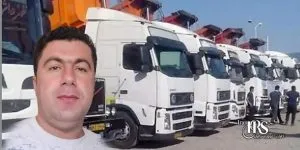
Alireza Faghfouri, a truck driver from Behbahan also known as “Reza Shabzadeh,” was arrested at his home on the night of Thursday, May 29, 2025, by security forces. Sources close to his family report that agents entered his home without a judicial warrant, using threats and intimidation, and took him to an undisclosed location.
Faghfouri’s family remains in complete uncertainty, with no information about his whereabouts or health as of this report. Behbahan has reportedly become a major hub of the strike in recent days, with a heavy security presence leading to widespread arrests and repression of activists.
Bijar, Shiraz, Bandar Lengeh: Widespread Repression in Small and Large Cities
In Bijar, a truck driver was arrested for participating in a protest gathering. In Shiraz, the city’s prosecutor announced the arrest of a group of protesting drivers, claiming they had “organized” disruptions to transportation. Exact numbers of those arrested in Shiraz are unavailable, but local sources report violent and threatening behavior by security forces during these arrests.
In Bandar Lengeh, the county police commander reported the arrest of a citizen for producing and sharing a video in support of the truck drivers’ strike. The individual was accused of endangering the country’s economic security by posting the video on social media and sharing it with foreign media.
Widespread Strikes: From Mehran to Isfahan
As the crackdown continues, the strikes persist across various parts of the country. Key routes, such as Aligudarz to Isfahan, Bijar, Sarableh to the Mehran border, and dozens of other major roads, have fallen silent due to the absence of trucks. Strikers are chanting slogans against discrimination, heavy taxes, injustice, and the silence of officials. Reports indicate that over 140 cities have participated in these protests.
In Faridan, truck drivers have continued their strike despite security threats. Empty roads are a sign of quiet but effective civil resistance against a corrupt and repressive system.
In suppressing the truck drivers’ protests, the ruling dictatorship has systematically and extensively violated fundamental human rights principles. The crackdown, marked by numerous arbitrary arrests, lack of judicial transparency, forced confessions, denial of legal counsel, and lack of family contact, clearly violates several key provisions of the ICCPR.
First, Article 9 of the ICCPR explicitly states that no one should be arbitrarily arrested or detained, and every detained person must be promptly informed of the reasons for their arrest and charges against them. In the case of the truck drivers’ protests, many detainees have been abducted without judicial warrants, without notification to their families, and through violent nighttime raids, a clear violation of this article.
Second, Article 14 guarantees the right to a fair trial, the presumption of innocence, access to a lawyer, and protection against coerced confessions. The broadcast of forced confession videos by detainees on state media, without access to legal counsel and under interrogation pressure, demonstrates a direct violation of fair trial principles and the prohibition of torture and coercion. This also violates Article 7, which prohibits torture, inhuman, and degrading treatment.
Third, Article 19 addresses the right to freedom of expression, which includes the freedom to express opinions, engage in peaceful protest, and share protest-related content online. The arrest of individuals for merely sharing videos in support of the strike is a clear violation of this article and an attempt to suppress freedom of expression through repression.
Fourth, Article 21 explicitly recognizes the right to peaceful assembly. The truck drivers have engaged in entirely peaceful strikes, yet they have faced threats, physical repression, arrests, and intimidation, which directly violates this article.
What we are witnessing in the truck drivers’ protests in Iran is a clear example of the regime’s instrumental use of security forces to suppress labor demands. Widespread arrests, pressure for forced confessions, lack of judicial transparency, and the use of state media to legitimize repression are only part of the systematic policies of the ruling dictatorship to silence the Iranian people’s call for justice.
Follow Iran Human Rights Society on social networks:
Telegram /Twitter /Instagram / YouTube / Facebook
Join Iran Human Rights Society on Twitter



Discussion about this post