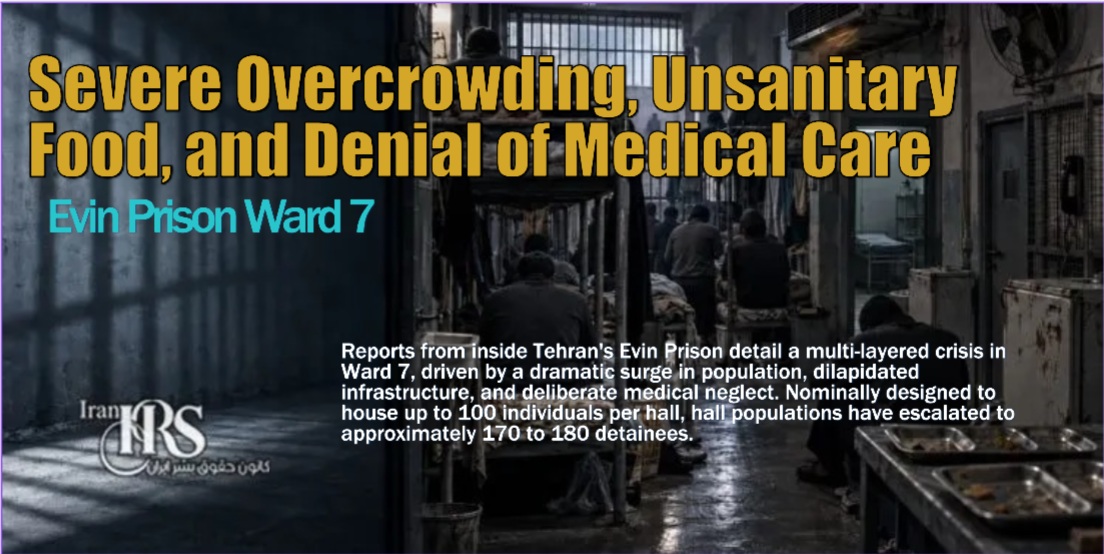
The surge in hall populations to approximately 170 people, widespread bedbug infestation, lack of sanitary facilities, inadequate food, absence of specialist doctors, and violation of crime segregation rules have turned the status of Ward 7 into a multi-layered crisis.
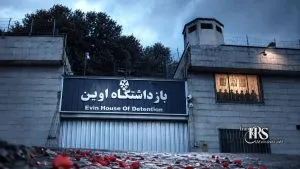
Iran Human Rights Society, Sunday, September 20, 2026– Ward 7 of Evin Prison faces severe overcrowding, a lack of sanitary facilities, improper nutrition, restricted access to medical treatment, absence of cooling equipment, and deprivation of cultural and athletic amenities. Halls designed with a maximum capacity of 100 people are currently housing approximately 170 prisoners each.
A large portion of this population increase stems from the transfer of financial prisoners and individuals with general convictions from Greater Tehran Prison (famously known as Fashafuye) to Evin Prison. These transfers have taken place without expanding living space, increasing the number of showers or toilets, or providing essential necessities, further intensifying the pressure on the ward’s dilapidated infrastructure.
In each hall, there are only seven toilets and seven showers for roughly 170 people. Bedbugs have spread across almost all rooms, disinfectant materials are unavailable, and even the distributed hand soap is expired in some instances. Concurrently, the low quality of food, the sale of limited shop items at prices higher than the outside market, drug shortages, and the refusal to transfer sick prisoners to external medical centers severely jeopardize the health of detainees.
What You Will Read in This Report
- Population increase in halls from a capacity of 100 to approximately 170 people
- The presence of only seven showers and seven toilets per hall
- Widespread infestation of bedbugs and absence of disinfectants
- Low quantity, poor quality, and in some cases unsanitary food
- Lack of specialist physicians, medications, and emergency equipment
- Prohibition of electric fans, electric shavers, and other electrical appliances
- Lack of libraries, sports facilities, and employment opportunities
- Easy access to narcotics and the complete absence of crime segregation
A Statistical Snapshot of Evin Prison Ward 7
| Subject | Current Status |
| Capacity of Each Hall | Maximum 100 people |
| Current Population per Hall | Approximately 170 people |
| Toilets | 7 units per 170 people |
| Showers | 7 units per 170 people |
| Fresh Air Yard | Approximately 30 meters by 10 meters |
| Fresh Air Yard Amenities | Devoid of trees, awnings, or benches |
| Available Books | Approximately 17 to 20 volumes per hall |
| Televisions | 1 device per 12 people (purchased by the prisoners) |
| Refrigerators | 2 devices per 15 people (mostly dilapidated) |
| Telephones | Approximately 1 device per 15 people with number restrictions |
| Permitted Phone Numbers | Maximum 7 registered numbers per prisoner |
Transfers from Fashafuye and Population Surge to 170 People
The transfer of financial prisoners and general conviction detainees from Fashafuye to Ward 7, without creating new space, has raised the population of certain halls to nearly 170 individuals. The nominal capacity of each hall is 100 people; thus, the current prisoner population exceeds the official capacity by roughly 70 percent.
In recent weeks, transfers of dozens of financial prisoners to Ward 7 of Evin Prison have continued, with some halls recording between 170 and 180 detainees. Prior to this, on July 14, 2026, around 40 financial prisoners had also been transferred to this ward.
Protests against these relocations were not directed at the incoming prisoners themselves, but rather focused on the total lack of capacity, the scarcity of basic amenities, and the consequences of further overcrowding. Despite these warnings, the transfers were not halted, and newly arrived prisoners were distributed among various halls.
The population surge has made accessing beds, showers, toilets, phones, refrigerators, and common areas vastly more difficult. Overcrowding also escalates the probability of transmitting respiratory, skin, and infectious diseases, as social distancing, isolating sick individuals, and regular sanitation of the environment are practically impossible.
Seven Showers and Seven Toilets for 170 People
Each hall in Ward 7 contains only seven toilets and seven showers. This number is limited even for the nominal capacity of 100 people, and with the population rising to roughly 170, continuous pressure on infrastructure and long queues have become the norm.
Hot water in the showers is also not consistently available. On many occasions, prisoners are forced to bathe with cold water or postpone using the shower altogether. Broken equipment and increased usage in overpopulated halls have further worsened these conditions.
Simultaneously, the bedbug crisis has impacted almost all rooms. The absence of effective pest control, failure to replace contaminated bedding, and lack of specialized cleaning have allowed these insects to spread repeatedly. Disinfectant supplies to sanitize common spaces, telephones, and shared surfaces are non-existent, and the hand soap distributed is expired in several cases.
Telephones, door handles, toilets, and showers are used daily by dozens of individuals. The lack of disinfectants in such an environment heightens the transmission risk of illnesses, posing a greater threat to elderly prisoners, those with underlying health conditions, and physically vulnerable individuals.
Extreme Heat, Defective Fan-Coils, and the Ban on Electric Fans
The cooling system of Ward 7 fails to operate effectively during hot days. During periods where outdoor temperatures reached near 50°C, the halls lacked effective cooling. Instead of reducing the temperature, the fan-coil systems in some instances blew hot air directly into the halls.
All personal electrical appliances—ranging from electric fans and shavers to electric kettles—are strictly prohibited. This prohibition persists even when prisoners express readiness to pay for the equipment personally at inflated prices.
Previously, amid an outbreak of respiratory illness in Ward 7 of Evin Prison, issues regarding extreme heat, enclosed hall spaces, and the prevention of bringing in fans or coolers had been raised. The combination of high heat, congestion, and inadequate ventilation severely increases the danger of respiratory disease transmission.
For every 15 prisoners, only two low-quality domestic refrigerators are provided, many of which are broken or outdated. The lack of refrigerator space and broken units make storing food items and temperature-sensitive medications extremely difficult.
Expensive Prison Shop and Limited Food Supplies
The shop in Ward 7 offers a very narrow variety of food products. Available items are often limited to cooking oil, eggs, cheese, and biscuits, and orders placed by prisoners are not fulfilled on a regular basis.
A portion of the goods sold is purchased based on supplier discounts rather than the actual needs of the prisoners. The quality and expiration dates of several items are questionable, yet those exact goods are sold at prices approximately 20 percent higher than the market outside the prison.
This situation persists while many prisoners lack employment or income-generating opportunities inside the prison, placing the financial burden of purchasing from the shop directly onto their families. Consequently, the nutritional quality of prisoners becomes increasingly dependent on their families’ financial capacity.
Meager Rations and Low-Quality Food
The food distributed in Ward 7 suffers from severe deficiencies in quantity, quality, and cooking standards. The rice provided is mostly low-grade imported Indian rice. Chicken is sometimes cooked whole and then divided, leaving parts of it undercooked and foul-smelling.
The amount of stew allocated to each prisoner is sometimes limited to just two tablespoons. In stews containing meat, an individual’s share may be reduced to two tiny pieces roughly the size of a sugar cube. The quality of vegetables and raw ingredients used in stews is likewise very low.
Dinner on certain nights consists of lentil soup, bean stew, or a single boiled egg paired with a small potato. Other meals are often inedible due to poor preparation. Distributed patties consist of a very thin mixture of undercooked, burned, or stale soy.
Breakfast is typically restricted to a tiny packet of low-quality halva, jam, or a piece of margarine roughly the size of a matchbox. A container of yogurt or a single tomato is occasionally distributed alongside lunch or dinner, but fruit and desserts are completely absent from the diet menu.
Infirmary Without Medication and Refusal to Transfer Sick Inmates
Emergency medical supplies are absent within the halls, and the infirmary’s equipment is severely limited. In emergency situations, available resources are mostly confined to basic bandages and elementary supplies. Specialist doctors are unavailable to evaluate serious illnesses, and requests for transfers to external hospitals or clinics are routinely denied.
In instances where medical transfers are approved, the financial cost of transportation, accompanying guards, and other transfer expenses are imposed directly on the prisoner. Compelling prisoners to bear such costs leaves financially destitute inmates practically deprived of specialized medical care.
The prison pharmacy lacks diverse and essential medications. When a prisoner falls ill or when similar symptoms spread among multiple inmates, general drugs like anti-allergy pills or a limited number of cold tablets are distributed, and the individual is sent back to the hall without proper testing or specialized examination.
In an environment where 170 people share common spaces, limited facilities, and poor ventilation, the absence of medical diagnosis and isolation of sick individuals can easily transform a localized illness into a prison-wide epidemic.
Restrictions on Family Contact
Telephone access is completely disproportionate to the ward’s population. There is approximately one telephone for every 15 people, and each prisoner is permitted to register only seven phone numbers for outbound calls. This restriction makes contacting family members, legal counsel, and trusted individuals extremely difficult.
The population surge without the addition of new telephone units has lengthened waiting lines significantly. Phone calls with family represent a prisoner’s sole tool for maintaining emotional connections, providing updates on physical health, and managing legal matters; unnecessary restrictions in this area sharply escalate psychological stress.
Lack of Libraries, Educational Programs, and Athletic Facilities
Ward 7 lacks a functional library. In each hall, there are only about 17 to 20 book volumes—roughly one book for every 10 prisoners. The existing content is limited and lacks variety, and the entry of foreign language learning books has been explicitly banned.
There is approximately one television for every 12 people, which was purchased at the personal expense of the prisoners. Athletic facilities inside the halls do not exist. Across the entire ward complex, sports equipment is limited to a single ping-pong table, one foosball table, and two chessboards.
The fresh air yard measures approximately 30 meters in length and 10 meters in width, lacking trees, awnings, or even benches. Prisoners spend the vast majority of the day confined inside closed halls without opportunities for regular exercise or access to proper open air.
Deprivation of Employment and Vocational Training
Ward 7 contains no barbershop, proper grooming tools, tailoring workshops, or handicraft facilities. Prisoners are deprived of learning skills, gaining employment, or earning an income to cover their basic personal expenses.
No green space or small garden has been designated for simple daily activities. The complete absence of work, exercise, education, and cultural programming increases long hours of physical inactivity, leading to psychological burnout, depression, and heightened internal tensions within the ward.
Prisoner employment must be voluntary, safe, fair, and accompanied by proper training. Removing work and educational opportunities altogether strips prisoners of the ability to rehabilitate or acquire skills.
Easy Access to Narcotics and Absence of Effective Oversight
Narcotics are easily accessible in parts of the prison, with distribution operating through organized networks. The regular entry of drugs into a heavily inspected and monitored environment raises serious questions regarding lax oversight, deliberate turning of a blind eye, or direct involvement of certain internal staff.
Available information indicates the potential role of certain guards, ward representatives (vokalaye band), and prisoners who temporarily leave the ward for work or transfer assignments in smuggling drugs. Establishing criminal liability requires an independent investigation, examining entry routes, and auditing financial transactions.
Widespread drug accessibility, paired with a lack of addiction treatment and proper prisoner separation, threatens the overall health and safety of inmates. Prison management is obligated to identify entry points and distribution networks while providing medical care, rather than resorting solely to punitive measures against drug users.
Failure to Segregate Crime Categories in Ward 7
Political prisoners, financial convicts, general offenders, foreign nationals, and individuals suffering from substance addiction are housed together in shared spaces. This situation demonstrates that the principle of prisoner classification and segregation is completely unfulfilled in practice.
The transfer of financial prisoners to Ward 7 and subsequent protests over the violation of crime segregation principles had been raised previously. Mixing groups with vastly different legal statuses, medical requirements, and security levels escalates the risk of conflicts, intimidation, abuse, and disease transmission.
The absence of crime segregation must not lead to discrimination among prisoners; all detainees, regardless of their case type, hold the fundamental right to adequate living space, healthy food, medical care, security, and humane treatment. The primary issue lies in the prison management’s inability to provide a suitable environment tailored to the needs of each group.
History of Security Pressure in Ward 7
Livelihood and sanitary hardship continue under circumstances where Ward 7 has simultaneously faced heightened security pressure. On August 8, 2026, approximately 50 special unit guards raided Halls 3 and 4 of Ward 7.
This raid was accompanied by the physical beating of several prisoners, the destruction or confiscation of personal belongings, and the forcible transfer of four political prisoners out of the ward. Lack of information regarding their transfer location and physical health increased deep concerns among their families.
The destruction of personal items—which prisoners had purchased at their own expense or through their families—creates an added layer of distress under conditions already defined by severe resource shortages. Such aggressive actions, combined with overcrowding, bad nutrition, disease, and phone restrictions, impose a heavy compound pressure on the prisoners.
Legal Review of Ward 7 Conditions Based on Domestic Laws
The laws of the ruling system in Iran have been consistently criticized for non-compliance with fair trial standards and restriction of prisoners’ rights. Reviewing the conditions of Ward 7 based on domestic statutes does not signify endorsement of these regulations, but serves to demonstrate that authorities fail to adhere even to their own statutory mandates.
Legal Ambiguities
The exact number of prisoners, official hall capacities, count of sick inmates, food and infirmary budget allocations, legal grounds for banning electrical appliances, and the justification for mixing different prisoner categories have never been transparently disclosed.
Relevant Legal Articles
- Articles 22 and 39 of the Constitution: Emphasize the inviolability of life, rights, and dignity of individuals, explicitly banning any behavior that degrades the human dignity of prisoners.
- Articles 2, 4, 118, and 123 of the Executive Regulations of the Prisons Organization: Obligate officials to protect human dignity, maintain physical and psychological health, prevent disease outbreaks, ensure proper hygiene, and provide free medical treatment and proper crime classification.
- Probable Legal Violations: Extreme overcrowding, insufficient food, lack of medical treatment, ongoing bedbug infestations, deprivation of ventilation, non-segregation of crimes, and unnecessary restrictions on family communications directly contradict these statutory obligations.
Human Rights Violations in Ward 7 of Evin Prison
Articles 5 and 25 of the Universal Declaration of Human Rights (UDHR) emphasize the absolute prohibition of inhuman treatment and guarantee the right to health and medical care. Article 10 of the International Covenant on Civil and Political Rights (ICCPR) obligates state parties to treat all persons deprived of their liberty with humanity and respect for inherent human dignity.
The UN Nelson Mandela Rules stress the necessity of adequate living space, proper ventilation, lighting, cleanliness, appropriate sanitary facilities, sufficient nutritious food, clean drinking water, healthcare equivalent to community standards, and regular contact with family. The conditions in Ward 7 of Evin Prison regarding overcrowding, sanitation, nutrition, treatment, and family contact stand at a severe distance from these international standards.
An immediate relief of overcrowding, halting new prisoner transfers, fundamental pest fumigation, provision of healthy food, presence of specialist physicians, medical transfers without imposing financial costs on prisoners, supply of cooling equipment, and execution of proper crime segregation are essential emergency measures required to prevent further physical and psychological harm.
See also the below articles:
- Execution of Hossein Pedaran in Dastgerd Prison, Isfahan
- Confirmation of Death Sentence for Omid Goudarzvand Chegini
Follow Iran Human Rights Society on social networks:
Telegram /Twitter /Instagram / YouTube / Facebook
Join Iran Human Rights Society on Twitter