
Khamenei, in his speech, instead of mentioning “severe revenge,” promised “severe punishment” for those responsible for the Israel attack.
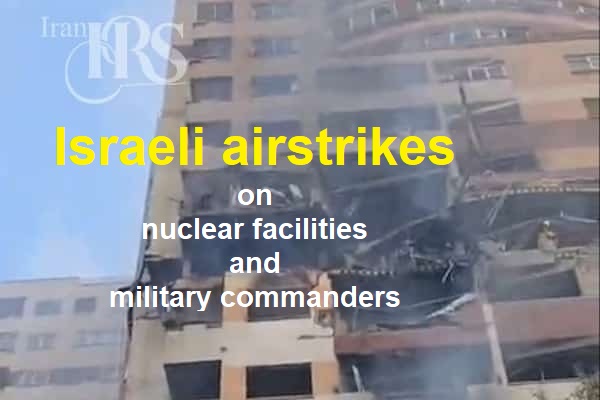
Iran Human Rights Society, Saturday, June 14, 2025 – Over the past 30 hours, a full-scale war that began with Israel’s attack on Iran’s nuclear facilities and IRGC headquarters has intensified, with both sides exchanging strikes, an action experts describe as the start of an unprecedented war with nuclear, military, and strategic objectives.
Israel Attack: Coordinated Strikes Against Nuclear and IRGC Centers
On the early morning of June 13, 2025, Israel launched an extensive military operation codenamed Operation Rising Lion targeting over 100 military, nuclear, and missile sites in Iran. These attacks were carried out using nearly 200 advanced fighter jets, missiles, and drones, targeting the following sensitive sites:
Uranium enrichment facilities in Natanz and Fordow
Air bases in Tabriz and Hamedan
IRGC missile infrastructure in western regions
Offices of senior military commanders and nuclear scientists
Mehrabad Airport in Tehran, Bushehr, Tabriz, Hamedan, and various military sites in the capital and other parts of the country
According to The Guardian, approximately 78 people were killed and over 320 injured.
Twenty-four hours after the start of Israel’s attacks, the list of targeted sites encompasses a wide range of Iran’s military and nuclear infrastructure:
The entire senior command of the IRGC Aerospace Force
A significant number of IRGC and Armed Forces General Staff commanders
Key figures in the nuclear program
A large portion of air defense systems from the north to the west of the country
At least four main missile bases
Three major air bases
A naval base in Bushehr
The primary uranium enrichment center
The only heavy water production facility
Additionally, other sensitive facilities were also targeted in these attacks.
Key Targets: Air Defense, Nuclear, and Commanders
Official sources have confirmed that Israel’s targets were carefully selected, with a particular focus on nuclear and missile infrastructure as well as Iran’s senior commanders. Alongside the destruction of parts of the enrichment site, an early-warning air defense radar in Nahavand was also destroyed. The spokesperson for Iran’s Atomic Energy Organization stated that the damage was limited and the underground Fordow facility remains intact.
Launch of Hundreds of Missiles and Drones Toward Israel
In response to Israel’s attack on military and nuclear sites, Iran launched over 400 missiles and drones in several waves toward targets in Israel. Haaretz reported that at least two people were killed and dozens injured in central Israel. Al Arabiya sources reported five waves of attacks by the Iranian military, involving over 400 missiles and drones.
Casualties in Israel: Three Killed and Dozens Injured
The missiles fired toward Israel targeted residential and administrative areas in Tel Aviv and Jerusalem. According to Haaretz, three people were killed and over 90 injured. The Magen David Adom relief organization reported that more than 70 people were hospitalized due to injuries.
Active Air Defense in Pasteur
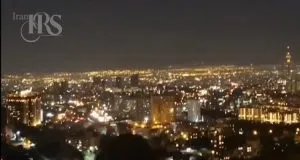
In Iran, explosions were heard in the capital and the Pasteur Square area, where the offices of Khamenei and the presidency are located. American sources reported widespread activation of air defense systems in these areas.
Global Reactions: Sanctions, Warnings, and Security Meetings
Reuters reported that an emergency meeting of the UN Security Council was held at Iran’s request to address Israel’s attack. French President Emmanuel Macron sharply criticized the actions of both Tehran and Israel, stating that Iran is responsible for regional instability. The White House emphasized that Iran’s missiles were intercepted with U.S. military assistance.
Oil and Economic Markets: Sudden Surge in Tensions
The intense military tensions led to a 10% increase in oil prices and a drop in global stock market indices. It was also announced that some regional air routes and commercial flights have been suspended.
Statements by Regime Officials
Khamenei, in his speech, instead of mentioning “severe revenge,” promised “severe punishment” for those responsible for the Israel attack. Baqai, the Foreign Ministry spokesperson, also stated:
“You cannot allow Israel to attack Iran while simultaneously talking about negotiations.”
The international community must act to prevent the escalation of the crisis and ensure the safety of civilians.
Continued Reciprocal Attacks
According to the Armed Forces General Staff, Brigadier General Masoud Shanei, Brigadier General Gholamreza Mehrabi, and Brigadier General Mehdi Rabbani, staff officials of the armed forces, were killed in the Israel attack.
Masoud Shanei was the head of the IRGC’s General Command Office.
Gholamreza Mehrabi was the deputy intelligence officer of the Armed Forces General Staff.
Martyr Brigadier General Mehdi Rabbani was the deputy operations officer of the Armed Forces General Staff.
Behrouz Kamalvandi, spokesperson for the Atomic Energy Organization:
“Limited damage was inflicted on some areas in Fordow during the Israel attack. We had previously transferred a significant portion of equipment and materials outside, and there has been no extensive damage or concern regarding contamination.”
Consecutive explosions around 4:30 a.m. in Zanjan due to Israel’s attack.
Local sources report black smoke rising from the targeting of the IRGC’s armored brigade in Zanjan.
Follow Iran Human Rights Society on social networks:
Telegram /Twitter /Instagram / YouTube / Facebook
Join Iran Human Rights Society on Twitter


Discussion about this post