
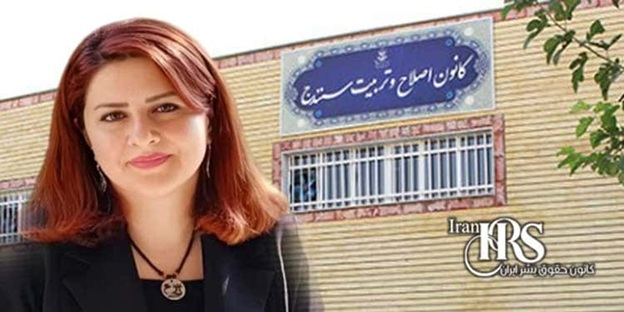
Political women prisoners, including Zhina Modares Gorji, are under increased surveillance and pressure. Their phone conversations are monitored, and the entry of some books, despite having official permits, is prohibited.
Iran Human Rights Society, Friday, July 4, 2025 –Zhina Modares Gorji endures challenging conditions in Sanandaj’s women’s prison, located within the city’s Reform and Rehabilitation Center. The facility lacks a designated ward for political prisoners, forcing around 50 female inmates into cramped, inhumane conditions. There are no rehabilitation programs, workshops, or sports facilities. Furthermore, prisoners face strict limits on phone calls and outdoor time. Political prisoners like Zhina experience intense monitoring, with their phone conversations recorded and certain books, even those with official permits, banned. These restrictions violate basic rights and create a repressive environment.

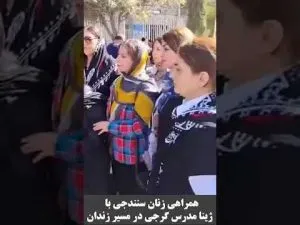
On November 2, 2024, Zhina Modares Gorji voluntarily reported to the Sanandaj Judiciary’s Sentence Enforcement Office to serve her sentence, accompanied by a group of civil activists. In a note published on her Instagram account, she described the women’s prison in Sanandaj as a place filled with “threefold discrimination based on gender, class, and nationality,” writing, “I go there with my hope.”The women’s prison in Sanandaj, located within the city’s Reform and Rehabilitation Center, lacks standard facilities such as a gym, workshop, or rehabilitation programs for inmates. It also does not have a designated section for political prisoners, and approximately 50 female prisoners are held under harsh conditions, including severe restrictions on phone calls and outdoor time.Political women prisoners, including Zhina Modares Gorji, face heightened surveillance and pressure. Their phone conversations are monitored, and some books, despite having official permits, are banned from entry. Additionally, some sources report efforts by security institutions to produce a documentary targeting Kurdish political activists, including Zhina Modares Gorji.
History of Arrests and Unjust Charges
Authorities first arrested Zhina Modares Gorji on September 21, 2022, during nationwide protests. Security forces used violence, detaining her for 42 days before her release on a 100 million toman bail, later raised to one billion toman due to additional charges. On April 10, 2023, she faced a second arrest, spending 84 days in detention, including a month in solitary confinement. She secured release on July 3, 2023, after posting a 5 billion toman bail. In June 2024, the Sanandaj Revolutionary Court sentenced her to 21 years for charges like “forming an illegal group” and “propaganda against the state.” However, an appeal reduced this to 28 months, with only the 16-month term enforceable under Iranian law.
New Charges and Ongoing Harassment
In December 2024, Zhina faced fresh charges of “spreading false information” in Sanandaj Criminal Court. Fortunately, the judge dismissed the case, recognizing the charges overlapped with her prior conviction. Despite this, security agencies, particularly the Sanandaj Intelligence Agency, continue to target her. They have denied her requests for furlough, except for a brief two-week release in May 2025, and rejected conditional release with electronic monitoring. Reports also suggest authorities are producing a documentary to discredit Kurdish activists, including Zhina, further escalating the harassment.
Violations of Human Rights
Zhina Modares Gorji’s detention exposes significant human rights violations in Iran. Specifically, her case breaches:
– Article 9, Universal Declaration of Human Rights: Arbitrary arrests without fair judicial processes.
– Article 19, Universal Declaration of Human Rights: Limits on freedom of expression, evident in her monitored communications and banned books.
– Article 10, International Covenant on Civil and Political Rights: Inhumane detention conditions without rehabilitation opportunities.
– Article 14, International Covenant on Civil and Political Rights: Lack of fair trial, judicial independence, and proper legal defense.

– Articles 21 and 22, International Covenant on Civil and Political Rights: Suppression of peaceful assembly and activism.
A Call for Justice
Zhina Modares Gorji’s case demands urgent attention. Her detention reflects broader human rights abuses in Iran. The international community must advocate for her release. Supporting Kurdish activists and women’s rights defenders is crucial. Zhina’s hope inspires action. Raising awareness can pressure authorities to uphold justice. Her story underscores the need for fair trials and humane treatment for all prisoners.
Follow Iran Human Rights Society on social networks:
Telegram /Twitter /Instagram / YouTube / Facebook
Join Iran Human Rights Society on Twitter







Discussion about this post