
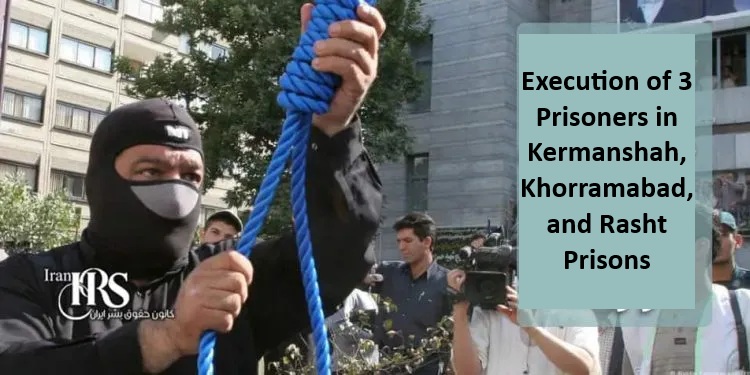
Iran executes 56 prisoners in Persian month of Tir, including Hamed Jalilian, Mosayeb Sagvand, and Peyman Afshar. Death penalty violates human rights.
Iran Human Rights Society, Thursday, July 17, 2025 – Iran’s execution rate alarms human rights groups, with 56 prisoners executed Persian month of Tir alone. This averages over two executions daily, raising concerns about the death penalty in Iran. Reports confirm three executions in Kermanshah, Khorramabad, and Rasht prisons, alongside one prisoner’s transfer to solitary confinement. These actions spark global outcry for violating human rights standards, particularly the right to life.
Hamed Jalilian’s Execution in Kermanshah Prison
On July 15, 2025, authorities executed Hamed Jalilian in Kermanshah Prison. Arrested for murder, Jalilian faced a death sentence. Another prisoner, Kianoush Khosravi Siahbidi, met the same fate that day. Human rights organizations documented these cases, highlighting the lack of fair trial guarantees. Such executions fuel debates about Iran’s justice system and its alignment with international human rights norms.
Mosayeb Sagvand Executed in Khorramabad Prison
On July 13, 2025, Mosayeb Sagvand faced execution in Khorramabad Prison. Arrested in 2020 for murder, he received a death sentence. This case underscores Iran’s frequent use of capital punishment, often criticized for inconsistent judicial processes. Human rights advocates argue these executions violate global standards, as fair trial rights are frequently undermined.
Peyman Afshar’s Execution in Lakan Prison, Rasht
On July 16, 2025, Peyman Afshar, aged 43, was executed in Lakan Prison, Rasht. Convicted of murder, Afshar’s case adds to Iran’s growing execution tally. The swift implementation of death sentences raises questions about judicial transparency and fairness. Critics point to these cases as evidence of Iran’s disregard for international human rights obligations.
Prisoner Transferred to Solitary Confinement in Lakan Prison
On July 16, 2025, authorities moved a 41-year-old prisoner to solitary confinement in Lakan Prison, Rasht, awaiting execution for murder. This transfer signals Iran’s ongoing reliance on the death penalty, despite global calls for a moratorium. The practice of solitary confinement before execution intensifies concerns about inhumane treatment in Iran’s prison system.
Death Penalty Conflicts with Universal Human Rights
Article 3 of the Universal Declaration of Human Rights states, “Everyone has the right to life.” The death penalty directly challenges this principle. It deprives individuals of their fundamental right to life. Moreover, the irreversible nature of executions risks uncorrectable judicial errors. Certain execution methods also qualify as torture or inhuman treatment, further violating human rights standards.
Iran’s Breach of International Human Rights Obligations
Article 6 of the International Covenant on Civil and Political Rights, which Iran signed, permits the death penalty only for the most serious crimes and with fair trial guarantees. However, many cases lack transparency and judicial independence. Defendants often face restricted legal rights, undermining fair trial standards. These violations highlight Iran’s failure to uphold its international commitments, drawing condemnation from human rights advocates worldwide.
Follow Iran Human Rights Society on social networks:
Telegram /Twitter /Instagram / YouTube / Facebook
Join Iran Human Rights Society on Twitter







Discussion about this post